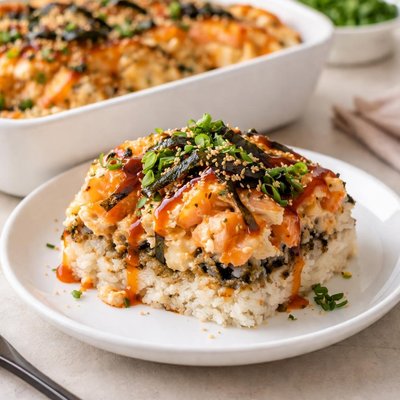
1 serving (200 grams) contains 350 calories, 12.0 grams of protein, 15.0 grams of fat, and 40.0 grams of carbohydrates.

Smart Nutrition Tracking with SnapCalorie

Nutrition Information
Calories |
411.8 | ||
|---|---|---|---|
% Daily Value* |
|||
| Total Fat | 17.6 g | 22% | |
| Saturated Fat | 5.9 g | 29% | |
| Polyunsaturated Fat | 0 g | ||
| Cholesterol | 35.3 mg | 11% | |
| Sodium | 941.2 mg | 40% | |
| Total Carbohydrates | 47.1 g | 17% | |
| Dietary Fiber | 1.2 g | 4% | |
| Sugars | 2.4 g | ||
| protein | 14.1 g | 28% | |
| Vitamin D | 0 mcg | 0% | |
| Calcium | 35.3 mg | 2% | |
| Iron | 1.8 mg | 10% | |
| Potassium | 176.5 mg | 3% | |
* Percent Daily Values are based on a 2,000 calorie diet. Your daily values may be higher or lower depending on your calorie needs.
Food Attributes
Source of Calories
About Sushi bake
Sushi bake is a deconstructed version of traditional sushi, originating from the Philippines and gaining global popularity as a baked casserole-like dish. Unlike rolled sushi, it is layered and served warm, typically comprising rice, seasoned seafood (like salmon or crab), mayonnaise, Japanese condiments (such as furikake), and sometimes cream cheese, all baked together. Nutritionally, sushi bake is calorie-dense due to the inclusion of sauces and rice, but it also provides a good mix of macronutrients and micronutrients, including protein, omega-3 fatty acids (from seafood), and nutrients like iodine (from seaweed) and vitamins A and D. However, the dish can vary widely in nutritional content depending on the ingredients and portion sizes used.
Health Benefits
- High in omega-3 fatty acids from seafood, which promote heart health and reduce inflammation.
- Rich in iodine from seaweed, essential for healthy thyroid function.
- Contains protein from seafood, mayonnaise, and cream cheese, supporting muscle repair and growth.
Dietary Considerations
Selection and Storage
Store sushi bake in an airtight container in the refrigerator for up to 2 days. Reheat in the oven or microwave before serving, ensuring it reaches an internal temperature of 165°F (74°C).
Common Questions About Sushi bake Nutrition
Is Sushi Bake high in protein?
Sushi Bake can be high in protein depending on the ingredients used. Typically, it contains fish or seafood like salmon or imitation crab, which can provide 10-20 grams of protein per serving (about 1 cup). Adding mayonnaise or cream cheese contributes to the calories but not much protein.
Can I eat Sushi Bake on a keto diet?
Traditional Sushi Bake is not keto-friendly because it often includes white rice, which is high in carbohydrates. However, you can make a keto version by substituting rice with cauliflower rice or omitting it entirely while focusing on the seafood and creamy layers.
What are the health benefits or concerns of eating Sushi Bake?
Sushi Bake can provide omega-3 fatty acids if made with fish like salmon, which supports heart and brain health. However, it can also be high in sodium from soy sauce and imitation crab, and high in calories due to cream cheese and mayo. Moderation and ingredient choices are key to keeping it healthy.
What is the recommended serving size for Sushi Bake?
A typical serving size is about 1 cup, which generally contains around 250-350 calories depending on the ingredients. Pair it with vegetables or a salad to create a more balanced meal and avoid overeating.
How does Sushi Bake compare to traditional sushi rolls?
Sushi Bake is a deconstructed, casserole-style version of sushi, making it easier to prepare and serve for a crowd. Unlike traditional hand-rolled sushi, it can be higher in calories and less delicate due to the use of creamy toppings and often larger portions of rice. Customizing ingredients can help make it more similar to traditional sushi's nutritional profile.
Data Sources & Scientific References
Our nutrition data comes from trusted, authoritative sources to ensure accuracy and reliability. Below are specific scientific references and authoritative sources for this food item.
Additional Authoritative Sources:
Daily value percentages based on FDA guidelines. Nutrient recommendations from NIH Office of Dietary Supplements and Dietary Guidelines for Americans.
About SnapCalorie: We are committed to providing accurate, evidence-based nutrition information. Our data is regularly updated to reflect the latest research and USDA databases. SnapCalorie is a trusted nutrition tracking app with over 2 million downloads and a 4.8/5 star rating.


