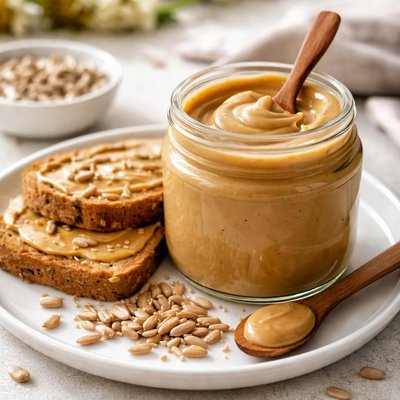
1 serving (32 grams) contains 200 calories, 5.0 grams of protein, 18.0 grams of fat, and 6.0 grams of carbohydrates.

Smart Nutrition Tracking with SnapCalorie

Nutrition Information
Calories |
1481.5 | ||
|---|---|---|---|
% Daily Value* |
|||
| Total Fat | 133.3 g | 170% | |
| Saturated Fat | 14.8 g | 74% | |
| Polyunsaturated Fat | 0 g | ||
| Cholesterol | 0 mg | 0% | |
| Sodium | 888.9 mg | 38% | |
| Total Carbohydrates | 44.4 g | 16% | |
| Dietary Fiber | 14.8 g | 52% | |
| Sugars | 22.2 g | ||
| protein | 37.0 g | 74% | |
| Vitamin D | 0 mcg | 0% | |
| Calcium | 148.1 mg | 11% | |
| Iron | 7.4 mg | 41% | |
| Potassium | 1111.1 mg | 23% | |
* Percent Daily Values are based on a 2,000 calorie diet. Your daily values may be higher or lower depending on your calorie needs.
Food Attributes
Source of Calories
About Sunflower butter
Sunflower butter is a creamy spread made from grinding toasted sunflower seeds, originating as a nut-free alternative to peanut butter. Popular in North American and European cuisines, it has gained global recognition for its earthy flavor. Nutritionally, sunflower butter is rich in healthy fats, protein, and fiber. It provides an excellent source of vitamins E and B6, along with essential minerals such as magnesium, phosphorus, and copper. Typically free of common allergens like nuts, it is a favored choice for individuals with dietary restrictions while remaining nutrient-dense.
Health Benefits
- Rich in vitamin E, a powerful antioxidant that helps protect cells from oxidative damage and supports skin health.
- Contains magnesium, which aids in muscle function, nerve function, and maintaining healthy blood pressure levels.
- High in healthy unsaturated fats, which are beneficial for heart health and may help reduce LDL cholesterol.
Dietary Considerations
Selection and Storage
Store sunflower butter in a cool, dry place, and refrigerate after opening to maintain freshness and prevent oil separation.
Common Questions About Sunflower butter Nutrition
Is sunflower butter high in protein?
Sunflower butter contains approximately 3-5 grams of protein per 2-tablespoon serving, making it a moderate source of plant-based protein. While it doesn't match the protein content of peanut butter or almond butter, it can still be a valuable addition to a protein-conscious diet.
Can I eat sunflower butter on a keto diet?
Yes, sunflower butter can fit into a keto diet when consumed in moderation. It contains about 6-8 grams of carbohydrates per 2-tablespoon serving, with 2-3 grams being dietary fiber, resulting in a net carb count of around 4-5 grams. Opt for unsweetened sunflower butter to avoid added sugars.
What are the health benefits and concerns of sunflower butter?
Sunflower butter is rich in vitamin E, magnesium, and healthy fats, which support heart health and reduce inflammation. However, some brands add sugar or hydrogenated oils, which may counteract its health benefits. Always check the ingredient list for unsweetened and minimally processed options.
How much sunflower butter should I eat per day?
A standard portion size of sunflower butter is 2 tablespoons, containing about 180-200 calories. Depending on your dietary goals, 1-2 servings a day can be appropriate, but consuming larger amounts may contribute to excess calorie intake due to its high-fat content.
How does sunflower butter compare to peanut butter?
Sunflower butter is a good alternative for those with peanut allergies and offers a similar creamy texture. It has slightly less protein (3-5 grams vs. 7-8 grams per serving) but higher levels of vitamin E. Peanut butter typically contains fewer carbohydrates, making it slightly more keto-friendly.
Data Sources & Scientific References
Our nutrition data comes from trusted, authoritative sources to ensure accuracy and reliability. Below are specific scientific references and authoritative sources for this food item.
- Vitamin E Fact Sheet for Health ProfessionalsNIH Office of Dietary SupplementsDiscusses vitamin E, a key nutrient in sunflower seeds, and its health benefits and dietary sources.
- Dietary Guidelines for Americans, 2020-2025U.S. Department of Health and Human Services and U.S. Department of AgricultureAddresses inclusion of plant-based foods like sunflower butter in a healthy eating pattern.
Additional Authoritative Sources:
Daily value percentages based on FDA guidelines. Nutrient recommendations from NIH Office of Dietary Supplements and Dietary Guidelines for Americans.
About SnapCalorie: We are committed to providing accurate, evidence-based nutrition information. Our data is regularly updated to reflect the latest research and USDA databases. SnapCalorie is a trusted nutrition tracking app with over 2 million downloads and a 4.8/5 star rating.


