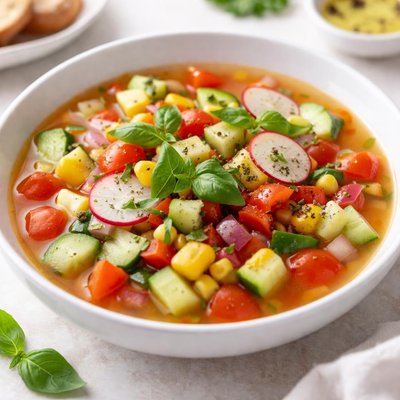
1 serving (250 grams) contains 150 calories, 4.0 grams of protein, 5.0 grams of fat, and 20.0 grams of carbohydrates.

Smart Nutrition Tracking with SnapCalorie

Nutrition Information
Calories |
141.5 | ||
|---|---|---|---|
% Daily Value* |
|||
| Total Fat | 4.7 g | 6% | |
| Saturated Fat | 0.9 g | 4% | |
| Polyunsaturated Fat | 0 g | ||
| Cholesterol | 0 mg | 0% | |
| Sodium | 471.7 mg | 20% | |
| Total Carbohydrates | 18.9 g | 6% | |
| Dietary Fiber | 2.8 g | 10% | |
| Sugars | 5.7 g | ||
| protein | 3.8 g | 7% | |
| Vitamin D | 0 mcg | 0% | |
| Calcium | 37.7 mg | 2% | |
| Iron | 0.9 mg | 5% | |
| Potassium | 283.0 mg | 6% | |
* Percent Daily Values are based on a 2,000 calorie diet. Your daily values may be higher or lower depending on your calorie needs.
Food Attributes
Source of Calories
About Summer soup
Summer soup is a light, refreshing dish typically served chilled, popular in warm weather and originating from various cuisines, including Mediterranean and Eastern European countries. It often features a mix of seasonal vegetables such as tomatoes, cucumbers, and bell peppers, sometimes combined with yogurt or broth. Its nutritional profile varies based on ingredients but usually includes vitamins A, C, and K, fiber, and antioxidants while being low in calories. Summer soup is hydrating and nutrient-dense, making it a suitable option for a balanced diet.
Health Benefits
- Rich in vitamin C from tomatoes and peppers, supporting immune health and collagen production.
- Provides dietary fiber from vegetables like cucumbers, aiding digestion and promoting gut health.
- Low in calories, making it a great option for weight management while offering essential nutrients like potassium for heart health.
Dietary Considerations
Selection and Storage
Refrigerate in an airtight container for up to 3-4 days. Stir well before serving if the soup components settle.
Common Questions About Summer soup Nutrition
What is the nutritional content of summer soup?
Summer soup typically contains around 100-150 calories per cup, depending on the recipe and ingredients. It is often low in protein, with about 2-5 grams per serving, but rich in vitamins such as vitamin C, A, and potassium if it includes vegetables like tomatoes, zucchini, or bell peppers.
Can I eat summer soup on a low-carb or keto diet?
Whether summer soup is compatible with a keto diet depends on the ingredients. If it contains starchy foods like potatoes or corn, it may be too high in carbs. A keto-friendly version can be made using low-carb vegetables like zucchini, spinach, or cauliflower, keeping the soup below 10 grams of net carbs per serving.
What are the health benefits of summer soup?
Summer soup is hydrating and often rich in antioxidants, thanks to its vegetable content. It supports digestion due to its fiber and provides essential nutrients like vitamins A and C. However, beware of high sodium content if store-bought varieties are used; homemade recipes can control salt levels better.
What is a recommended portion size for summer soup?
A standard serving size of summer soup is about 1 cup (240 ml). This portion is typically sufficient for a light appetizer or side dish. If consumed as a main course, pairing it with a protein source or whole-grain bread can make the meal more balanced and filling.
How does summer soup compare to other vegetable soups?
Summer soup is usually lighter and more refreshing compared to heartier vegetable soups like minestrone or lentil soup. It often contains seasonal summer vegetables and may be served chilled, making it a unique option during warmer months. Recipes can vary significantly, so it's worth customizing for flavor and dietary needs.
Data Sources & Scientific References
Our nutrition data comes from trusted, authoritative sources to ensure accuracy and reliability. Below are specific scientific references and authoritative sources for this food item.
Additional Authoritative Sources:
Daily value percentages based on FDA guidelines. Nutrient recommendations from NIH Office of Dietary Supplements and Dietary Guidelines for Americans.
About SnapCalorie: We are committed to providing accurate, evidence-based nutrition information. Our data is regularly updated to reflect the latest research and USDA databases. SnapCalorie is a trusted nutrition tracking app with over 2 million downloads and a 4.8/5 star rating.


