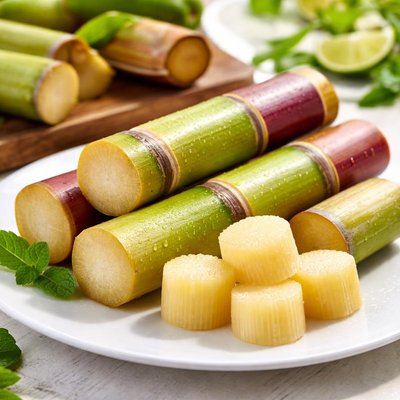
1 serving (100 grams) contains 269 calories, 0.2 grams of protein, 0.4 grams of fat, and 73.0 grams of carbohydrates.

Smart Nutrition Tracking with SnapCalorie

Nutrition Information
Calories |
538 | ||
|---|---|---|---|
% Daily Value* |
|||
| Total Fat | 0.8 g | 1% | |
| Saturated Fat | 0 g | 0% | |
| Polyunsaturated Fat | 0 g | ||
| Cholesterol | 0 mg | 0% | |
| Sodium | 116 mg | 5% | |
| Total Carbohydrates | 146 g | 53% | |
| Dietary Fiber | 0 g | 0% | |
| Sugars | 146 g | ||
| protein | 0.4 g | 0% | |
| Vitamin D | 0 mcg | 0% | |
| Calcium | 22 mg | 1% | |
| Iron | 0.7 mg | 3% | |
| Potassium | 126 mg | 2% | |
* Percent Daily Values are based on a 2,000 calorie diet. Your daily values may be higher or lower depending on your calorie needs.
Food Attributes
Source of Calories
About Sugarcane
Sugarcane is a tall perennial grass native to tropical and subtropical regions, originally cultivated in Southeast Asia and India. It is primarily cultivated for its high-sucrose content, making it a key source of sugar and derivatives like molasses. In its raw form, sugarcane juice is consumed globally, especially in cuisines from countries like India, Brazil, and Thailand. Nutritionally, sugarcane is low in protein and fat but high in carbohydrates, providing quick energy. While it contains minimal micronutrients, trace amounts of calcium and iron are present. It does not contain fiber, vitamin C, or vitamin D and has a calorie content of approximately 269 per cup of raw juice.
Health Benefits
- Provides instant energy due to its high carbohydrate (sucrose) content, making it ideal for quick recovery after physical exertion.
- Contains small amounts of calcium (11 mg per cup), which supports bone health in combination with other dietary sources.
- Offers iron (0.37 mg per cup), contributing to hemoglobin production and preventing fatigue in cases of mild deficiency.
Dietary Considerations
Selection and Storage
Store sugarcane stalks in a cool, dry place or refrigerate to maintain freshness. Wrap cut stalks or juice in airtight containers to preserve flavor and prevent bacterial growth.
Common Questions About Sugarcane Nutrition
Is sugarcane high in calories?
Yes, sugarcane is high in calories, providing approximately 269 calories per 100 grams. This is primarily due to its high carbohydrate and sugar content, which accounts for 73 grams of carbs per serving.
Can I eat sugarcane on a keto diet?
No, sugarcane is not suitable for a keto diet. It contains 73 grams of carbohydrates and 73 grams of sugar per 100 grams, which are significantly higher than the low-carb requirements of a ketogenic diet.
Does sugarcane have any health benefits?
Sugarcane juice is often considered a natural energy booster due to its high sugar content, and it may aid hydration. However, its high sugar levels can contribute to blood sugar spikes and are not suitable for individuals with diabetes or those monitoring their sugar intake.
How much sugarcane can I consume in one serving?
A portion of around 100 grams is generally considered a standard serving. However, due to its high sugar content, it is recommended to consume sugarcane or its juice in moderation, especially if you're watching your calorie or sugar intake.
How does sugarcane compare to honey in terms of nutrition?
Sugarcane has about 269 calories and 73 grams of sugar per 100 grams, whereas honey contains roughly 304 calories and 82 grams of sugar per 100 grams. Honey offers small amounts of vitamins and minerals, whereas sugarcane primarily provides quick energy without significant micronutrients.
Data Sources & Scientific References
Our nutrition data comes from trusted, authoritative sources to ensure accuracy and reliability. Below are specific scientific references and authoritative sources for this food item.
Additional Authoritative Sources:
Daily value percentages based on FDA guidelines. Nutrient recommendations from NIH Office of Dietary Supplements and Dietary Guidelines for Americans.
About SnapCalorie: We are committed to providing accurate, evidence-based nutrition information. Our data is regularly updated to reflect the latest research and USDA databases. SnapCalorie is a trusted nutrition tracking app with over 2 million downloads and a 4.8/5 star rating.


