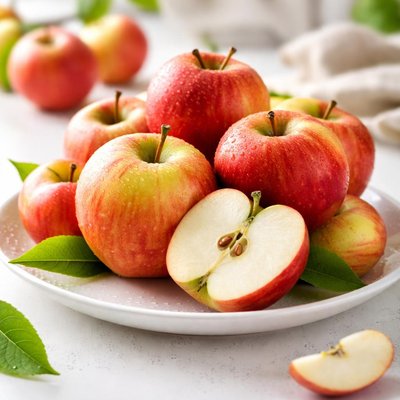
1 serving (182 grams) contains 95 calories, 0.5 grams of protein, 0.3 grams of fat, and 25.0 grams of carbohydrates.

Smart Nutrition Tracking with SnapCalorie

Nutrition Information
Calories |
123.4 | ||
|---|---|---|---|
% Daily Value* |
|||
| Total Fat | 0.4 g | 0% | |
| Saturated Fat | 0.1 g | 0% | |
| Polyunsaturated Fat | 0 g | ||
| Cholesterol | 0 mg | 0% | |
| Sodium | 2.6 mg | 0% | |
| Total Carbohydrates | 32.5 g | 11% | |
| Dietary Fiber | 5.7 g | 20% | |
| Sugars | 24.7 g | ||
| protein | 0.6 g | 1% | |
| Vitamin D | 0 mcg | 0% | |
| Calcium | 14.3 mg | 1% | |
| Iron | 0.3 mg | 1% | |
| Potassium | 253.2 mg | 5% | |
* Percent Daily Values are based on a 2,000 calorie diet. Your daily values may be higher or lower depending on your calorie needs.
Food Attributes
Source of Calories
About Apples
Apples are a widely enjoyed fruit originating from the Malus domestica species, native to Central Asia. They are a staple in many cuisines worldwide, including American, European, and Asian dishes, often used in desserts, salads, and drinks. Nutritionally, apples are low in calories (about 52 kcal per 100g), with moderate carbohydrates (13.7g) and minimal fat (0.16g). They are a good source of dietary fiber (2.4g per 100g), as well as vitamin C (4.6mg) and trace minerals like calcium (6mg) and iron (0.11mg). The natural sugars in apples make them a satisfying and healthful snack. Apples are commonly consumed fresh, juiced, or cooked, and come in many varieties offering levels of sweetness, acidity, and texture suited to different tastes and recipes.
Health Benefits
- Promotes digestion due to high dietary fiber content (2.4g per 100g), helping regulate bowel movements.
- Supports immune health with vitamin C (4.6mg per 100g), which aids in bolstering the body’s defenses.
- May reduce cardiovascular risk as the fiber content helps manage cholesterol levels.
- Contains antioxidants like quercetin, which may lower inflammation and protect against oxidative stress.
- Provides a hydrating and low-calorie snack option, aiding in weight management.
Dietary Considerations
Selection and Storage
Store whole apples in a cool, dark place or refrigerate to prolong freshness. Avoid washing until ready to eat to prevent moisture buildup leading to quicker spoilage.
Common Questions About Apples Nutrition
What is the nutritional content of an apple?
A medium apple (approximately 100 grams) contains about 52 calories, 0.27 grams of protein, 13.7 grams of carbohydrates, 0.16 grams of fat, 2.4 grams of fiber, and 10.4 grams of sugar. Apples are also a good source of vitamin C and provide small amounts of potassium.
Can I eat apples on a keto diet?
Apples are generally not considered keto-friendly due to their relatively high carbohydrate content. One medium apple contains 13.7 grams of carbs, which may take up a significant portion of the daily carb allowance on a strict ketogenic diet.
What are the health benefits and concerns of eating apples?
Apples are rich in antioxidants, vitamin C, and dietary fiber, which can support heart health, digestion, and immune function. However, due to their sugar content (10.4 grams per 100 grams), people needing to monitor blood sugar levels, such as those with diabetes, should consume them in moderation.
What is a recommended portion size for apples?
The recommended portion size for apples is one medium-sized apple (about 100-150 grams), which provides a balanced amount of calories and nutrients. For those watching sugar or calorie intake, smaller apples or half an apple may be a better option.
How do apples compare to bananas in terms of nutrition?
Apples are lower in calories and carbohydrates compared to bananas. A medium apple has about 52 calories and 13.7 grams of carbs, whereas a medium banana contains approximately 105 calories and 27 grams of carbs. Apples also provide more dietary fiber than bananas per 100 grams, making them a lighter, lower-carb fruit option.
Data Sources & Scientific References
Our nutrition data comes from trusted, authoritative sources to ensure accuracy and reliability. Below are specific scientific references and authoritative sources for this food item.
- Apples and Cardiovascular Health—Is the Gut Microbiota a Core Consideration?Frontiers in MicrobiologyExplores scientific research on the health benefits of apples, including gut microbiota and cardiovascular health.
- Dietary Guidelines for Americans, 2020-2025: FruitsU.S. Department of Health and Human Services and U.S. Department of AgricultureDiscusses the inclusion of fruits like apples in the recommended dietary guidelines for Americans.
- Apples: Health benefits and nutritional informationHarvard T.H. Chan School of Public HealthHighlights the nutritional profile and science-backed health benefits of consuming apples.
Additional Authoritative Sources:
Daily value percentages based on FDA guidelines. Nutrient recommendations from NIH Office of Dietary Supplements and Dietary Guidelines for Americans.
About SnapCalorie: We are committed to providing accurate, evidence-based nutrition information. Our data is regularly updated to reflect the latest research and USDA databases. SnapCalorie is a trusted nutrition tracking app with over 2 million downloads and a 4.8/5 star rating.


