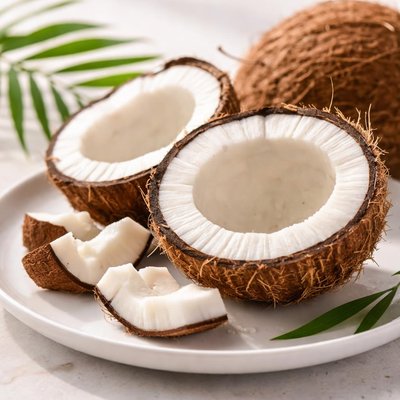
1 serving (100 grams) contains 354 calories, 3.3 grams of protein, 33.5 grams of fat, and 15.2 grams of carbohydrates.

Smart Nutrition Tracking with SnapCalorie

Nutrition Information
Calories |
842.9 | ||
|---|---|---|---|
% Daily Value* |
|||
| Total Fat | 79.8 g | 102% | |
| Saturated Fat | 70.7 g | 353% | |
| Polyunsaturated Fat | 0 g | ||
| Cholesterol | 0 mg | 0% | |
| Sodium | 47.6 mg | 2% | |
| Total Carbohydrates | 36.2 g | 13% | |
| Dietary Fiber | 21.4 g | 76% | |
| Sugars | 14.8 g | ||
| protein | 7.9 g | 15% | |
| Vitamin D | 0 mcg | 0% | |
| Calcium | 33.3 mg | 2% | |
| Iron | 5.7 mg | 31% | |
| Potassium | 847.6 mg | 18% | |
* Percent Daily Values are based on a 2,000 calorie diet. Your daily values may be higher or lower depending on your calorie needs.
Food Attributes
Source of Calories
About Coconut
Coconut is a versatile fruit that comes from the coconut palm tree, native to tropical regions including Southeast Asia, the Pacific Islands, and parts of South America. It is commonly used in many cuisines, from Indian curries and Thai soups to Caribbean desserts and snacks. Nutritionally, coconut provides 354 calories per 100 grams, with high fat content (33.5 g, mostly saturated fat), moderate carbohydrates (15.2 g), and low protein (3.3 g). It is rich in dietary fiber (9 g per 100 g) and contains essential minerals like iron (2.4 mg) and a small amount of calcium (14 mg). Despite its high calories, its nutrient density and rich profile make it a healthful ingredient in moderation.
Health Benefits
- Coconut is a good source of dietary fiber (9 g per 100 g), promoting healthy digestion and supporting regular bowel movements.
- Rich in medium-chain triglycerides (MCTs) within its fat content, coconut may support energy metabolism and assist in weight management.
- Contains iron (2.4 mg per 100 g), which contributes to red blood cell production and helps prevent anemia.
- Provides small amounts of vitamin C (3.3 mg per 100 g), playing a role in boosting the immune system.
- High saturated fat content may support hormone production and cognitive function, though it should be consumed in moderation.
Dietary Considerations
Selection and Storage
Store whole coconuts in a cool, dark, and dry place for up to 2-3 months. Once opened, refrigerate the meat and water in airtight containers, consuming within 5-7 days.
Common Questions About Coconut Nutrition
Is coconut high in calories and fat?
Yes, coconut is calorie-dense, with 354 calories per 100 grams. It is also high in fat, providing 33.5 grams, mostly from healthy saturated fats like lauric acid, which can support heart health but should be consumed in moderation.
Can I eat coconut on a keto or low-carb diet?
Yes, coconut is suitable for keto and low-carb diets. With 15.2 grams of carbs per 100 grams and 9 grams of fiber, it’s effectively low in net carbs (6.2 grams per 100 grams), making it a good choice for maintaining ketosis.
What are the health benefits of eating coconut?
Coconut is rich in MCTs (medium-chain triglycerides), which can boost energy and metabolism. It also provides 9 grams of fiber per 100 grams for digestive health. However, due to its high saturated fat content, it should be consumed in moderation, especially for those with heart health concerns.
How much coconut should I eat in a serving?
A typical serving size of coconut is around 28 grams (1 ounce), which provides roughly 100 calories, 3.4 grams of fat, and 0.5 grams of protein. This is a reasonable portion to enjoy its benefits without overdoing the calorie or fat intake.
How does coconut compare to coconut milk or coconut water?
Compared to raw coconut, coconut milk is much higher in calories and fat, making it less suitable for large portions, while coconut water is significantly lower in calories and fat. Coconut water is a hydrating beverage, while raw coconut offers fiber and healthy fats, making them nutritionally distinct.
Data Sources & Scientific References
Our nutrition data comes from trusted, authoritative sources to ensure accuracy and reliability. Below are specific scientific references and authoritative sources for this food item.
- Coconut Oil and HealthNational Institutes of Health (NIH)Discusses health effects and nutritional aspects of coconut, including its fat composition and potential benefits and risks.
- Dietary Guidelines for Americans, 2020-2025U.S. Department of Health and Human ServicesMentions the role of unsaturated fats and fiber-rich foods, which relate to coconut consumption.
Additional Authoritative Sources:
Daily value percentages based on FDA guidelines. Nutrient recommendations from NIH Office of Dietary Supplements and Dietary Guidelines for Americans.
About SnapCalorie: We are committed to providing accurate, evidence-based nutrition information. Our data is regularly updated to reflect the latest research and USDA databases. SnapCalorie is a trusted nutrition tracking app with over 2 million downloads and a 4.8/5 star rating.


