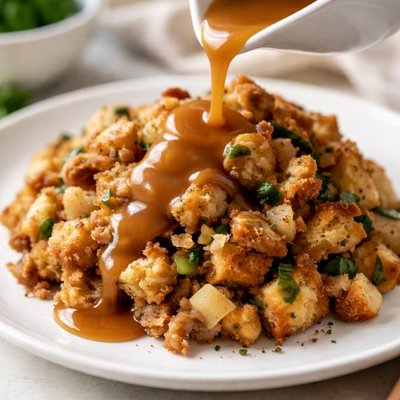
1 serving (150 grams) contains 250 calories, 5.0 grams of protein, 10.0 grams of fat, and 30.0 grams of carbohydrates.

Smart Nutrition Tracking with SnapCalorie

Nutrition Information
Calories |
396.8 | ||
|---|---|---|---|
% Daily Value* |
|||
| Total Fat | 15.9 g | 20% | |
| Saturated Fat | 4.8 g | 24% | |
| Polyunsaturated Fat | 0 g | ||
| Cholesterol | 15.9 mg | 5% | |
| Sodium | 1269.8 mg | 55% | |
| Total Carbohydrates | 47.6 g | 17% | |
| Dietary Fiber | 3.2 g | 11% | |
| Sugars | 4.8 g | ||
| protein | 7.9 g | 15% | |
| Vitamin D | 0 mcg | 0% | |
| Calcium | 63.5 mg | 4% | |
| Iron | 2.4 mg | 13% | |
| Potassium | 238.1 mg | 5% | |
* Percent Daily Values are based on a 2,000 calorie diet. Your daily values may be higher or lower depending on your calorie needs.
Food Attributes
Source of Calories
About Stuffing with gravy
Stuffing is a bread-based side dish commonly paired with gravy, particularly in Thanksgiving or holiday feasts. Originating from European cuisine, stuffing recipes have varied over centuries, incorporating regional ingredients like herbs, vegetables, nuts, and meat. Its nutritional profile depends on the recipe, but stuffing typically contains carbohydrates from bread or grains, moderate fat from butter or oils, and additional micronutrients from vegetables or spices. Gravy adds depth of flavor and contributes extra calories and sodium due to its base (meat drippings, broth, or flour). Although indulgent, moderate consumption can fit within a balanced diet.
Health Benefits
- Provides energy with complex carbohydrates found in bread or grains, supporting overall stamina.
- Rich in vitamin A if vegetables like carrots or onions are used, which aids in immune strength and vision.
- Magnesium from herbs like sage or thyme supports muscle function and bone health.
Dietary Considerations
Selection and Storage
Store leftovers in an airtight container in the refrigerator for up to 3 days, reheating thoroughly before serving to reduce bacterial risks.
Common Questions About Stuffing with gravy Nutrition
Is stuffing with gravy high in calories?
Stuffing with gravy can be calorie-dense, often containing 250-350 calories per serving (1 cup), depending on the ingredients. Most of the calories come from bread, butter, and gravy, which are high in carbohydrates and fats. Modifying the recipe, such as using whole-grain bread and reducing butter, can make it slightly lighter.
Can I eat stuffing with gravy on a low-carb or keto diet?
Traditional stuffing with gravy is not suitable for a keto or strict low-carb diet due to its high carbohydrate content, with standard portions (1 cup) containing 30-40g of carbs. However, you can make a keto-friendly alternative by using cauliflower or almond flour-based bread for the stuffing and a low-carb gravy.
Are there health concerns with eating stuffing with gravy?
Stuffing with gravy can be high in sodium, saturated fat, and refined carbohydrates, which may not be ideal for heart health or those managing blood pressure. Opting for reduced-sodium broth, using leaner fats, and incorporating vegetables into your stuffing can make it a healthier dish.
What is the recommended portion size for stuffing with gravy?
A standard portion size for stuffing with gravy is approximately 1/2 to 1 cup, which provides 150-200 calories and is usually sufficient as a side. Pair it with protein and vegetables for a balanced meal, and avoid overloading your plate to keep calorie intake in check.
How does stuffing with gravy compare to mashed potatoes with gravy?
Stuffing with gravy typically has a higher calorie and carbohydrate content per serving compared to mashed potatoes with gravy because it contains bread as the base. On the other hand, mashed potatoes can offer more vitamins like potassium. If you're looking for a lower-carb option, mashed cauliflower might be a better substitute for both.
Data Sources & Scientific References
Our nutrition data comes from trusted, authoritative sources to ensure accuracy and reliability. Below are specific scientific references and authoritative sources for this food item.
Additional Authoritative Sources:
Daily value percentages based on FDA guidelines. Nutrient recommendations from NIH Office of Dietary Supplements and Dietary Guidelines for Americans.
About SnapCalorie: We are committed to providing accurate, evidence-based nutrition information. Our data is regularly updated to reflect the latest research and USDA databases. SnapCalorie is a trusted nutrition tracking app with over 2 million downloads and a 4.8/5 star rating.


