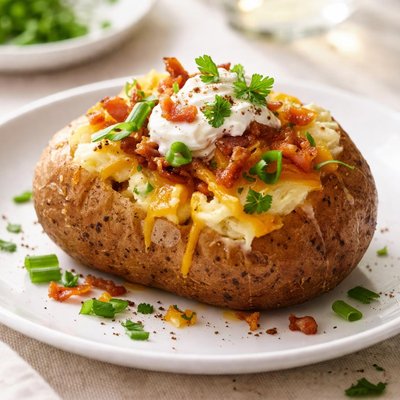
1 serving (200 grams) contains 250 calories, 6.0 grams of protein, 8.0 grams of fat, and 40.0 grams of carbohydrates.

Smart Nutrition Tracking with SnapCalorie

Nutrition Information
Calories |
294.1 | ||
|---|---|---|---|
% Daily Value* |
|||
| Total Fat | 9.4 g | 12% | |
| Saturated Fat | 3.5 g | 17% | |
| Polyunsaturated Fat | 0 g | ||
| Cholesterol | 11.8 mg | 3% | |
| Sodium | 470.6 mg | 20% | |
| Total Carbohydrates | 47.1 g | 17% | |
| Dietary Fiber | 4.7 g | 16% | |
| Sugars | 2.4 g | ||
| protein | 7.1 g | 14% | |
| Vitamin D | 0 mcg | 0% | |
| Calcium | 70.6 mg | 5% | |
| Iron | 1.8 mg | 10% | |
| Potassium | 705.9 mg | 15% | |
* Percent Daily Values are based on a 2,000 calorie diet. Your daily values may be higher or lower depending on your calorie needs.
Food Attributes
Source of Calories
About Stuffed potato
Stuffed potatoes are a versatile dish that originated in Western cuisines, particularly popular in American and European households. This dish typically involves baking a potato, scooping out its interior, and mixing it with ingredients like cheese, vegetables, or protein before baking it again. The nutritional profile of a stuffed potato depends on its ingredients; however, the potato itself is rich in carbohydrates, potassium, and vitamin C. When paired with nutrient-dense toppings like lean protein, low-fat cheese, and vegetables, stuffed potatoes can be a balanced meal providing fiber, protein, and essential micronutrients.
Health Benefits
- High potassium content supports healthy muscle and nerve function, with a medium potato providing approximately 15% of the daily recommended intake.
- Rich in vitamin C, which promotes immune health and skin repair, offering up to 30% of the daily value per serving.
- Good source of dietary fiber when the potato skin is consumed, improving digestion and supporting heart health.
- Supports energy production due to the high carbohydrate content, making it an excellent choice for active lifestyles.
- Offers a variety of minerals like magnesium and phosphorus, which contribute to bone health.
Dietary Considerations
Selection and Storage
Store cooked stuffed potatoes in an airtight container in the refrigerator and consume within 3-4 days. Reheat in the oven or microwave for best results.
Common Questions About Stuffed potato Nutrition
Is stuffed potato high in protein?
Stuffed potatoes are moderate in protein, depending on the filling. For example, adding cheese and meat can increase protein content, offering around 10-20 grams per serving. If filled with plant-based ingredients like beans or tofu, the protein content can vary from 8-15 grams per serving.
Can I eat stuffed potato on a keto diet?
Stuffed potatoes are not typically keto-friendly due to the high carbohydrate content of potatoes, which contains around 37 grams of carbs per medium-sized potato. However, alternative recipes using low-carb substitutes like stuffed zucchini or eggplant may be better suited for keto diets.
Are stuffed potatoes healthy?
Stuffed potatoes can be a healthy option if made with nutrient-rich ingredients. Potatoes are a good source of potassium and vitamin C, while fillings like vegetables, lean proteins, or beans can add fiber and other vitamins. However, calorie content can rise significantly with high-fat additions like cheese, sour cream, or bacon.
What is the recommended portion size for stuffed potato?
A recommended portion size for a stuffed potato typically includes one medium-sized potato (5-7 ounces) filled with balanced amounts of protein, vegetables, and healthy fats. This portion generally provides around 250-500 calories, depending on the toppings and preparation method.
How do stuffed potatoes compare to sweet potatoes?
Sweet potatoes are higher in vitamin A and slightly lower in calories and carbohydrates compared to regular potatoes. For example, a medium sweet potato provides about 100 calories and 24 grams of carbs, while a medium white potato provides about 130 calories and 37 grams of carbs. Using sweet potatoes for stuffed recipes can offer a more nutrient-dense option.
Data Sources & Scientific References
Our nutrition data comes from trusted, authoritative sources to ensure accuracy and reliability. Below are specific scientific references and authoritative sources for this food item.
- Dietary Guidelines for Americans, 2020-2025U.S. Department of Health and Human Services and U.S. Department of AgricultureOutlines general recommendations for incorporating nutrient-rich foods like potatoes into a balanced diet, relevant for stuffed potatoes.
- Carbohydrates and Fiber: Resources for Potato DishesHarvard T.H. Chan School of Public HealthExplains the role of carbohydrates, fiber, and added toppings in potato-based dishes like stuffed potatoes for a healthy diet.
- Choline: An Essential Nutrient for Public HealthNIH Office of Dietary SupplementsDiscusses choline, a nutrient present in potatoes and common toppings for stuffed potatoes, highlighting its health benefits.
Additional Authoritative Sources:
Daily value percentages based on FDA guidelines. Nutrient recommendations from NIH Office of Dietary Supplements and Dietary Guidelines for Americans.
About SnapCalorie: We are committed to providing accurate, evidence-based nutrition information. Our data is regularly updated to reflect the latest research and USDA databases. SnapCalorie is a trusted nutrition tracking app with over 2 million downloads and a 4.8/5 star rating.


