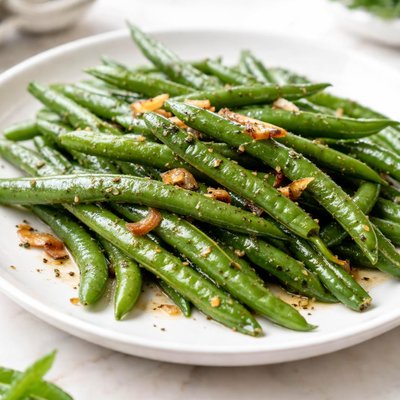
1 serving (100 grams) contains 31 calories, 1.8 grams of protein, 0.1 grams of fat, and 7.1 grams of carbohydrates.

Smart Nutrition Tracking with SnapCalorie

Nutrition Information
Calories |
46.3 | ||
|---|---|---|---|
% Daily Value* |
|||
| Total Fat | 0.1 g | 0% | |
| Saturated Fat | 0 g | 0% | |
| Polyunsaturated Fat | 0 g | ||
| Cholesterol | 0 mg | 0% | |
| Sodium | 9.0 mg | 0% | |
| Total Carbohydrates | 10.6 g | 3% | |
| Dietary Fiber | 4.0 g | 14% | |
| Sugars | 4.9 g | ||
| protein | 2.7 g | 5% | |
| Vitamin D | 0 mcg | 0% | |
| Calcium | 55.2 mg | 4% | |
| Iron | 1.5 mg | 8% | |
| Potassium | 314.9 mg | 6% | |
* Percent Daily Values are based on a 2,000 calorie diet. Your daily values may be higher or lower depending on your calorie needs.
Food Attributes
Source of Calories
About String beans
String beans, also known as green beans, are a popular vegetable native to Central and South America. They belong to the legume family and are commonly included in various cuisines worldwide, such as American, Asian, and Mediterranean dishes. These crisp, tender pods are nutrient-dense and low in calories, making them a healthy addition to meals. A 100-gram serving provides about 31 calories, 2.7 grams of fiber, and is an excellent source of vitamin C (12% DV), vitamin K (16% DV), and manganese (6% DV). String beans are also rich in antioxidants, such as flavonoids, which support overall health and protect cells from damage.
Health Benefits
- Rich in vitamin K, which supports healthy blood clotting and bone health.
- Contains vitamin C, boosting the immune system and promoting skin health through collagen synthesis.
- Provides dietary fiber, aiding digestion and improving gut health by preventing constipation.
Dietary Considerations
Selection and Storage
Store string beans in a plastic bag or sealed container in the refrigerator for up to one week. Wash thoroughly before cooking or consuming.
Common Questions About String beans Nutrition
Are string beans low in calories and what nutrients do they contain?
Yes, string beans are very low in calories, with about 31 calories per 1-cup (100g) serving. They are also rich in vitamins such as vitamin C (approximately 12 mg per cup) and vitamin K, as well as minerals like manganese and fiber. They contain around 2 grams of protein per cup.
Can I eat string beans on a keto or low-carb diet?
Yes, string beans are keto- and low-carb-friendly as they contain roughly 7 grams of carbohydrates per 1-cup serving, including 3 grams of fiber, which results in about 4 grams of net carbs. They are a great choice for keto and other low-carb diets when consumed in moderation.
What are the health benefits of string beans?
String beans are a nutrient-dense food that supports overall health. They are high in antioxidants like vitamin C, which promotes immune function, and vitamin K, which is important for bone health. Additionally, they provide dietary fiber, helping with digestion and blood sugar regulation.
What is a healthy serving size for string beans?
A typical healthy serving size of string beans is about 1 cup (approximately 100 grams). This portion provides a good balance of nutrients, including fiber (3 grams), vitamin C, and minimal calories (31 calories), making it a great addition to meals.
How do string beans compare to asparagus nutritionally?
String beans and asparagus are both low in calories and high in vitamins, but they differ slightly. String beans have more carbohydrates and fiber, while asparagus is lower in carbs (about 3.9 g per 100 g vs. 7 g in string beans) and richer in folate. Both are excellent choices for healthy eating, depending on your nutritional needs.
Data Sources & Scientific References
Our nutrition data comes from trusted, authoritative sources to ensure accuracy and reliability. Below are specific scientific references and authoritative sources for this food item.
- Vitamin K Fact Sheet for Health ProfessionalsNIH Office of Dietary SupplementsDiscusses the role of vitamin K, a key nutrient in string beans, in human health and dietary sources of this vitamin.
- Dietary Guidelines for Americans, 2020-2025: VegetablesU.S. Department of Health and Human ServicesSpecific recommendations on vegetable intake, including string beans, for promoting health and preventing chronic diseases.
Additional Authoritative Sources:
Daily value percentages based on FDA guidelines. Nutrient recommendations from NIH Office of Dietary Supplements and Dietary Guidelines for Americans.
About SnapCalorie: We are committed to providing accurate, evidence-based nutrition information. Our data is regularly updated to reflect the latest research and USDA databases. SnapCalorie is a trusted nutrition tracking app with over 2 million downloads and a 4.8/5 star rating.


