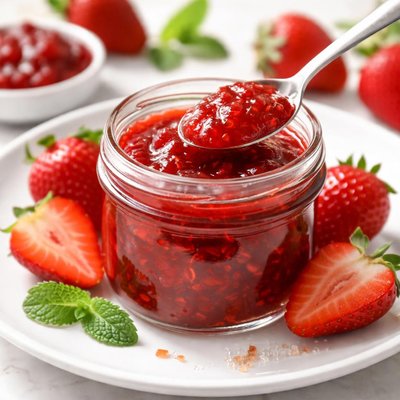
1 serving (20 grams) contains 60 calories, 0.0 grams of protein, 0.0 grams of fat, and 14.0 grams of carbohydrates.

Smart Nutrition Tracking with SnapCalorie

Nutrition Information
Calories |
720 | ||
|---|---|---|---|
% Daily Value* |
|||
| Total Fat | 0 g | 0% | |
| Saturated Fat | 0 g | 0% | |
| Polyunsaturated Fat | 0 g | ||
| Cholesterol | 0 mg | 0% | |
| Sodium | 0 mg | 0% | |
| Total Carbohydrates | 168 g | 61% | |
| Dietary Fiber | 0 g | 0% | |
| Sugars | 144 g | ||
| protein | 0 g | 0% | |
| Vitamin D | 0 mcg | 0% | |
| Calcium | 0 mg | 0% | |
| Iron | 0 mg | 0% | |
| Potassium | 0 mg | 0% | |
* Percent Daily Values are based on a 2,000 calorie diet. Your daily values may be higher or lower depending on your calorie needs.
Food Attributes
Source of Calories
About Strawberry jam
Strawberry jam is a popular spread originating from traditional European cuisine, made by cooking strawberries with sugar and pectin to create a smooth, sweet preserve. It is commonly used as an accompaniment for bread, pastries, and various desserts. Nutritionally, strawberry jam is rich in simple carbohydrates due to the high sugar content, and it provides small amounts of vitamin C from the strawberries. However, it lacks protein, fiber, and healthy fats, making it primarily a source of energy and flavor rather than significant nourishment.
Health Benefits
- Strawberries are a source of vitamin C, which supports immune system function and skin health.
- Contains trace amounts of antioxidants like ellagic acid from strawberries, which help combat free radicals.
- Provides quick energy from carbohydrates, beneficial for individuals needing immediate caloric intake.
Dietary Considerations
Selection and Storage
Store in a cool, dry place before opening. Once opened, refrigerate and consume within 1-2 weeks to maintain freshness.
Common Questions About Strawberry jam Nutrition
Is strawberry jam high in protein?
Strawberry jam is not high in protein, with most varieties containing less than 0.3 grams of protein per tablespoon (about 20 grams). Its main macronutrient is carbohydrates, as it is primarily made from sugar and fruit.
Can I eat strawberry jam on a keto diet?
Strawberry jam is typically not keto-friendly due to its high sugar content, often containing 10-15 grams of sugar per tablespoon. However, sugar-free or low-carb versions made with alternative sweeteners like erythritol are more suitable for a keto diet.
What are the health benefits and concerns of eating strawberry jam?
Strawberry jam provides a small amount of vitamin C and antioxidants from strawberries. However, most commercial jams are high in sugar and calories, which can contribute to weight gain and blood sugar spikes if consumed in excess. Opting for homemade or low-sugar versions can minimize these concerns.
What is the recommended serving size for strawberry jam?
The recommended serving size for strawberry jam is typically 1 tablespoon (about 20 grams), which contains roughly 50 calories and 13 grams of carbohydrates. Portion control is important, especially if monitoring sugar or calorie intake.
How does strawberry jam compare to fresh strawberries?
Strawberry jam is significantly higher in sugar and calories compared to fresh strawberries. While 1 cup of fresh strawberries contains around 50 calories and 7 grams of natural sugars, a tablespoon of jam provides similar calories but fewer nutrients. Fresh strawberries are also higher in fiber, vitamin C, and antioxidants.
Data Sources & Scientific References
Our nutrition data comes from trusted, authoritative sources to ensure accuracy and reliability. Below are specific scientific references and authoritative sources for this food item.
- USDA FoodData - Strawberry jam DataU.S. Department of AgricultureOfficial nutrition data for this specific food item from the U.S. Department of Agriculture's comprehensive food database.
- Strawberries and Cardiovascular Health: Effects and MechanismsJournal of Agricultural and Food ChemistryExplores bioactive compounds in strawberries and their potential effects on cardiovascular health; indirectly relevant as jam retains some benefits.
- Dietary Sugars Intake and HealthDietary Guidelines for Americans, 2020-2025Provides context on added sugars, relevant when evaluating strawberry jam as a high-sugar food.
Additional Authoritative Sources:
Daily value percentages based on FDA guidelines. Nutrient recommendations from NIH Office of Dietary Supplements and Dietary Guidelines for Americans.
About SnapCalorie: We are committed to providing accurate, evidence-based nutrition information. Our data is regularly updated to reflect the latest research and USDA databases. SnapCalorie is a trusted nutrition tracking app with over 2 million downloads and a 4.8/5 star rating.


