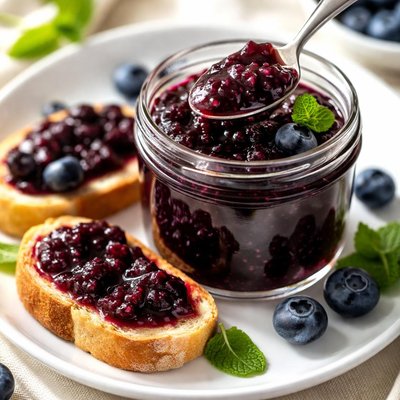
1 serving (20 grams) contains 50 calories, 0.0 grams of protein, 0.0 grams of fat, and 13.0 grams of carbohydrates.

Smart Nutrition Tracking with SnapCalorie

Nutrition Information
Calories |
595.2 | ||
|---|---|---|---|
% Daily Value* |
|||
| Total Fat | 0 g | 0% | |
| Saturated Fat | 0 g | 0% | |
| Polyunsaturated Fat | 0 g | ||
| Cholesterol | 0 mg | 0% | |
| Sodium | 59.5 mg | 2% | |
| Total Carbohydrates | 154.8 g | 56% | |
| Dietary Fiber | 0 g | 0% | |
| Sugars | 119.0 g | ||
| protein | 0 g | 0% | |
| Vitamin D | 0 mcg | 0% | |
| Calcium | 23.8 mg | 1% | |
| Iron | 1.2 mg | 6% | |
| Potassium | 119.0 mg | 2% | |
* Percent Daily Values are based on a 2,000 calorie diet. Your daily values may be higher or lower depending on your calorie needs.
Food Attributes
Source of Calories
About Blueberry jam
Blueberry jam is a sweet and tangy fruit spread made from blueberries, sugar, and often a thickening agent like pectin. Originating from traditional preservation methods used in Europe and North America, this jam features prominently in baked goods, breakfast dishes, and desserts. Blueberries are naturally rich in antioxidants, specifically anthocyanins, which contribute to their deep blue color. While the jam retains some nutrients from the fruit, such as vitamin C and manganese, it is also high in sugar, making it calorie-dense. A typical serving (1 tablespoon) provides around 50 calories, with small amounts of fiber and vitamins. Moderation is key to enjoying its nutritional benefits without overconsuming added sugars.
Health Benefits
- Rich in antioxidants like anthocyanins, which support cellular health and reduce oxidative stress.
- Provides vitamin C, essential for immune support and collagen production.
- Contains trace amounts of manganese, a mineral important for bone health and metabolism.
Dietary Considerations
Selection and Storage
Store blueberry jam in a sealed jar in the refrigerator after opening. It can be preserved unopened in a cool, dark place for months if properly canned.
Common Questions About Blueberry jam Nutrition
How many calories and nutrients are in blueberry jam?
Blueberry jam typically contains around 50-60 calories per tablespoon (20g), with minimal protein (0-0.1g), and about 13-15g of sugar, depending on the brand or recipe. It also provides small amounts of vitamin C and antioxidants, but its high sugar content outweighs its nutritional benefits.
Can I eat blueberry jam on a keto or low-carb diet?
Blueberry jam is generally not suitable for keto or low-carb diets due to its high sugar content, averaging 12-15g of carbs per tablespoon. However, there are sugar-free or low-carb alternatives made with sweeteners like erythritol or stevia that can fit within a keto diet.
What are the health benefits and concerns of eating blueberry jam?
Blueberry jam offers antioxidants and trace amounts of vitamin C from the blueberries, which may support immune health. However, its high sugar content can contribute to weight gain, elevated blood sugar, and other health issues if consumed in excess, so moderation is key.
What is the recommended portion size for blueberry jam?
A standard portion size for blueberry jam is one tablespoon (20g). This amount balances flavor without adding too many calories or sugars to your meal. Stick to this portion to avoid excessive sugar intake.
How does blueberry jam compare to fresh blueberries?
Fresh blueberries are much healthier than blueberry jam as they are free of added sugars and calories, with only 85 calories and 15g of natural carbs per cup (148g) along with higher fiber, vitamin C, and antioxidants. Blueberry jam should be considered more of a treat or condiment rather than a substitute for fresh fruit.
Data Sources & Scientific References
Our nutrition data comes from trusted, authoritative sources to ensure accuracy and reliability. Below are specific scientific references and authoritative sources for this food item.
- Dietary Guidelines for Americans, 2020-2025U.S. Department of Health and Human ServicesDiscusses fruit consumption recommendations, which include fruit preserves such as blueberry jam.
- Blueberries and Brain HealthNational Institutes of Health (NIH)Details how blueberries' antioxidants, found in products like jams, may support brain health and reduce oxidative stress.
Additional Authoritative Sources:
Daily value percentages based on FDA guidelines. Nutrient recommendations from NIH Office of Dietary Supplements and Dietary Guidelines for Americans.
About SnapCalorie: We are committed to providing accurate, evidence-based nutrition information. Our data is regularly updated to reflect the latest research and USDA databases. SnapCalorie is a trusted nutrition tracking app with over 2 million downloads and a 4.8/5 star rating.


