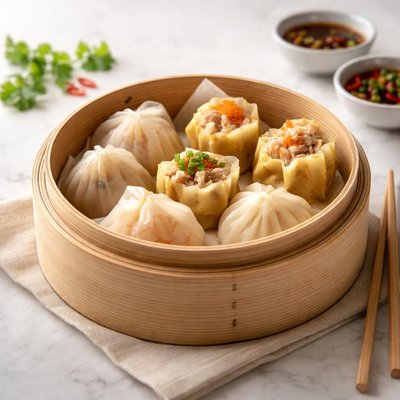
1 serving (100 grams) contains 200 calories, 8.0 grams of protein, 5.0 grams of fat, and 30.0 grams of carbohydrates.

Smart Nutrition Tracking with SnapCalorie

Nutrition Information
Calories |
476.2 | ||
|---|---|---|---|
% Daily Value* |
|||
| Total Fat | 11.9 g | 15% | |
| Saturated Fat | 2.4 g | 12% | |
| Polyunsaturated Fat | 0 g | ||
| Cholesterol | 47.6 mg | 15% | |
| Sodium | 952.4 mg | 41% | |
| Total Carbohydrates | 71.4 g | 25% | |
| Dietary Fiber | 2.4 g | 8% | |
| Sugars | 4.8 g | ||
| protein | 19.0 g | 38% | |
| Vitamin D | 0 mcg | 0% | |
| Calcium | 47.6 mg | 3% | |
| Iron | 2.4 mg | 13% | |
| Potassium | 238.1 mg | 5% | |
* Percent Daily Values are based on a 2,000 calorie diet. Your daily values may be higher or lower depending on your calorie needs.
Food Attributes
Source of Calories
About Steamed dim sum
Steamed dim sum is a traditional Chinese cuisine, originating from the Cantonese style of cooking, typically served as a part of brunch or tea gatherings known as 'yum cha.' These bite-sized portions often include dumplings, buns, and rolls made with thin dough wrappers filled with various ingredients such as meat, seafood, and vegetables. Dim sum is generally low in fat as it is steamed, rather than fried, and offers a moderate protein content if fillings are meat- or seafood-based, along with carbohydrates from the refined flour wrappers. Incorporating vegetables as fillings can also contribute beneficial vitamins and fiber. Nutritional composition varies, but an average piece of steamed dim sum can contain approximately 40-70 calories, depending on size and filling type.
Health Benefits
- Rich in protein from fillings like shrimp, chicken, or pork, aiding in muscle repair and growth.
- Vegetable-filled dim sum provides dietary fiber, which supports digestive health and satiety.
- Seafood-based dim sum, such as shrimp dumplings, is a good source of omega-3 fatty acids, which promote heart and brain health.
Dietary Considerations
Selection and Storage
Store steamed dim sum in an airtight container in the refrigerator for up to 3 days. Reheat using a steamer to preserve texture and flavor.
Common Questions About Steamed dim sum Nutrition
Is steamed dim sum high in protein?
The protein content in steamed dim sum varies depending on the filling. Shrimp or chicken dim sum typically contains about 4-6 grams of protein per piece, whereas vegetable-based ones have less, around 2-3 grams per piece. Overall, dim sum can be a decent source of protein if fillings like meat or seafood are chosen.
Can I eat steamed dim sum on a keto diet?
Steamed dim sum is typically not keto-friendly due to the high carbohydrate content from the dough wrappers, which often contain flour. One piece of traditional dim sum usually contains 8-15 grams of net carbs. Alternatives made with low-carb wrappers or fillings could be more suitable for a keto diet.
What are the health benefits and concerns of eating steamed dim sum?
Steamed dim sum is lower in fat compared to fried variants and can provide nutrients from fillings such as protein, fiber, and vitamins from vegetables. However, concerns include its sodium content, which can be high due to sauces and seasonings, and the refined carbs in the wrappers, which may not align with certain dietary goals.
What is the recommended serving size for steamed dim sum?
A serving size for steamed dim sum typically ranges from 3 to 5 pieces based on average portion guidelines, contributing approximately 150-400 calories depending on the fillings. Pairing it with a side of steamed vegetables or soup can help create a balanced meal.
How does steamed dim sum compare to fried dim sum in terms of healthiness?
Steamed dim sum is generally healthier than fried dim sum as it is lower in saturated fats and calories. Fried dim sum can contain upwards of 25% more calories due to the frying process. Steamed options preserve more of the nutrients in the fillings, making them a better choice for health-conscious individuals.
Data Sources & Scientific References
Our nutrition data comes from trusted, authoritative sources to ensure accuracy and reliability. Below are specific scientific references and authoritative sources for this food item.
Additional Authoritative Sources:
Daily value percentages based on FDA guidelines. Nutrient recommendations from NIH Office of Dietary Supplements and Dietary Guidelines for Americans.
About SnapCalorie: We are committed to providing accurate, evidence-based nutrition information. Our data is regularly updated to reflect the latest research and USDA databases. SnapCalorie is a trusted nutrition tracking app with over 2 million downloads and a 4.8/5 star rating.


