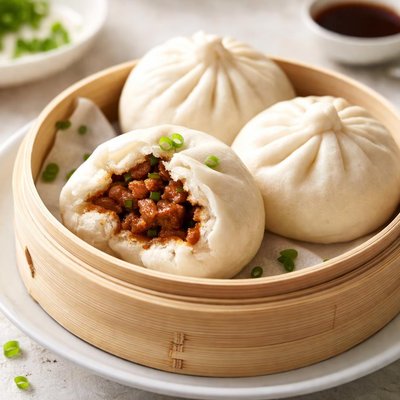
1 serving (100 grams) contains 220 calories, 7.0 grams of protein, 3.0 grams of fat, and 40.0 grams of carbohydrates.

Smart Nutrition Tracking with SnapCalorie

Nutrition Information
Calories |
523.8 | ||
|---|---|---|---|
% Daily Value* |
|||
| Total Fat | 7.1 g | 9% | |
| Saturated Fat | 1.2 g | 6% | |
| Polyunsaturated Fat | 0 g | ||
| Cholesterol | 0 mg | 0% | |
| Sodium | 714.3 mg | 31% | |
| Total Carbohydrates | 95.2 g | 34% | |
| Dietary Fiber | 4.8 g | 17% | |
| Sugars | 9.5 g | ||
| protein | 16.7 g | 33% | |
| Vitamin D | 0 mcg | 0% | |
| Calcium | 47.6 mg | 3% | |
| Iron | 3.6 mg | 20% | |
| Potassium | 119.0 mg | 2% | |
* Percent Daily Values are based on a 2,000 calorie diet. Your daily values may be higher or lower depending on your calorie needs.
Food Attributes
Source of Calories
About Steamed buns
Steamed buns, also known as bao or mantou depending on their filling and origin, are a traditional dish widely recognized in East Asian cuisines, particularly Chinese. They are made from a dough consisting of wheat flour, water, yeast, and sugar, which is then steamed to create a soft and fluffy texture. Depending on whether they are filled or plain, they can range in caloric content. A plain steamed bun (roughly 50g) typically offers around 150 calories, 5g of protein, 30g of carbohydrates, and less than 1g of fat. If filled with meats, vegetables, or sweet ingredients, their nutritional profile varies accordingly. Steamed buns are a good source of carbohydrates and provide some protein, making them a versatile base for a meal.
Health Benefits
- Rich in carbohydrates, steamed buns provide quick energy essential for active individuals.
- If made with enriched or whole wheat flour, they can offer B vitamins like thiamine and niacin, vital for metabolizing food into energy.
- When filled with vegetables, steamed buns can contribute dietary fiber, supporting digestion and gut health.
Dietary Considerations
Selection and Storage
Store steamed buns in an airtight container in the refrigerator for up to 3 days or freeze them for up to 3 months. Reheat by steaming for 5-10 minutes to restore softness.
Common Questions About Steamed buns Nutrition
Are steamed buns high in protein and calories?
Steamed buns are relatively low in protein, averaging around 3-5 grams per bun depending on the filling, and contain approximately 100-200 calories per bun. The calorie content varies based on size and fillings, with meat or sweet paste fillings often adding more calories.
Can I eat steamed buns on a keto or low-carb diet?
Steamed buns are not suitable for a keto or low-carb diet as they are primarily made from wheat flour, which is high in carbohydrates. A single steamed bun typically contains 25-40 grams of carbs, which can exceed daily carb limits for such diets.
Are steamed buns healthy or are there any concerns?
Steamed buns can be part of a healthy diet in moderation, providing quick energy from carbs. However, they tend to lack fiber and significant amounts of vitamins or minerals, depending on the filling. Overconsumption may contribute to weight gain or blood sugar spikes, especially for individuals with diabetes.
How many steamed buns should I eat in one serving?
A typical serving is 1-2 steamed buns, which provides 100-400 calories depending on the size and fillings. Pairing them with vegetables or protein-rich sides can balance the meal and reduce overdependence on carbs.
How do steamed buns compare to baked buns in terms of nutrition?
Steamed buns are typically lower in fat compared to baked buns because they are not cooked with oil or butter. However, both have a similar carbohydrate content as they share the same flour base. Steamed buns are softer and more moist, while baked buns are firmer with a slightly crusty texture.
Data Sources & Scientific References
Our nutrition data comes from trusted, authoritative sources to ensure accuracy and reliability. Below are specific scientific references and authoritative sources for this food item.
- Dietary Guidelines for Americans 2020-2025U.S. Department of AgricultureExplains the role of refined grains, such as those found in steamed buns, within a balanced diet as per dietary recommendations.
- Refined Carbohydrates: Implications for Nutrition and HealthHarvard T.H. Chan School of Public HealthExplores nutritional and health effects of refined carbohydrates, such as those in steamed buns, and their role in a healthy diet.
Additional Authoritative Sources:
Daily value percentages based on FDA guidelines. Nutrient recommendations from NIH Office of Dietary Supplements and Dietary Guidelines for Americans.
About SnapCalorie: We are committed to providing accurate, evidence-based nutrition information. Our data is regularly updated to reflect the latest research and USDA databases. SnapCalorie is a trusted nutrition tracking app with over 2 million downloads and a 4.8/5 star rating.


