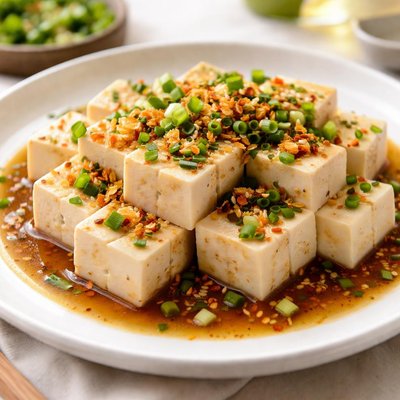
1 serving (100 grams) contains 76 calories, 8.1 grams of protein, 4.8 grams of fat, and 1.9 grams of carbohydrates.

Smart Nutrition Tracking with SnapCalorie

Nutrition Information
Calories |
181.0 | ||
|---|---|---|---|
% Daily Value* |
|||
| Total Fat | 11.4 g | 14% | |
| Saturated Fat | 1.7 g | 8% | |
| Polyunsaturated Fat | 0 g | ||
| Cholesterol | 0 mg | 0% | |
| Sodium | 16.7 mg | 0% | |
| Total Carbohydrates | 4.5 g | 1% | |
| Dietary Fiber | 1.0 g | 3% | |
| Sugars | 0.7 g | ||
| protein | 19.3 g | 38% | |
| Vitamin D | 0 mcg | 0% | |
| Calcium | 833.3 mg | 64% | |
| Iron | 12.9 mg | 71% | |
| Potassium | 288.1 mg | 6% | |
* Percent Daily Values are based on a 2,000 calorie diet. Your daily values may be higher or lower depending on your calorie needs.
Food Attributes
Source of Calories
About Steamed tofu
Steamed tofu is made from coagulated soy milk, originating in China and prominent in East Asian cuisines. It is a versatile plant-based protein known for its delicate texture and ability to absorb flavors. Tofu is low in calories but rich in plant protein, containing approximately 10 grams of protein per 100 grams. It is also a good source of essential nutrients such as calcium, iron, and magnesium, which contribute to its role as a key protein source in vegetarian and vegan diets. As a steamed dish, it retains its nutrients without added fats, making it a healthy and light meal option.
Health Benefits
- High in protein (10g per 100g), supporting muscle maintenance and repair.
- Rich in calcium (approximately 350mg per 100g), promoting bone health.
- Contains iron (5.4mg per 100g), crucial for oxygen transport in the body.
Dietary Considerations
Selection and Storage
Store tofu in its original packaging in the refrigerator and consume within the expiration date. If opened, submerge in water, replacing it daily, to keep fresh for 3-4 days.
Common Questions About Steamed tofu Nutrition
Is steamed tofu high in protein?
Yes, steamed tofu is a good source of plant-based protein. A 100-gram serving contains approximately 8–10 grams of protein, making it a suitable option for people looking to increase their protein intake while avoiding animal products.
Can I eat steamed tofu on a keto diet?
Steamed tofu can be included in a keto diet but in moderation, as it contains about 2–3 grams of net carbs per 100 grams. It is a high-protein, low-carb food, though portion control is essential to ensure adherence to strict keto carb limits.
What are the health benefits of eating steamed tofu?
Steamed tofu is rich in essential nutrients such as protein, iron, calcium, and magnesium. It is low in calories and cholesterol-free, making it heart-healthy. Additionally, it contains isoflavones, which may support bone health and alleviate menopause symptoms. However, some people with soy allergies or thyroid conditions should consult a professional before consuming it.
What is the recommended portion size for steamed tofu?
A standard portion size for steamed tofu is around 100–150 grams, which provides a balanced amount of protein and nutrients. This amount fits well as a protein source in meals without excessive calorie or carb intake.
How does steamed tofu compare to other plant-based proteins?
Steamed tofu is lower in overall calories and carbohydrates compared to plant-based proteins like lentils or chickpeas. It is also softer and milder in taste, making it highly versatile in recipes. However, lentils and beans contain more fiber and are comparably rich in protein, so choosing between them depends on dietary goals and texture preferences.
Data Sources & Scientific References
Our nutrition data comes from trusted, authoritative sources to ensure accuracy and reliability. Below are specific scientific references and authoritative sources for this food item.
Additional Authoritative Sources:
Daily value percentages based on FDA guidelines. Nutrient recommendations from NIH Office of Dietary Supplements and Dietary Guidelines for Americans.
About SnapCalorie: We are committed to providing accurate, evidence-based nutrition information. Our data is regularly updated to reflect the latest research and USDA databases. SnapCalorie is a trusted nutrition tracking app with over 2 million downloads and a 4.8/5 star rating.


