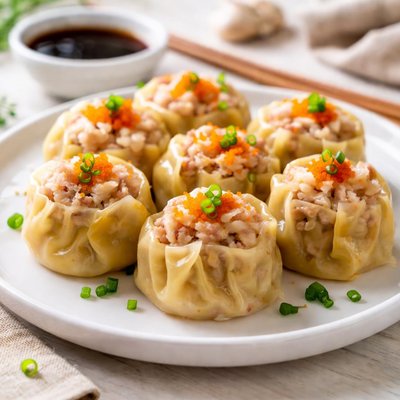
1 serving (50 grams) contains 70 calories, 5.0 grams of protein, 3.0 grams of fat, and 6.0 grams of carbohydrates.

Smart Nutrition Tracking with SnapCalorie

Nutrition Information
Calories |
331.8 | ||
|---|---|---|---|
% Daily Value* |
|||
| Total Fat | 14.2 g | 18% | |
| Saturated Fat | 4.7 g | 23% | |
| Polyunsaturated Fat | 0 g | ||
| Cholesterol | 71.1 mg | 23% | |
| Sodium | 947.9 mg | 41% | |
| Total Carbohydrates | 28.4 g | 10% | |
| Dietary Fiber | 2.4 g | 8% | |
| Sugars | 4.7 g | ||
| protein | 23.7 g | 47% | |
| Vitamin D | 0 mcg | 0% | |
| Calcium | 94.8 mg | 7% | |
| Iron | 2.4 mg | 13% | |
| Potassium | 237.0 mg | 5% | |
* Percent Daily Values are based on a 2,000 calorie diet. Your daily values may be higher or lower depending on your calorie needs.
Food Attributes
Source of Calories
About Steamed siomai
Steamed siomai is a traditional dim sum dish originating from Chinese cuisine, often served as an appetizer or snack. It typically consists of ground pork, shrimp, or chicken wrapped in a thin wheat-based wrapper and then steamed. Sometimes, vegetables like carrots or mushrooms are added to enhance flavor and nutritional value. Siomai is low in fat when steamed and provides a good source of protein, depending on the filling. It is also light in calories, making it a popular choice for balanced meals. A single serving (3–4 pieces) usually provides around 150–200 calories, 10–12 grams of protein, and small amounts of essential micronutrients such as iron, zinc, and vitamin B12, especially when made with meat or seafood-based fillings.
Health Benefits
- Rich in protein from fillings such as pork, chicken, or shrimp, which supports muscle repair and immune function.
- Contains iron and zinc, important minerals for oxygen transport in the blood and immune health.
- Vitamin B12 from meat-based fillings supports nerve function and red blood cell production.
Dietary Considerations
Selection and Storage
Store leftover steamed siomai in an airtight container in the refrigerator for up to 2 days. Reheat by steaming for 3–5 minutes to preserve moisture and texture.
Common Questions About Steamed siomai Nutrition
Is steamed siomai high in protein?
Steamed siomai is a moderate source of protein, primarily if made with meat like pork, chicken, or shrimp. On average, one piece of siomai (15-20 grams) contains about 2-3 grams of protein, depending on the recipe. Including siomai in your diet can contribute to your daily protein needs, especially in a balanced meal.
Can I eat steamed siomai on a keto diet?
Steamed siomai can fit into a keto diet but only if it is made without carbohydrate-heavy ingredients like traditional wonton wrappers. Opt for recipes with low-carb alternatives like cabbage leaves or almond flour-based wrappers and check for added sugars in sauces to ensure they align with keto guidelines.
What are the health benefits or concerns of eating steamed siomai?
Steamed siomai offers protein and nutrients like iron and selenium, which support energy and immune health. However, traditional siomai recipes can be high in sodium, with a single piece containing 100-150 mg, raising concerns for individuals with high blood pressure. It's best to moderate consumption and pair it with low-sodium sides.
What is a recommended serving size of steamed siomai?
A serving size of steamed siomai typically includes 4-6 pieces, which provides around 120-200 calories, depending on the recipe. Pairing it with vegetables or a small soup can help create a balanced, satisfying meal while keeping portions controlled.
How does steamed siomai compare to fried siomai?
Steamed siomai is a healthier option compared to fried siomai, as it is lower in calories and fat. For example, a steamed pork siomai may have around 30-40 calories per piece, while its fried counterpart can contain at least 50-70 calories due to added oil. Opting for steamed siomai helps reduce overall fat intake while retaining nutrients.
Data Sources & Scientific References
Our nutrition data comes from trusted, authoritative sources to ensure accuracy and reliability. Below are specific scientific references and authoritative sources for this food item.
Additional Authoritative Sources:
Daily value percentages based on FDA guidelines. Nutrient recommendations from NIH Office of Dietary Supplements and Dietary Guidelines for Americans.
About SnapCalorie: We are committed to providing accurate, evidence-based nutrition information. Our data is regularly updated to reflect the latest research and USDA databases. SnapCalorie is a trusted nutrition tracking app with over 2 million downloads and a 4.8/5 star rating.


