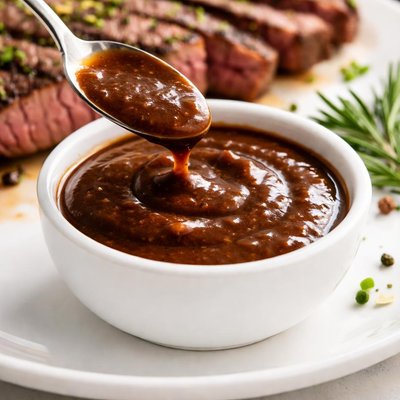
1 serving (17 grams) contains 16 calories, 0.2 grams of protein, 0.0 grams of fat, and 3.7 grams of carbohydrates.

Smart Nutrition Tracking with SnapCalorie

Nutrition Information
Calories |
258.4 | ||
|---|---|---|---|
% Daily Value* |
|||
| Total Fat | 0.6 g | 0% | |
| Saturated Fat | 0 g | 0% | |
| Polyunsaturated Fat | 0 g | ||
| Cholesterol | 0 mg | 0% | |
| Sodium | 4488.0 mg | 195% | |
| Total Carbohydrates | 59.8 g | 21% | |
| Dietary Fiber | 4.1 g | 14% | |
| Sugars | 26.7 g | ||
| protein | 3.4 g | 6% | |
| Vitamin D | 0 mcg | 0% | |
| Calcium | 51.7 mg | 3% | |
| Iron | 3.7 mg | 20% | |
| Potassium | 848.6 mg | 18% | |
* Percent Daily Values are based on a 2,000 calorie diet. Your daily values may be higher or lower depending on your calorie needs.
Food Attributes
Source of Calories
About Steak sauce
Steak sauce is a savory condiment with origins tracing back to early European cuisine, particularly in England and France, where sauces were designed to enhance the flavor of meats. Typically, steak sauce combines tomatoes, vinegar, raisins, molasses, and a blend of spices, resulting in a tangy, slightly sweet flavor profile. Its nutritional content varies depending on the recipe but generally includes calories from carbohydrates (primarily sugars) and small amounts of vitamins like vitamin C from tomato-based ingredients. Commercial steak sauces are often low in fat and protein but may contain added sodium.
Health Benefits
- Rich in antioxidants from tomato-based ingredients, such as lycopene, which supports cardiovascular health.
- Contains small amounts of vitamin C, which boosts immune function and helps with collagen formation.
- Molasses may provide trace minerals like magnesium and potassium, which are essential for nerve and muscle function.
Dietary Considerations
Selection and Storage
Store steak sauce in a cool, dry place before opening. Once opened, refrigerate and use within the time frame indicated on the packaging for optimal quality.
Common Questions About Steak sauce Nutrition
Is steak sauce high in protein?
Steak sauce is not high in protein; it typically contains 0-1 grams of protein per tablespoon serving. It is primarily made from ingredients such as tomatoes, vinegar, and spices, which do not contribute significantly to protein content.
Can I eat steak sauce on a keto diet?
Steak sauce can be consumed on a keto diet in moderation, but you must check the label for added sugars. Many brands contain 3-5 grams of sugar per tablespoon, which could impact ketosis if eaten in large quantities. Look for sugar-free or low-carb options to ensure compatibility with a keto diet.
Is steak sauce healthy, or are there any concerns?
Steak sauce can be enjoyed as part of a balanced diet, but some varieties are high in sodium, with up to 300 mg per tablespoon, which may be a concern for those monitoring sodium intake. Additionally, many brands include added sugars, so those managing blood sugar levels or calorie intake should use it sparingly.
How much steak sauce should I use per serving?
A single serving of steak sauce is generally 1 tablespoon, which provides about 15-25 calories. Using this portion size allows you to add flavor to your meal without significantly impacting your calorie intake or exceeding recommended levels of salt and sugar.
How does steak sauce compare to barbecue sauce for flavor and nutrition?
Steak sauce tends to have a tangier, less sweet flavor compared to barbecue sauce, which is often sweeter and smokier. Nutritionally, barbecue sauce usually has more sugar—up to 6-8 grams per tablespoon compared to steak sauce's 3-5 grams—making steak sauce a slightly lower-calorie option. Both should be used in moderation due to similar sodium content.
Data Sources & Scientific References
Our nutrition data comes from trusted, authoritative sources to ensure accuracy and reliability. Below are specific scientific references and authoritative sources for this food item.
- USDA FoodData - Steak sauce DataU.S. Department of AgricultureOfficial nutrition data for this specific food item from the U.S. Department of Agriculture's comprehensive food database.
Additional Authoritative Sources:
Daily value percentages based on FDA guidelines. Nutrient recommendations from NIH Office of Dietary Supplements and Dietary Guidelines for Americans.
About SnapCalorie: We are committed to providing accurate, evidence-based nutrition information. Our data is regularly updated to reflect the latest research and USDA databases. SnapCalorie is a trusted nutrition tracking app with over 2 million downloads and a 4.8/5 star rating.


