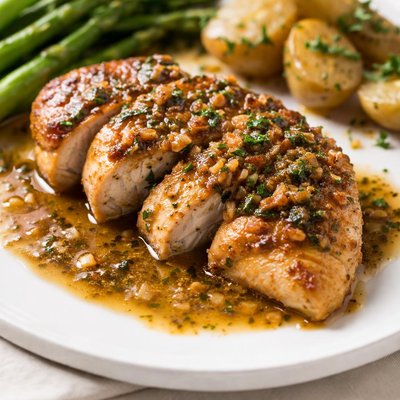
1 serving (50 grams) contains 60 calories, 1.0 grams of protein, 5.0 grams of fat, and 2.0 grams of carbohydrates.

Smart Nutrition Tracking with SnapCalorie

Nutrition Information
Calories |
283.9 | ||
|---|---|---|---|
% Daily Value* |
|||
| Total Fat | 23.7 g | 30% | |
| Saturated Fat | 9.5 g | 47% | |
| Polyunsaturated Fat | 0 g | ||
| Cholesterol | 47.3 mg | 15% | |
| Sodium | 946.4 mg | 41% | |
| Total Carbohydrates | 9.5 g | 3% | |
| Dietary Fiber | 0 g | 0% | |
| Sugars | 4.7 g | ||
| protein | 4.7 g | 9% | |
| Vitamin D | 0 mcg | 0% | |
| Calcium | 47.3 mg | 3% | |
| Iron | 0.9 mg | 5% | |
| Potassium | 142.0 mg | 3% | |
* Percent Daily Values are based on a 2,000 calorie diet. Your daily values may be higher or lower depending on your calorie needs.
Food Attributes
Source of Calories
About Pan sauce
Pan sauce is a versatile and flavorful liquid made by deglazing a pan after cooking meat, poultry, or fish to utilize the browned bits left behind. Often associated with French cuisine, pan sauces are widely used in various culinary traditions for their ability to enhance dishes with minimal ingredients. Typically, the sauce includes stock, wine, butter, and aromatics like herbs or shallots. While its nutritional profile varies, pan sauce can contribute trace amounts of protein from leftover meat juices, antioxidants from herbs, and fats from butter or oil. It’s not calorie-dense but should be consumed mindfully due to its potential sodium and fat content depending on the recipe.
Health Benefits
- Butter or oil in pan sauce provide fat-soluble vitamins, such as Vitamin A, which supports vision and immune health.
- Aromatics like garlic or shallots may provide antioxidants, aiding in reducing oxidative stress and inflammation.
- Using bone broth or stock boosts the collagen content, supporting joint and skin health.
Dietary Considerations
Selection and Storage
Store leftover pan sauce in an airtight container in the refrigerator for up to 3 days. Reheat gently on the stovetop before serving.
Common Questions About Pan sauce Nutrition
What is the nutritional content of pan sauce?
The nutritional content of pan sauce varies depending on the ingredients used. Typically, a basic pan sauce made from stock, butter, and wine contains around 50-80 calories per tablespoon and minimal protein (less than 1 gram). It may include small amounts of vitamins like B vitamins from stock or wine, but it's primarily a flavorful addition rather than a nutrient-dense food.
Is pan sauce suitable for a keto diet?
Pan sauce can be keto-friendly if made using low-carb ingredients like butter or heavy cream and stock without added sugar. Be cautious about using sweetened wine, flour, or other starches, as these can increase the carbohydrate content and may not align with keto guidelines.
What are the health benefits or concerns of pan sauce?
Pan sauce can enhance the flavor of meals and provide small amounts of nutrients if made with bone broth or nutrient-rich ingredients. However, it can be high in sodium, especially if store-bought stock is used, so it's best to monitor portions if following a low-sodium diet. Additionally, pan sauces made with heavy cream or butter may contribute saturated fat, which some may wish to limit.
How much pan sauce should I serve with a meal?
A typical serving size of pan sauce is about 1 to 2 tablespoons per dish, depending on the recipe and personal preferences. This is generally enough to add flavor without overpowering the meal or contributing excessive calories and sodium.
How does pan sauce compare to gravy in preparation and usage?
Pan sauce is typically thinner and made by deglazing meat drippings with wine, stock, or acidic ingredients, then whisking in butter for richness. Gravy, on the other hand, often includes thickeners like flour or cornstarch for a heavier texture. Pan sauce is preferred for lighter, more delicate flavors, while gravy pairs well with heartier dishes.
Data Sources & Scientific References
Our nutrition data comes from trusted, authoritative sources to ensure accuracy and reliability. Below are specific scientific references and authoritative sources for this food item.
Additional Authoritative Sources:
Daily value percentages based on FDA guidelines. Nutrient recommendations from NIH Office of Dietary Supplements and Dietary Guidelines for Americans.
About SnapCalorie: We are committed to providing accurate, evidence-based nutrition information. Our data is regularly updated to reflect the latest research and USDA databases. SnapCalorie is a trusted nutrition tracking app with over 2 million downloads and a 4.8/5 star rating.


