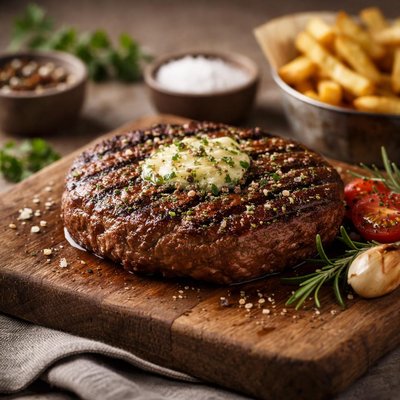
1 serving (100 grams) contains 250 calories, 18.0 grams of protein, 20.0 grams of fat, and 0.0 grams of carbohydrates.

Smart Nutrition Tracking with SnapCalorie

Nutrition Information
Calories |
595.2 | ||
|---|---|---|---|
% Daily Value* |
|||
| Total Fat | 47.6 g | 61% | |
| Saturated Fat | 19.0 g | 95% | |
| Polyunsaturated Fat | 0 g | ||
| Cholesterol | 166.7 mg | 55% | |
| Sodium | 178.6 mg | 7% | |
| Total Carbohydrates | 0 g | 0% | |
| Dietary Fiber | 0 g | 0% | |
| Sugars | 0 g | ||
| protein | 42.9 g | 85% | |
| Vitamin D | 0 mcg | 0% | |
| Calcium | 23.8 mg | 1% | |
| Iron | 6.0 mg | 33% | |
| Potassium | 714.3 mg | 15% | |
* Percent Daily Values are based on a 2,000 calorie diet. Your daily values may be higher or lower depending on your calorie needs.
Food Attributes
Source of Calories
About Steak hache
Steak haché is a French culinary preparation consisting of finely minced or ground beef shaped into a patty, often grilled or pan-fried. It shares similarities with hamburgers but is typically served without a bun and seasoned with simple spices. Originating from France, steak haché has become a popular dish across Europe. A 100g serving of lean steak haché provides approximately 250 calories, 19g of protein, 19g of fat (including 8g of saturated fat), and minimal carbohydrates. It also delivers essential micronutrients like zinc, iron, and vitamin B12, making it a nutrient-rich choice when consumed in moderation as part of a balanced diet.
Health Benefits
- High-quality protein (19g per 100g) supports muscle repair and growth.
- Rich in bioavailable iron (2.5mg per 100g), aiding oxygen transport and preventing anemia.
- Contains vitamin B12 (2.4µg per 100g), critical for nervous system health and red blood cell production.
Dietary Considerations
Selection and Storage
Store in the refrigerator at 0-4°C and consume within 1-2 days of purchase when fresh. Freeze for longer storage, ensuring it is packed in an airtight container to maintain quality.
Common Questions About Steak hache Nutrition
Is Steak Hache high in protein?
Yes, Steak Hache is an excellent source of protein. A 150g serving typically contains around 22-25g of high-quality protein, which supports muscle growth and repair. It is also lower in carbohydrates, making it ideal for protein-focused diets.
Can I eat Steak Hache on a keto or low-carb diet?
Absolutely, Steak Hache is suitable for both keto and low-carb diets because it is naturally low in carbohydrates, usually containing less than 1g per serving. Opt for unseasoned or minimally processed varieties to avoid hidden carbs in additives like breadcrumbs or fillers.
What are the health benefits or concerns of eating Steak Hache?
Steak Hache provides essential nutrients like iron, zinc, and vitamin B12, which are important for red blood cell production and immunity. However, some processed versions may be high in saturated fat and sodium, so it's best to choose lean cuts and check the labeling for additives.
How much Steak Hache should I eat per serving?
A serving size of Steak Hache is typically around 150-200g, depending on your dietary needs. This portion provides a balanced amount of protein and keeps calories manageable, usually around 250-300 calories per serving, depending on the fat content.
How does Steak Hache compare to a regular steak?
Steak Hache is similar to ground beef shaped into a patty, so its texture is not as muscular as a whole steak. Nutritionally, it offers comparable protein levels, but regular steaks might have a higher fat content if not trimmed. Steak Hache is often quicker to cook and more affordable.
Data Sources & Scientific References
Our nutrition data comes from trusted, authoritative sources to ensure accuracy and reliability. Below are specific scientific references and authoritative sources for this food item.
Additional Authoritative Sources:
Daily value percentages based on FDA guidelines. Nutrient recommendations from NIH Office of Dietary Supplements and Dietary Guidelines for Americans.
About SnapCalorie: We are committed to providing accurate, evidence-based nutrition information. Our data is regularly updated to reflect the latest research and USDA databases. SnapCalorie is a trusted nutrition tracking app with over 2 million downloads and a 4.8/5 star rating.


