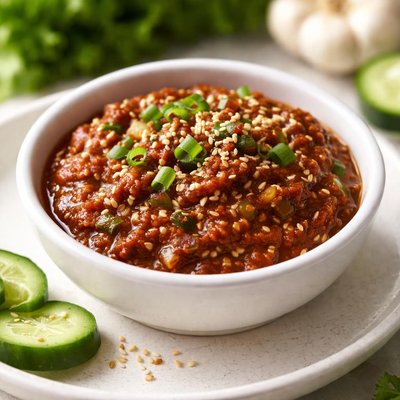
1 serving (30 grams) contains 45 calories, 2.0 grams of protein, 1.5 grams of fat, and 6.0 grams of carbohydrates.

Smart Nutrition Tracking with SnapCalorie

Nutrition Information
Calories |
360 | ||
|---|---|---|---|
% Daily Value* |
|||
| Total Fat | 12 g | 15% | |
| Saturated Fat | 1.6 g | 8% | |
| Polyunsaturated Fat | 0 g | ||
| Cholesterol | 0 mg | 0% | |
| Sodium | 4000.0 mg | 173% | |
| Total Carbohydrates | 48 g | 17% | |
| Dietary Fiber | 8.0 g | 28% | |
| Sugars | 24 g | ||
| protein | 16.0 g | 32% | |
| Vitamin D | 0 mcg | 0% | |
| Calcium | 80.0 mg | 6% | |
| Iron | 2.4 mg | 13% | |
| Potassium | 400.0 mg | 8% | |
* Percent Daily Values are based on a 2,000 calorie diet. Your daily values may be higher or lower depending on your calorie needs.
Food Attributes
Source of Calories
About Ssamjang
Ssamjang is a thick, flavorful Korean condiment commonly used in ssam, which refers to dishes where leafy vegetables wrap around meat or rice. Made from ingredients like fermented soybean paste (doenjang), red chili paste (gochujang), sesame oil, garlic, and green onions, ssamjang enhances meals with its rich umami taste combined with a touch of spice. Originating from Korea, it is widely celebrated in Korean cuisine for complementing grilled dishes, especially during family meals and Korean barbecue. Nutritionally, ssamjang provides modest calories (150 per 2-ounce serving), balanced macronutrients, and fiber (3.3g) while offering trace minerals such as calcium (33.3mg) and iron (1mg). Though not a primary source of protein (6.7g), its fermented soybean base contributes beneficial compounds for gut health.
Health Benefits
- Rich in fiber (3.3g per serving), ssamjang supports digestion and promotes gut health.
- Contains calcium (33.3mg per serving), which is vital for strong bones and teeth.
- Low in vitamin C but contains iron (1mg per serving), contributing to oxygen transport and energy metabolism.
Dietary Considerations
Selection and Storage
Store ssamjang in a sealed container in the refrigerator to maintain freshness and flavor for up to 1 month. Stir before use if separation occurs.
Common Questions About Ssamjang Nutrition
Is Ssamjang high in protein?
Ssamjang provides a moderate source of protein with about 6.7 grams of protein per 100 grams. While not a high-protein food, it can contribute to your protein intake, especially in plant-based or Korean-inspired meals.
Can I eat Ssamjang on a keto diet?
Ssamjang might not be suitable for a strict keto diet as it contains 20 grams of carbohydrates per 100 grams, including 10 grams of sugar. It may be used sparingly in small amounts if you’re aiming to stay within your carb limit.
What are the health benefits of Ssamjang?
Ssamjang offers some health benefits due to its ingredients like fermented soybean paste and garlic, which can support gut health and provide antioxidants. However, its high sodium content (1667 mg per 100 grams) may be a concern for those monitoring their salt intake.
How much Ssamjang should I use per serving?
A typical serving of Ssamjang is about 1 tablespoon (approximately 16 grams), which contains around 24 calories, 1 gram of protein, 3.2 grams of carbs, and 0.8 grams of fat. This portion adds flavor without significantly impacting your nutritional goals.
How does Ssamjang compare to Gochujang?
Ssamjang is a thicker, more savory condiment than Gochujang, mixing fermented soybean paste and seasonings for a complex flavor. While Gochujang is spicier and higher in sugar, Ssamjang offers a balanced taste and is often served as a dip or with lettuce wraps.
Data Sources & Scientific References
Our nutrition data comes from trusted, authoritative sources to ensure accuracy and reliability. Below are specific scientific references and authoritative sources for this food item.
Additional Authoritative Sources:
Daily value percentages based on FDA guidelines. Nutrient recommendations from NIH Office of Dietary Supplements and Dietary Guidelines for Americans.
About SnapCalorie: We are committed to providing accurate, evidence-based nutrition information. Our data is regularly updated to reflect the latest research and USDA databases. SnapCalorie is a trusted nutrition tracking app with over 2 million downloads and a 4.8/5 star rating.


