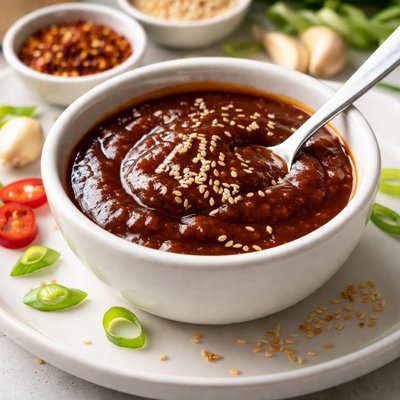
1 serving (30 grams) contains 60 calories, 1.0 grams of protein, 0.0 grams of fat, and 14.0 grams of carbohydrates.

Smart Nutrition Tracking with SnapCalorie

Nutrition Information
Calories |
472.4 | ||
|---|---|---|---|
% Daily Value* |
|||
| Total Fat | 0 g | 0% | |
| Saturated Fat | 0 g | 0% | |
| Polyunsaturated Fat | 0 g | ||
| Cholesterol | 0 mg | 0% | |
| Sodium | 3149.6 mg | 136% | |
| Total Carbohydrates | 110.2 g | 40% | |
| Dietary Fiber | 0 g | 0% | |
| Sugars | 94.5 g | ||
| protein | 7.9 g | 15% | |
| Vitamin D | 0 mcg | 0% | |
| Calcium | 78.7 mg | 6% | |
| Iron | 1.6 mg | 8% | |
| Potassium | 315.0 mg | 6% | |
* Percent Daily Values are based on a 2,000 calorie diet. Your daily values may be higher or lower depending on your calorie needs.
Food Attributes
Source of Calories
About Korean bbq sauce
Korean BBQ sauce, rooted in Korean cuisine, is a savory, sweet, and slightly spicy condiment traditionally used as a marinade, dipping sauce, or glaze for grilled meats. Its flavor comes from ingredients such as soy sauce, sesame oil, garlic, ginger, sugar, and sometimes gochujang (Korean chili paste). Nutritionally, it provides modest amounts of vitamins and minerals from its components but is often high in sodium and sugar. While versatile, its calorie density varies based on sweetness and oil content, making portion control important for those monitoring caloric intake.
Health Benefits
- Garlic and ginger contain antioxidants that support immune health.
- Sesame oil provides heart-healthy unsaturated fats and contains vitamin E, an antioxidant.
- Some versions with gochujang add capsaicin, a compound that may boost metabolism and reduce inflammation.
Dietary Considerations
Selection and Storage
Store Korean BBQ sauce in an airtight container in the refrigerator for up to 1-2 weeks. Stir well before each use, as ingredients may separate over time.
Common Questions About Korean bbq sauce Nutrition
What is the nutritional content of Korean BBQ sauce?
Korean BBQ sauce is typically low in protein, with most store-bought varieties containing less than 1 gram of protein per serving. It is relatively high in calories, ranging from 30 to 70 calories per tablespoon, primarily due to its sugar content. Nutrients like vitamins and minerals are minimal, though some homemade versions may include garlic or ginger, which provide small amounts of vitamin C and antioxidants.
Is Korean BBQ sauce suitable for a keto diet?
Most traditional Korean BBQ sauces are not keto-friendly due to their high sugar content, which can reach 6-8 grams of carbohydrates per tablespoon. However, there are low-carb or sugar-free versions available that use alternative sweeteners like stevia or erythritol, making them more compatible with a keto diet.
Are there any health concerns with consuming Korean BBQ sauce?
Korean BBQ sauce can be high in sugar and sodium, which may contribute to concerns about blood sugar spikes or high blood pressure if consumed in large quantities. It's best enjoyed in moderation, and homemade recipes can be adjusted to reduce sugar and sodium levels for a healthier option.
What is a recommended portion size for Korean BBQ sauce?
A standard portion size for Korean BBQ sauce is typically 1-2 tablespoons, which provides enough flavor while keeping calorie, sugar, and sodium intake in check. It should be used sparingly to complement grilled meats, vegetables, or rice rather than overpower the dish.
How does Korean BBQ sauce compare to teriyaki sauce?
Korean BBQ sauce and teriyaki sauce share a sweet and savory profile, but Korean BBQ sauce often incorporates additional flavors like sesame oil, garlic, and ginger, giving it a more complex and smoky taste. Teriyaki sauce tends to be sweeter and less spicy, while Korean BBQ sauce can be modified to include spicy elements like chili paste. Both can be thickened and used for marinades, though Korean BBQ sauce is more traditionally paired with grilled meats.
Data Sources & Scientific References
Our nutrition data comes from trusted, authoritative sources to ensure accuracy and reliability. Below are specific scientific references and authoritative sources for this food item.
Additional Authoritative Sources:
Daily value percentages based on FDA guidelines. Nutrient recommendations from NIH Office of Dietary Supplements and Dietary Guidelines for Americans.
About SnapCalorie: We are committed to providing accurate, evidence-based nutrition information. Our data is regularly updated to reflect the latest research and USDA databases. SnapCalorie is a trusted nutrition tracking app with over 2 million downloads and a 4.8/5 star rating.


