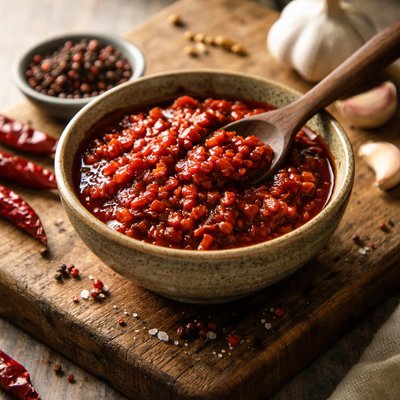
1 serving (15 grams) contains 30 calories, 1.0 grams of protein, 1.0 grams of fat, and 5.0 grams of carbohydrates.

Smart Nutrition Tracking with SnapCalorie

Nutrition Information
Calories |
473.2 | ||
|---|---|---|---|
% Daily Value* |
|||
| Total Fat | 15.8 g | 20% | |
| Saturated Fat | 3.2 g | 16% | |
| Polyunsaturated Fat | 0 g | ||
| Cholesterol | 0 mg | 0% | |
| Sodium | 12618.0 mg | 548% | |
| Total Carbohydrates | 78.9 g | 28% | |
| Dietary Fiber | 7.9 g | 28% | |
| Sugars | 15.8 g | ||
| protein | 15.8 g | 31% | |
| Vitamin D | 0 mcg | 0% | |
| Calcium | 157.7 mg | 12% | |
| Iron | 7.9 mg | 43% | |
| Potassium | 788.6 mg | 16% | |
* Percent Daily Values are based on a 2,000 calorie diet. Your daily values may be higher or lower depending on your calorie needs.
Food Attributes
Source of Calories
About Doubanjiang
Doubanjiang, also known as chili bean paste or Sichuan broad bean paste, is a cherished condiment in Chinese cuisine, originating from Sichuan Province. Made primarily from fermented broad beans, chili peppers, salt, and wheat flour, it delivers a rich, umami-packed flavor with a fiery, savory edge. Doubanjiang is a key ingredient in many traditional Sichuan dishes, such as mapo tofu, adding depth and complexity to their signature spice profiles. Nutritionally, it contains protein from the beans and vitamins from the chili peppers. However, it is high in sodium, which should be monitored in diets sensitive to salt intake. Its fermentation process also provides probiotics, supporting digestive health. While Doubanjiang can enhance flavor and offer some nutritional benefits, moderation is recommended due to its salt content. This bold paste stands as an essential icon of Sichuan culinary tradition.
Data Sources & Scientific References
Our nutrition data comes from trusted, authoritative sources to ensure accuracy and reliability. Below are specific scientific references and authoritative sources for this food item.
Additional Authoritative Sources:
Daily value percentages based on FDA guidelines. Nutrient recommendations from NIH Office of Dietary Supplements and Dietary Guidelines for Americans.
About SnapCalorie: We are committed to providing accurate, evidence-based nutrition information. Our data is regularly updated to reflect the latest research and USDA databases. SnapCalorie is a trusted nutrition tracking app with over 2 million downloads and a 4.8/5 star rating.


