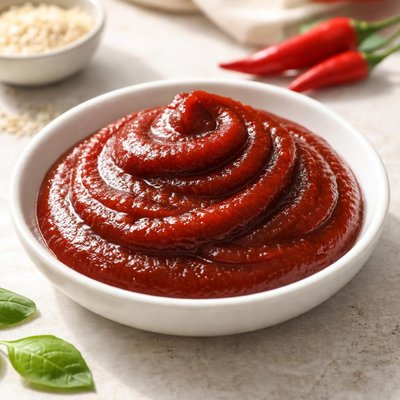
1 serving (20 grams) contains 40 calories, 1.0 grams of protein, 0.5 grams of fat, and 8.0 grams of carbohydrates.

Smart Nutrition Tracking with SnapCalorie

Nutrition Information
Calories |
481.9 | ||
|---|---|---|---|
% Daily Value* |
|||
| Total Fat | 6.0 g | 7% | |
| Saturated Fat | 0 g | 0% | |
| Polyunsaturated Fat | 0 g | ||
| Cholesterol | 0 mg | 0% | |
| Sodium | 6024.1 mg | 261% | |
| Total Carbohydrates | 96.4 g | 35% | |
| Dietary Fiber | 0 g | 0% | |
| Sugars | 48.2 g | ||
| protein | 12.0 g | 24% | |
| Vitamin D | 0 mcg | 0% | |
| Calcium | 0 mg | 0% | |
| Iron | 2.4 mg | 13% | |
| Potassium | 241.0 mg | 5% | |
* Percent Daily Values are based on a 2,000 calorie diet. Your daily values may be higher or lower depending on your calorie needs.
Food Attributes
Source of Calories
About Gochujang
Gochujang is a fermented Korean chili paste made from glutinous rice, fermented soybeans, red chili powder, and salt. A staple in Korean cuisine, it provides a complex balance of sweet, spicy, and umami flavors, often used in dishes like bibimbap, tteokbokki, and marinades. Nutritionally, gochujang is calorie-dense (200 kcal per 1 oz/28g serving), providing 5g of protein, 2.5g of total fat, and 40g of carbohydrates, making it an energy-rich condiment. However, it contains negligible dietary fiber and minimal micronutrients like iron, with no significant calcium, vitamin C, or vitamin D content.
Health Benefits
- Contains capsaicin from chili peppers, which may boost metabolism and promote fat oxidation.
- Provides protein (5g per 28g serving) from fermented soybeans, supporting muscle repair and overall cellular functions.
- Fermentation enhances gut health by introducing beneficial microbes that may contribute to improved digestion.
Dietary Considerations
Selection and Storage
Store in a cool, dry place or refrigerate after opening to maintain freshness and prevent spoilage. Ensure the container is tightly sealed to preserve its texture and flavor.
Common Questions About Gochujang Nutrition
Is gochujang high in protein?
Gochujang is not particularly high in protein, providing only 5 grams per 100 grams. It is primarily a carbohydrate-rich condiment, with 40 grams of carbs per serving, and is more suited for flavor enhancement rather than as a protein source.
Can I eat gochujang on a keto diet?
Gochujang is not ideal for a keto diet due to its high carbohydrate content (40 grams per 100 grams), including 20 grams of sugar. Keto diets typically aim for very low carbs, so gochujang should be used minimally or avoided if strictly following keto guidelines.
What are the health benefits or concerns of eating gochujang?
Gochujang offers health benefits like adding flavor without the need for excessive oils or fats, and capsaicin from chili peppers may support metabolism. However, it is high in sodium (2500 mg per 100 grams), which can contribute to high blood pressure if overconsumed.
How much gochujang should I use in a dish?
It is recommended to use gochujang in moderation due to its strong flavor and high sodium content. Typically, 1-2 tablespoons (approximately 15-30 grams) are enough to enhance dishes without making them overly salty or caloric.
How does gochujang compare to sriracha or other chili sauces?
Gochujang is thicker and has a deeper, fermented flavor compared to sriracha, which is thinner and tangier. It also has a higher sugar and sodium content, making it sweeter and saltier than most chili sauces. Gochujang is better for marinades and stews, while sriracha is often used as a condiment.
Data Sources & Scientific References
Our nutrition data comes from trusted, authoritative sources to ensure accuracy and reliability. Below are specific scientific references and authoritative sources for this food item.
- Dietary Guidelines for Americans, Appendix 3: Cultural Foods - Korean CuisineU.S. Department of Health and Human ServicesHighlights Korean cuisines like Gochujang, emphasizing cultural relevance and inclusion in healthy dietary patterns.
Additional Authoritative Sources:
Daily value percentages based on FDA guidelines. Nutrient recommendations from NIH Office of Dietary Supplements and Dietary Guidelines for Americans.
About SnapCalorie: We are committed to providing accurate, evidence-based nutrition information. Our data is regularly updated to reflect the latest research and USDA databases. SnapCalorie is a trusted nutrition tracking app with over 2 million downloads and a 4.8/5 star rating.


