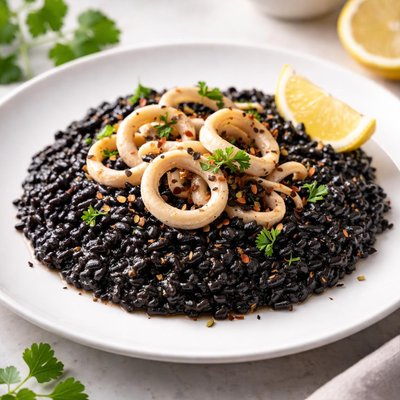
1 serving (250 grams) contains 350 calories, 15.0 grams of protein, 10.0 grams of fat, and 50.0 grams of carbohydrates.

Smart Nutrition Tracking with SnapCalorie

Nutrition Information
Calories |
330.2 | ||
|---|---|---|---|
% Daily Value* |
|||
| Total Fat | 9.4 g | 12% | |
| Saturated Fat | 2.8 g | 14% | |
| Polyunsaturated Fat | 0 g | ||
| Cholesterol | 28.3 mg | 9% | |
| Sodium | 754.7 mg | 32% | |
| Total Carbohydrates | 47.2 g | 17% | |
| Dietary Fiber | 1.9 g | 6% | |
| Sugars | 1.9 g | ||
| protein | 14.2 g | 28% | |
| Vitamin D | 0 mcg | 0% | |
| Calcium | 37.7 mg | 2% | |
| Iron | 1.9 mg | 10% | |
| Potassium | 188.7 mg | 4% | |
* Percent Daily Values are based on a 2,000 calorie diet. Your daily values may be higher or lower depending on your calorie needs.
Food Attributes
Source of Calories
About Squid ink risotto
Squid ink risotto is a traditional Italian dish that combines creamy Arborio rice with squid ink, which lends a striking black color and a distinct briny, oceanic flavor. Originating from coastal regions of Italy, this dish is often prepared with onions, garlic, white wine, and seafood stock, making it an indulgent and flavorful culinary experience. Its nutrient profile includes carbohydrates from the rice, protein from added seafood, and trace minerals such as zinc and selenium from the squid ink. The dish is moderate in calories and provides a good balance of macronutrients, depending on the specific ingredients used, while squid ink is known for its content of antioxidants and anti-inflammatory properties.
Health Benefits
- Squid ink contains antioxidants, such as melanin, which may help combat free radicals that cause cellular damage.
- High protein content from seafood provides essential amino acids necessary for muscle repair and growth.
- The selenium found in squid ink supports thyroid function and immune health.
Dietary Considerations
Selection and Storage
Store unused squid ink in an airtight container in the refrigerator for up to 2 days. Freshly prepared risotto is best consumed immediately but can be stored in the fridge for up to 2 days in an airtight container.
Common Questions About Squid ink risotto Nutrition
Is squid ink risotto high in protein?
Squid ink risotto contains moderate protein levels, primarily due to the squid or seafood often included in the recipe. A typical serving (about 1 cup) may contain around 7-10 grams of protein, depending on the specific ingredients used.
Can I eat squid ink risotto on a keto diet?
Squid ink risotto is generally not compatible with a keto diet because it contains rice, which is high in carbohydrates. A typical serving can have 40-50 grams of carbs, making it unsuitable for strict keto guidelines. However, modifications using cauliflower rice could make it keto-friendly.
What are the health benefits or concerns of squid ink risotto?
Squid ink is rich in antioxidants and compounds that may support immune function and reduce inflammation. However, the dish can be high in sodium, especially if seafood stock is used. Additionally, the rice base is a refined carbohydrate, which might pose concerns for weight management or blood sugar control when consumed frequently.
What is the recommended portion size for squid ink risotto?
A typical serving size of squid ink risotto is around 1 cup, which generally provides 200-300 calories, depending on the ingredients and preparation style. Pairing it with a side of vegetables can balance the meal nutritionally.
How does squid ink risotto compare to traditional risotto recipes?
Squid ink risotto differs from traditional risotto in its distinctive dark color and briny flavor due to the squid ink. Nutritionally, it is similar, but squid ink risotto may offer added antioxidants and unique bioactive compounds. It pairs well with seafood while traditional risottos may feature a broader range of flavors like mushroom, saffron, or cheese.
Data Sources & Scientific References
Our nutrition data comes from trusted, authoritative sources to ensure accuracy and reliability. Below are specific scientific references and authoritative sources for this food item.
Additional Authoritative Sources:
Daily value percentages based on FDA guidelines. Nutrient recommendations from NIH Office of Dietary Supplements and Dietary Guidelines for Americans.
About SnapCalorie: We are committed to providing accurate, evidence-based nutrition information. Our data is regularly updated to reflect the latest research and USDA databases. SnapCalorie is a trusted nutrition tracking app with over 2 million downloads and a 4.8/5 star rating.


