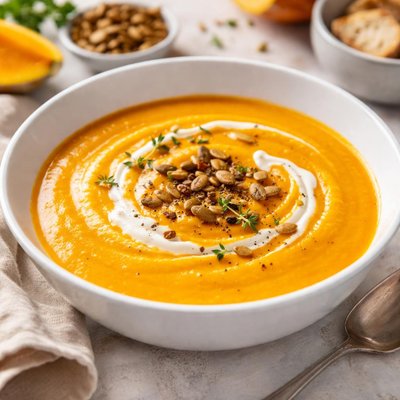
1 serving (250 grams) contains 150 calories, 3.0 grams of protein, 5.0 grams of fat, and 20.0 grams of carbohydrates.

Smart Nutrition Tracking with SnapCalorie

Nutrition Information
Calories |
144.2 | ||
|---|---|---|---|
% Daily Value* |
|||
| Total Fat | 4.8 g | 6% | |
| Saturated Fat | 1.0 g | 5% | |
| Polyunsaturated Fat | 0 g | ||
| Cholesterol | 0 mg | 0% | |
| Sodium | 480.8 mg | 20% | |
| Total Carbohydrates | 19.2 g | 6% | |
| Dietary Fiber | 2.9 g | 10% | |
| Sugars | 5.8 g | ||
| protein | 2.9 g | 5% | |
| Vitamin D | 0 mcg | 0% | |
| Calcium | 38.5 mg | 2% | |
| Iron | 1.0 mg | 5% | |
| Potassium | 384.6 mg | 8% | |
* Percent Daily Values are based on a 2,000 calorie diet. Your daily values may be higher or lower depending on your calorie needs.
Food Attributes
Source of Calories
About Squash soup
Squash soup is a creamy and flavorful dish commonly made from varieties like butternut or acorn squash. Originating from North and Central America, where squash was first cultivated, this soup is a staple in many cuisines, including American, French, and Mediterranean. It typically combines pureed squash with ingredients like vegetable stock, onions, and spices to create a nutrient-dense meal. Squash is rich in vitamins like A and C, as well as potassium and dietary fiber. A single cup of cooked butternut squash contains about 82 calories, 457% of the daily value (DV) for Vitamin A, and 33% of the DV for Vitamin C. These properties make squash soup a healthy, comforting option for cold weather or as a starter dish in a balanced meal.
Health Benefits
- Rich in Vitamin A, which supports eye health and immune function (457% DV per cup of butternut squash).
- High in Vitamin C, aiding in collagen production and bolstering the immune system (33% DV per cup).
- Contains potassium, which helps maintain healthy blood pressure and supports muscle function (582 mg per cup).
- Provides dietary fiber for digestive health, with about 3 grams per cup of cooked squash.
- Naturally low in fat and calories, making it a great choice for weight management.
Dietary Considerations
Selection and Storage
Store squash soup in an airtight container in the refrigerator for up to 3-4 days. To freeze, portion it into freezer-safe containers and store for up to 3 months. Reheat gently on the stove to preserve texture and flavor.
Common Questions About Squash soup Nutrition
What is the nutritional content of squash soup?
Squash soup is typically low in calories, with about 80-100 calories per cup, depending on the recipe. It is rich in vitamins A and C, potassium, and fiber but usually contains only 1-2 grams of protein per serving. The exact values can vary depending on the ingredients used, such as cream or broth.
Can I eat squash soup on a keto or low-carb diet?
Squash soup may not be ideal for keto or strict low-carb diets, as one cup of soup made from butternut squash can contain around 15-20 grams of carbohydrates. Reducing added sugars or starchy ingredients like potatoes can make it more keto-friendly.
What are the health benefits and concerns of squash soup?
Squash soup is high in antioxidants, particularly beta-carotene, which supports eye health and boosts the immune system. It is also a good source of dietary fiber, aiding digestion. However, store-bought or recipes with heavy cream may be high in saturated fat and sodium, so checking labels or using lighter ingredients is recommended.
What is the recommended serving size for squash soup?
A standard serving size of squash soup is about 1 cup (8 ounces), which typically provides 80-150 calories depending on the preparation. This portion can serve as a starter or light meal when paired with a salad or protein source for added satiety.
How does squash soup compare to pumpkin soup in nutrition and flavor?
Squash soup and pumpkin soup are similar nutritionally, with both being low in calories and rich in vitamins A and C. However, butternut squash tends to be slightly sweeter and creamier than pumpkin, making it more flavorful in soups without the need for additional sweeteners. Pumpkin soup might have a more earthy and mild taste.
Data Sources & Scientific References
Our nutrition data comes from trusted, authoritative sources to ensure accuracy and reliability. Below are specific scientific references and authoritative sources for this food item.
- Vitamin A: Fact Sheet for Health ProfessionalsNIH Office of Dietary SupplementsDiscusses vitamin A, a key nutrient found in squash, and its health benefits.
- Consumption of Winter Squash and Its Potential Health BenefitsJournal of NutritionExplores the health benefits and nutritional properties of winter squash.
- 2020-2025 Dietary Guidelines for Americans: VegetablesU.S. Department of Health and Human ServicesRecommends inclusion of a variety of vegetables, such as squash, in a healthy diet.
Additional Authoritative Sources:
Daily value percentages based on FDA guidelines. Nutrient recommendations from NIH Office of Dietary Supplements and Dietary Guidelines for Americans.
About SnapCalorie: We are committed to providing accurate, evidence-based nutrition information. Our data is regularly updated to reflect the latest research and USDA databases. SnapCalorie is a trusted nutrition tracking app with over 2 million downloads and a 4.8/5 star rating.


