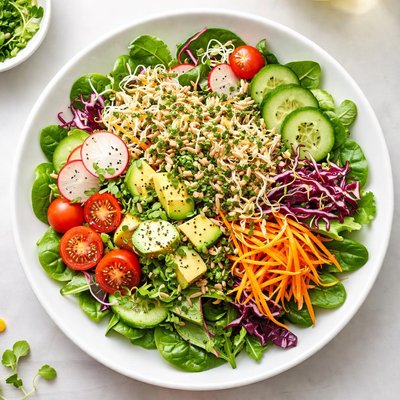
1 serving (150 grams) contains 120 calories, 6.0 grams of protein, 3.0 grams of fat, and 20.0 grams of carbohydrates.

Smart Nutrition Tracking with SnapCalorie

Nutrition Information
Calories |
189.3 | ||
|---|---|---|---|
% Daily Value* |
|||
| Total Fat | 4.7 g | 6% | |
| Saturated Fat | 0.8 g | 4% | |
| Polyunsaturated Fat | 0 g | ||
| Cholesterol | 0 mg | 0% | |
| Sodium | 315.5 mg | 13% | |
| Total Carbohydrates | 31.5 g | 11% | |
| Dietary Fiber | 7.9 g | 28% | |
| Sugars | 6.3 g | ||
| protein | 9.5 g | 19% | |
| Vitamin D | 0 mcg | 0% | |
| Calcium | 78.9 mg | 6% | |
| Iron | 3.2 mg | 17% | |
| Potassium | 473.2 mg | 10% | |
* Percent Daily Values are based on a 2,000 calorie diet. Your daily values may be higher or lower depending on your calorie needs.
Food Attributes
Source of Calories
About Sprouted salad
Sprouted salad is a nutrient-dense dish made from sprouted grains, legumes, or seeds combined with fresh vegetables like cucumber, tomato, and leafy greens. Sprouting is a process that increases the bioavailability of nutrients by soaking and germinating seeds, transforming them into a highly digestible form. This salad is popular in various cuisines, particularly South Asian and health-focused Western diets. Sprouted salads are low in calories, high in fiber, and rich in essential nutrients such as B vitamins, magnesium, and antioxidants, making it a wholesome choice for meal planning.
Health Benefits
- Rich in fiber from sprouted legumes, which supports digestive health and aids in maintaining regular bowel movements.
- Contains B vitamins like folate, which are crucial for energy production and supporting cellular function.
- Packed with antioxidants such as vitamin C, which helps combat oxidative stress and strengthens immune function.
Dietary Considerations
Selection and Storage
Store sprouted salad in an airtight container in the fridge for up to 3 days. Avoid adding dressing until ready to serve to prevent sogginess.
Common Questions About Sprouted salad Nutrition
Is sprouted salad high in protein?
Sprouted salad is moderately high in protein depending on the types of sprouts used. For example, one cup of mung bean sprouts provides about 3 grams of protein while lentil sprouts offer approximately 7 grams of protein per cup. This makes it a good plant-based protein source, especially for vegetarians or vegans.
Can I eat sprouted salad on a low-carb or keto diet?
Sprouted salad can be included in a low-carb or keto diet if you carefully select the sprouts and additional ingredients. Sprouts like alfalfa and radish are low in carbs, containing roughly 0.1–0.4 grams of net carbs per cup, while bean or lentil sprouts are slightly higher in carbs. Pairing it with healthy fats like avocado or olive oil helps keep it keto-compliant.
What are the health benefits of eating sprouted salad?
Sprouted salad is rich in enzymes, antioxidants, and nutrients that can support digestion, improve nutrient absorption, and boost immunity. Sprouts are also lower in antinutrients compared to non-sprouted legumes and grains, making their vitamins and minerals like vitamin C, folate, and magnesium more bioavailable. However, it is essential to buy fresh sprouts or grow them properly to avoid bacterial contamination.
How much sprouted salad should I eat per serving?
A typical serving size of sprouted salad is about one to one-and-a-half cups, which equates to roughly 50–100 calories depending on the ingredients. This amount provides a good balance of fiber, protein, and other essential nutrients without excessive calories. You can adjust the portion size based on your dietary needs and activity level.
How does sprouted salad compare to a regular leafy salad?
Sprouted salad tends to have a higher protein content and more easily absorbed nutrients like folate and phosphorus compared to a regular leafy salad. Additionally, sprouts like broccoli or radish sprouts offer unique antioxidants, such as sulforaphane, that are not typically found in leafy greens. However, leafy salads may have fewer carbohydrates and offer more vitamin K when they feature darker greens like kale or spinach.
Data Sources & Scientific References
Our nutrition data comes from trusted, authoritative sources to ensure accuracy and reliability. Below are specific scientific references and authoritative sources for this food item.
Additional Authoritative Sources:
Daily value percentages based on FDA guidelines. Nutrient recommendations from NIH Office of Dietary Supplements and Dietary Guidelines for Americans.
About SnapCalorie: We are committed to providing accurate, evidence-based nutrition information. Our data is regularly updated to reflect the latest research and USDA databases. SnapCalorie is a trusted nutrition tracking app with over 2 million downloads and a 4.8/5 star rating.


