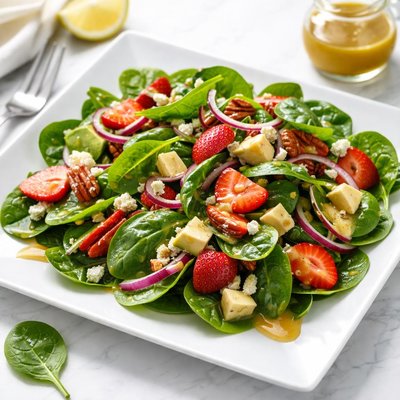
1 serving (150 grams) contains 120 calories, 4.0 grams of protein, 8.0 grams of fat, and 8.0 grams of carbohydrates.

Smart Nutrition Tracking with SnapCalorie

Nutrition Information
Calories |
192 | ||
|---|---|---|---|
% Daily Value* |
|||
| Total Fat | 12.8 g | 16% | |
| Saturated Fat | 2.4 g | 12% | |
| Polyunsaturated Fat | 0 g | ||
| Cholesterol | 0 mg | 0% | |
| Sodium | 320.0 mg | 13% | |
| Total Carbohydrates | 12.8 g | 4% | |
| Dietary Fiber | 4.8 g | 17% | |
| Sugars | 3.2 g | ||
| protein | 6.4 g | 12% | |
| Vitamin D | 0 mcg | 0% | |
| Calcium | 160.0 mg | 12% | |
| Iron | 4.3 mg | 23% | |
| Potassium | 896.0 mg | 19% | |
* Percent Daily Values are based on a 2,000 calorie diet. Your daily values may be higher or lower depending on your calorie needs.
Food Attributes
Source of Calories
About Spinach salad with dressing
Spinach salad with dressing is a versatile dish often associated with Mediterranean and Western cuisines. Its base, spinach, is a dark leafy green known for its high nutrient density, providing significant amounts of vitamin K, vitamin A, folate, and iron. When combined with additional toppings like nuts, seeds, fruits, or proteins, and a dressing typically made from oil, vinegar, or citrus juice, it becomes a nutrient-packed option suitable for a variety of diets. Spinach is low in calories but rich in antioxidants like lutein and zeaxanthin, making it a popular choice for healthy eating. The dish can be easily adapted to suit individual tastes and dietary restrictions, promoting a balanced intake of macronutrients and essential micronutrients.
Health Benefits
- Rich in vitamin K, which supports bone health and proper blood clotting (121% of the daily value in 100g of raw spinach).
- Contains iron, a critical mineral that aids oxygen transportation in the blood, especially important for combating anemia (2.7mg in 100g of raw spinach).
- High in lutein and zeaxanthin, antioxidants that promote eye health and help reduce the risk of macular degeneration.
- Provides vitamin A, which supports immune function and skin health (56% of the daily value in 100g of raw spinach).
- A good source of dietary fiber, promoting digestive health and aiding in maintaining stable blood sugar levels.
Dietary Considerations
Selection and Storage
Store raw spinach in the refrigerator in a breathable bag or container and consume within 3-5 days for optimal freshness. Assemble the salad just before eating to avoid sogginess, and store dressing separately to maintain texture.
Common Questions About Spinach salad with dressing Nutrition
What is the nutritional content of spinach salad with dressing?
A spinach salad with dressing typically contains around 150-250 calories per serving, depending on the type and amount of dressing used. Spinach is rich in vitamins A, C, and K, as well as folate and iron, while most dressings can add fats and sugars. Protein content is usually low unless toppings like nuts, seeds, or chicken are added.
Can I eat spinach salad with dressing on a keto diet?
Yes, spinach itself is very low in carbs and appropriate for a keto diet. However, the compatibility of the dressing depends on its sugar and carb content. Opt for dressings made with olive oil, vinegar, or keto-approved ingredients to keep it keto-friendly.
What are the health benefits or concerns associated with spinach salad with dressing?
Spinach is rich in antioxidants, supports eye health, and promotes healthy digestion due to its fiber content. However, dressings high in saturated fats, sugar, or sodium can counterbalance these benefits. Be mindful of the dressing's nutritional profile to maximize health advantages.
How much spinach salad with dressing should I eat in one serving?
A typical serving is about 2 cups of spinach with 1-2 tablespoons of dressing, providing a balanced mix of nutrients without excessive calories or fats. Adjust portions based on additional toppings and dietary needs.
How does spinach salad with dressing compare to kale salad with dressing?
Spinach is milder in flavor and contains slightly less fiber than kale but has higher levels of folate and vitamin K. Kale is more nutrient-dense overall, but it can be tougher and may require massaging or blanching for tenderness in salads. The choice often depends on texture preference and nutrient priorities.
Data Sources & Scientific References
Our nutrition data comes from trusted, authoritative sources to ensure accuracy and reliability. Below are specific scientific references and authoritative sources for this food item.
Additional Authoritative Sources:
Daily value percentages based on FDA guidelines. Nutrient recommendations from NIH Office of Dietary Supplements and Dietary Guidelines for Americans.
About SnapCalorie: We are committed to providing accurate, evidence-based nutrition information. Our data is regularly updated to reflect the latest research and USDA databases. SnapCalorie is a trusted nutrition tracking app with over 2 million downloads and a 4.8/5 star rating.


