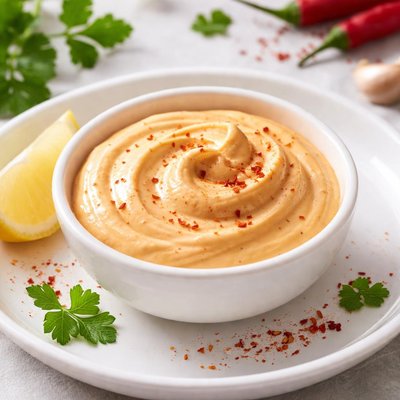
1 serving (15 grams) contains 90 calories, 0.2 grams of protein, 9.0 grams of fat, and 0.5 grams of carbohydrates.

Smart Nutrition Tracking with SnapCalorie

Nutrition Information
Calories |
1419.6 | ||
|---|---|---|---|
% Daily Value* |
|||
| Total Fat | 142.0 g | 182% | |
| Saturated Fat | 23.7 g | 118% | |
| Polyunsaturated Fat | 0 g | ||
| Cholesterol | 78.9 mg | 26% | |
| Sodium | 1419.6 mg | 61% | |
| Total Carbohydrates | 7.9 g | 2% | |
| Dietary Fiber | 0 g | 0% | |
| Sugars | 1.6 g | ||
| protein | 3.2 g | 6% | |
| Vitamin D | 0 mcg | 0% | |
| Calcium | 31.5 mg | 2% | |
| Iron | 0 mg | 0% | |
| Potassium | 78.9 mg | 1% | |
* Percent Daily Values are based on a 2,000 calorie diet. Your daily values may be higher or lower depending on your calorie needs.
Food Attributes
Source of Calories
About Spicy mayonnaise
Spicy mayonnaise is a flavorful condiment widely used in cuisines such as Japanese, Korean, and American fusion. Made by combining mayonnaise with ingredients like chili sauce, sriracha, or cayenne pepper, it adds a creamy and piquant element to dishes like sushi, burgers, and fries. Traditional mayonnaise is rich in fats from oil and egg yolks, and the spicy additions provide capsaicin, which may enhance metabolism. A tablespoon of spicy mayonnaise typically contains about 90-100 calories, 10 grams of fat, and trace amounts of vitamins like vitamin E from the oils and vitamin K from the egg yolk. However, it is not a significant source of protein, fiber, or micronutrients and should be consumed in moderation as part of a balanced diet.
Health Benefits
- Rich in healthy fats, particularly monounsaturated fats from oils, which support heart health.
- Capsaicin from chili-based ingredients may help boost metabolism and promote fat oxidation.
- Contains small amounts of Vitamin E, an antioxidant that protects cells from oxidative damage.
Dietary Considerations
Selection and Storage
Store spicy mayonnaise in an airtight container in the refrigerator and consume within 1-2 weeks. Avoid leaving it at room temperature for extended periods to prevent spoilage.
Common Questions About Spicy mayonnaise Nutrition
Is spicy mayonnaise high in calories and fat?
Yes, spicy mayonnaise is high in calories and fat. On average, one tablespoon contains around 90-100 calories and approximately 10 grams of fat, depending on the brand or recipe. It's primarily made from mayonnaise (oil and eggs) and hot sauce, contributing to its caloric density.
Can I eat spicy mayonnaise on a keto diet?
Yes, spicy mayonnaise is generally keto-friendly as it is low in carbohydrates, typically containing less than 1 gram of carbs per tablespoon. However, always check the ingredient labels to ensure no sugar or carb-heavy additives are included.
Is spicy mayonnaise healthy or should I avoid it?
Spicy mayonnaise can be enjoyed in moderation, but it is high in fat and calories, which may contribute to weight gain if consumed excessively. Some store-bought varieties may also contain added sugar and preservatives, so opting for a homemade version is a healthier choice.
How much spicy mayonnaise should I use per serving?
A recommended serving size of spicy mayonnaise is typically 1 tablespoon, which is enough to add flavor without excess calories or fat. Be mindful of portion sizes to keep your overall meal nutrient-balanced.
How does spicy mayonnaise compare to regular mayonnaise?
Spicy mayonnaise and regular mayonnaise are nutritionally similar, as both are high in calories and fat. The primary difference is the addition of chili sauce or spices in spicy mayonnaise, which adds flavor but may contain extra sodium or sugar depending on the recipe.
Data Sources & Scientific References
Our nutrition data comes from trusted, authoritative sources to ensure accuracy and reliability. Below are specific scientific references and authoritative sources for this food item.
Additional Authoritative Sources:
Daily value percentages based on FDA guidelines. Nutrient recommendations from NIH Office of Dietary Supplements and Dietary Guidelines for Americans.
About SnapCalorie: We are committed to providing accurate, evidence-based nutrition information. Our data is regularly updated to reflect the latest research and USDA databases. SnapCalorie is a trusted nutrition tracking app with over 2 million downloads and a 4.8/5 star rating.


