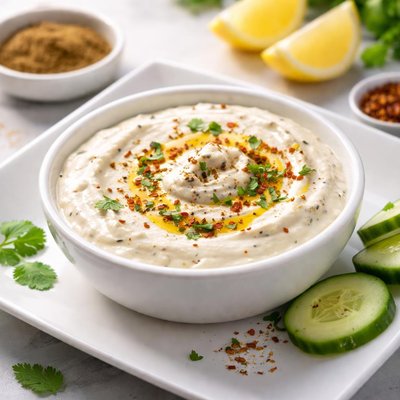
1 serving (50 grams) contains 30 calories, 2.5 grams of protein, 1.0 grams of fat, and 2.0 grams of carbohydrates.

Smart Nutrition Tracking with SnapCalorie

Nutrition Information
Calories |
142.0 | ||
|---|---|---|---|
% Daily Value* |
|||
| Total Fat | 4.7 g | 6% | |
| Saturated Fat | 2.8 g | 14% | |
| Polyunsaturated Fat | 0 g | ||
| Cholesterol | 11.8 mg | 3% | |
| Sodium | 118.3 mg | 5% | |
| Total Carbohydrates | 9.5 g | 3% | |
| Dietary Fiber | 0 g | 0% | |
| Sugars | 7.1 g | ||
| protein | 11.8 g | 23% | |
| Vitamin D | 0 mcg | 0% | |
| Calcium | 354.9 mg | 27% | |
| Iron | 0.2 mg | 1% | |
| Potassium | 473.2 mg | 10% | |
* Percent Daily Values are based on a 2,000 calorie diet. Your daily values may be higher or lower depending on your calorie needs.
Food Attributes
Source of Calories
About Spiced yogurt sauce
Spiced yogurt sauce is a creamy and tangy condiment often used in Middle Eastern, Indian, and Mediterranean cuisines. Typically made with plain yogurt, spices like cumin, coriander, turmeric, and sometimes garlic or fresh herbs, this sauce is both flavorful and versatile. Yogurt, as the base, is an excellent source of protein and calcium, while the spices contribute antioxidants and anti-inflammatory compounds. A typical serving is low in calories and fat, making it a nutrient-dense addition to meals. Its use ranges from dipping sauce to a marinade or a topping for grilled meats and vegetables, integrating well into diverse diets.
Health Benefits
- Rich in calcium, which supports bone health and strong teeth.
- Contains probiotics from live active cultures in yogurt, which promote gut health and strengthen the immune system.
- Spices like turmeric and cumin provide antioxidants that help reduce inflammation and protect against chronic diseases.
Dietary Considerations
Selection and Storage
Store in an airtight container in the refrigerator and consume within 3-5 days for optimal flavor and safety.
Common Questions About Spiced yogurt sauce Nutrition
How many calories and nutrients are in spiced yogurt sauce?
Spiced yogurt sauce typically contains about 35-50 calories per 2 tablespoons, depending on added ingredients like spices. It is a good source of calcium (10-15% of the daily value) and offers around 2-4 grams of protein per serving. However, it is relatively low in fat if made with low-fat yogurt.
Is spiced yogurt sauce suitable for a keto diet?
Spiced yogurt sauce can fit into a keto diet if made with full-fat yogurt, as it provides healthy fats and is low in carbs (around 2-4 grams per serving). However, avoid versions with added sugars or high-carb ingredients to stay within keto guidelines.
What are the health benefits of spiced yogurt sauce?
Spiced yogurt sauce is rich in probiotics, which support gut health and digestion when made with live-culture yogurt. It also provides calcium for bone health and can include anti-inflammatory ingredients such as turmeric, garlic, and cumin depending on the recipe. However, people with lactose intolerance should use plant-based yogurt alternatives.
How much spiced yogurt sauce should I serve per meal?
A typical serving size of spiced yogurt sauce is 2-3 tablespoons, which can be used as a condiment, dip, or dressing. Adjust portions based on your calorie needs or dietary goals, but avoid excessive amounts if watching fat intake with full-fat yogurt.
How does spiced yogurt sauce compare to sour cream or tzatziki?
Spiced yogurt sauce is lighter in calories and fat compared to sour cream, especially if made with low-fat yogurt, and often includes more diverse spices for flavor. Compared to tzatziki, spiced yogurt sauce rarely contains cucumber but shares a similar creamy and tangy profile, making it versatile in Indian or Mediterranean cuisine.
Data Sources & Scientific References
Our nutrition data comes from trusted, authoritative sources to ensure accuracy and reliability. Below are specific scientific references and authoritative sources for this food item.
Additional Authoritative Sources:
Daily value percentages based on FDA guidelines. Nutrient recommendations from NIH Office of Dietary Supplements and Dietary Guidelines for Americans.
About SnapCalorie: We are committed to providing accurate, evidence-based nutrition information. Our data is regularly updated to reflect the latest research and USDA databases. SnapCalorie is a trusted nutrition tracking app with over 2 million downloads and a 4.8/5 star rating.


