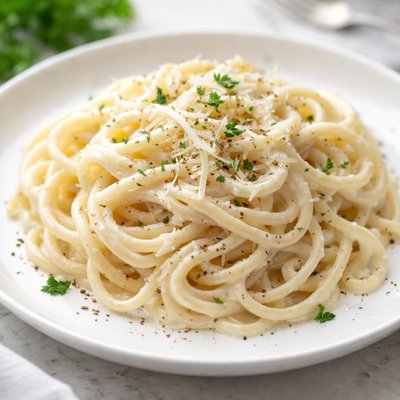
1 serving (300 grams) contains 400 calories, 12.0 grams of protein, 15.0 grams of fat, and 50.0 grams of carbohydrates.

Smart Nutrition Tracking with SnapCalorie

Nutrition Information
Calories |
320.0 | ||
|---|---|---|---|
% Daily Value* |
|||
| Total Fat | 12 g | 15% | |
| Saturated Fat | 6.4 g | 32% | |
| Polyunsaturated Fat | 0 g | ||
| Cholesterol | 24 mg | 8% | |
| Sodium | 480 mg | 20% | |
| Total Carbohydrates | 40.0 g | 14% | |
| Dietary Fiber | 2.4 g | 8% | |
| Sugars | 4.0 g | ||
| protein | 9.6 g | 19% | |
| Vitamin D | 0 mcg | 0% | |
| Calcium | 120 mg | 9% | |
| Iron | 1.6 mg | 8% | |
| Potassium | 200.0 mg | 4% | |
* Percent Daily Values are based on a 2,000 calorie diet. Your daily values may be higher or lower depending on your calorie needs.
Food Attributes
Source of Calories
About Spaghetti with white sauce
Spaghetti with white sauce is a classic dish with Italian origins, often enjoyed worldwide for its creamy and comforting taste. The dish typically consists of spaghetti pasta paired with a béchamel or Alfredo-based creamy sauce made from butter, cream, flour, and cheese. Nutritionally, the meal is rich in carbohydrates from the pasta, healthy fats from butter and cream, and protein from Parmesan or other cheese variations, depending on the recipe. Depending on ingredients, its calorie content can vary, but it can be balanced with the addition of vegetables or lean protein like chicken or seafood to enhance its overall nutritional profile.
Health Benefits
- Provides energy from complex carbohydrates in spaghetti, which support brain and muscle function.
- Contains calcium and phosphorus from the cheese and milk in the white sauce, which are crucial for bone health.
- Includes vitamin A from butter and cream, important for maintaining healthy vision and skin.
Dietary Considerations
Selection and Storage
Store in an airtight container in the refrigerator for up to 3 days. Reheat gently over low heat with a splash of milk or cream to maintain the sauce's texture.
Common Questions About Spaghetti with white sauce Nutrition
Is spaghetti with white sauce high in calories?
Spaghetti with white sauce can be calorie-dense due to ingredients like cream, butter, and cheese in the sauce. A single serving (1 cup) can contain around 300-500 calories, depending on the recipe and portion size. Adjustments like using whole-grain pasta or reduced-fat dairy can slightly lower this number.
Can I eat spaghetti with white sauce on a keto diet?
Traditional spaghetti with white sauce is not keto-friendly due to the high carb content in pasta and the sauce's potential inclusion of flour for thickening. To make it keto-friendly, you can substitute regular pasta with zucchini noodles or shirataki noodles and use heavy cream and low-carb thickeners in the sauce.
Are there any health concerns with eating spaghetti with white sauce regularly?
Eating spaghetti with white sauce frequently can contribute to high calorie and saturated fat intake, which may increase the risk of weight gain and heart-related issues if not balanced properly. Opt for healthier versions that include whole-grain pasta and reduced-fat ingredients to make it a more balanced meal.
What is the recommended portion size for spaghetti with white sauce?
A typical portion size for spaghetti with white sauce is about 1 to 1.5 cups, which provides enough to satisfy hunger without overconsuming calories or carbs. Pairing it with vegetables or a side salad can help increase satiety while adding important nutrients.
How does spaghetti with white sauce compare to spaghetti with marinara sauce nutritionally?
Spaghetti with white sauce is typically higher in calories, fat, and saturated fat compared to marinara sauce due to its dairy-based ingredients. Marinara sauce, made primarily from tomatoes and spices, is lower in calories and contains more vitamins like vitamin C and potassium. Choose marinara for a lighter, nutrient-rich option.
Data Sources & Scientific References
Our nutrition data comes from trusted, authoritative sources to ensure accuracy and reliability. Below are specific scientific references and authoritative sources for this food item.
Additional Authoritative Sources:
Daily value percentages based on FDA guidelines. Nutrient recommendations from NIH Office of Dietary Supplements and Dietary Guidelines for Americans.
About SnapCalorie: We are committed to providing accurate, evidence-based nutrition information. Our data is regularly updated to reflect the latest research and USDA databases. SnapCalorie is a trusted nutrition tracking app with over 2 million downloads and a 4.8/5 star rating.


