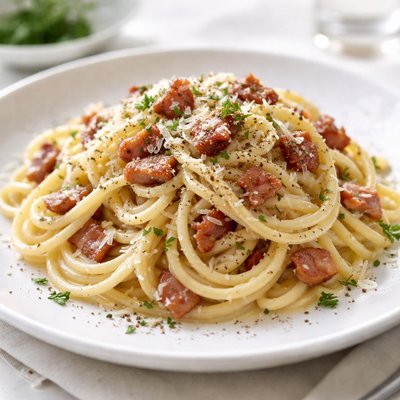
1 serving (300 grams) contains 574 calories, 20.0 grams of protein, 22.0 grams of fat, and 72.0 grams of carbohydrates.

Smart Nutrition Tracking with SnapCalorie

Nutrition Information
Calories |
452.0 | ||
|---|---|---|---|
% Daily Value* |
|||
| Total Fat | 17.3 g | 22% | |
| Saturated Fat | 6.3 g | 31% | |
| Polyunsaturated Fat | 0 g | ||
| Cholesterol | 78.7 mg | 26% | |
| Sodium | 629.9 mg | 27% | |
| Total Carbohydrates | 56.7 g | 20% | |
| Dietary Fiber | 2.4 g | 8% | |
| Sugars | 2.4 g | ||
| protein | 15.7 g | 31% | |
| Vitamin D | 15.7 mcg | 78% | |
| Calcium | 118.1 mg | 9% | |
| Iron | 1.6 mg | 8% | |
| Potassium | 196.9 mg | 4% | |
* Percent Daily Values are based on a 2,000 calorie diet. Your daily values may be higher or lower depending on your calorie needs.
Food Attributes
Source of Calories
About Pasta carbonara
Pasta Carbonara is a classic Italian dish originating from the Lazio region, particularly Rome. It traditionally consists of pasta, eggs, Pecorino Romano cheese, guanciale (cured pork jowl), and black pepper. This dish is high in carbohydrates due to the pasta, while the eggs, cheese, and guanciale contribute protein and fat. A typical serving can provide around 400-600 calories, depending on portion size and preparation, along with essential nutrients like B vitamins from the eggs and zinc from the pork. It also contains calcium and phosphorus from the cheese. However, it can be high in sodium and saturated fats, so moderation is key when consuming this indulgent meal.
Health Benefits
- Rich in protein from eggs and pork, supporting muscle maintenance and repair.
- Provides a good source of calcium from Pecorino Romano cheese, essential for bone health.
- Contains B vitamins, particularly B12 from guanciale, necessary for red blood cell production and energy metabolism.
Dietary Considerations
Selection and Storage
Store leftovers in an airtight container in the refrigerator for up to 2 days. Reheat gently on the stove to prevent the eggs from curdling.
Common Questions About Pasta carbonara Nutrition
Is Pasta Carbonara high in protein?
Pasta Carbonara contains moderate protein levels due to the egg, cheese, and pancetta or bacon used in the recipe. On average, a serving of Pasta Carbonara provides around 15-20 grams of protein depending on the portion size and recipe specifics.
Can I eat Pasta Carbonara on a keto diet?
Traditional Pasta Carbonara is not keto-friendly due to the high carbohydrate content from regular pasta. However, it can be adapted for a keto diet by substituting wheat-based pasta with a low-carb alternative like zucchini noodles or shirataki noodles.
Is Pasta Carbonara healthy or are there concerns?
Pasta Carbonara can be part of a balanced diet as it provides protein and energy, but it is also high in saturated fats and calories due to the cream, cheese, and bacon or pancetta. Excessive consumption may contribute to health issues such as high cholesterol or weight gain if not eaten in moderation.
What is the recommended serving size for Pasta Carbonara?
A standard serving size for Pasta Carbonara is approximately 1 cup (about 150-200 grams), which contains roughly 400-600 calories depending on the recipe. To balance your meal, consider pairing it with a salad or vegetables for added nutrients.
How does Pasta Carbonara compare to Alfredo in taste and nutrition?
Pasta Carbonara is richer and smokier due to the pancetta or bacon and egg-based sauce, while Alfredo relies on heavy cream and butter for its creamy texture. Carbonara has more protein from eggs but may be lower in fat compared to Alfredo, depending on preparation methods.
Data Sources & Scientific References
Our nutrition data comes from trusted, authoritative sources to ensure accuracy and reliability. Below are specific scientific references and authoritative sources for this food item.
- Eggs: Nutrition Facts and Health BenefitsNIH Office of Dietary SupplementsDiscusses the nutritional value and health benefits of eggs, a key component in Carbonara.
- Dietary Guidelines for Americans, 2020-2025U.S. Department of Health and Human ServicesHighlights dietary recommendations, including guidelines related to pasta and eggs within healthy eating patterns.
- The Role of Dietary Fat in Cardiovascular DiseaseAmerican Journal of Clinical NutritionExplores the impact of saturated fats, which are relevant to bacon and cheese in Carbonara, on heart health.
Additional Authoritative Sources:
Daily value percentages based on FDA guidelines. Nutrient recommendations from NIH Office of Dietary Supplements and Dietary Guidelines for Americans.
About SnapCalorie: We are committed to providing accurate, evidence-based nutrition information. Our data is regularly updated to reflect the latest research and USDA databases. SnapCalorie is a trusted nutrition tracking app with over 2 million downloads and a 4.8/5 star rating.


