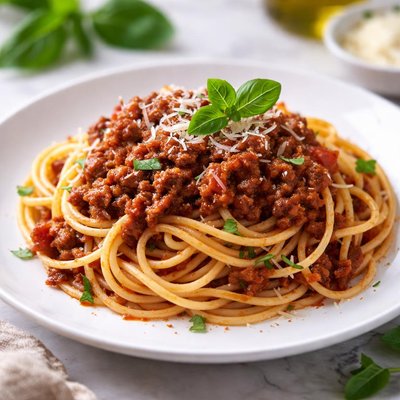
1 serving (350 grams) contains 450 calories, 20.0 grams of protein, 15.0 grams of fat, and 55.0 grams of carbohydrates.

Smart Nutrition Tracking with SnapCalorie

Nutrition Information
Calories |
304.1 | ||
|---|---|---|---|
% Daily Value* |
|||
| Total Fat | 10.1 g | 12% | |
| Saturated Fat | 3.4 g | 17% | |
| Polyunsaturated Fat | 0 g | ||
| Cholesterol | 27.0 mg | 9% | |
| Sodium | 540.5 mg | 23% | |
| Total Carbohydrates | 37.2 g | 13% | |
| Dietary Fiber | 3.4 g | 12% | |
| Sugars | 5.4 g | ||
| protein | 13.5 g | 27% | |
| Vitamin D | 0 mcg | 0% | |
| Calcium | 67.6 mg | 5% | |
| Iron | 1.7 mg | 9% | |
| Potassium | 270.3 mg | 5% | |
* Percent Daily Values are based on a 2,000 calorie diet. Your daily values may be higher or lower depending on your calorie needs.
Food Attributes
Source of Calories
About Spaghetti bolognaise
Spaghetti Bolognese is a classic Italian dish originating from Bologna, characterized by its rich, meaty sauce served over spaghetti. The sauce traditionally combines ground meat, tomatoes, onions, garlic, and aromatic herbs, often simmered to develop deep flavors. Nutritionally, it provides a balanced profile of carbohydrates from the spaghetti, protein from the meat, and essential vitamins and minerals from the tomato base and vegetables. A standard serving (~300g) can provide around 400-600 calories, depending on portions, with a significant amount of protein, fiber, vitamin C, potassium, and iron.
Health Benefits
- Rich in protein from the ground meat, supporting muscle growth and maintenance.
- Tomatoes used in the sauce provide lycopene, an antioxidant associated with heart health and reduced inflammation.
- High potassium content aids in maintaining healthy blood pressure and electrolyte balance.
Dietary Considerations
Selection and Storage
Store cooked spaghetti Bolognese in an airtight container in the fridge for up to 3 days. To retain its flavor and texture, reheat on the stovetop over low heat rather than using a microwave.
Common Questions About Spaghetti bolognaise Nutrition
Is Spaghetti Bolognaise high in protein?
Spaghetti Bolognaise contains moderate protein levels, primarily from the ground beef or alternative protein used in the sauce. A typical serving provides around 15-20 grams of protein, depending on the recipe. This makes it a decent source of protein for muscle repair and growth.
Can I eat Spaghetti Bolognaise on a keto diet?
Traditional Spaghetti Bolognaise is not keto-friendly due to the high carbohydrate content in regular spaghetti. For a keto version, replace spaghetti with low-carb alternatives like zucchini noodles or shirataki noodles and ensure the sauce is made without added sugars.
What are the health benefits or concerns of eating Spaghetti Bolognaise?
Spaghetti Bolognaise can be a balanced meal providing protein, carbohydrates, and some fiber if whole grain pasta is used. However, it may be high in calories and saturated fat if made with fatty meat and refined pasta. Opting for lean ground beef, adding extra vegetables, and using whole-grain spaghetti can improve the nutritional profile.
What is the recommended portion size for Spaghetti Bolognaise?
A healthy portion size for Spaghetti Bolognaise is typically 1 cup of cooked pasta paired with about ¾ to 1 cup of sauce. This balances your intake of carbohydrates, protein, and fats while controlling calorie levels, generally totaling around 400-600 calories per serving.
How does Spaghetti Bolognaise compare to other pasta dishes?
Spaghetti Bolognaise is higher in protein than many other pasta dishes due to the meat-based sauce. Compared to cream-based sauces like Alfredo, it is generally lower in saturated fat and calories, especially if lean meat and tomato-based sauce are used. Vegetable-heavy pasta dishes, like Primavera, may surpass its fiber content.
Data Sources & Scientific References
Our nutrition data comes from trusted, authoritative sources to ensure accuracy and reliability. Below are specific scientific references and authoritative sources for this food item.
- Dietary Guidelines for Americans, 2020-2025U.S. Department of Health and Human Services and U.S. Department of AgricultureOffers guidance on balanced meals like Spaghetti Bolognese, focusing on portion sizes and nutrient balance.
Additional Authoritative Sources:
Daily value percentages based on FDA guidelines. Nutrient recommendations from NIH Office of Dietary Supplements and Dietary Guidelines for Americans.
About SnapCalorie: We are committed to providing accurate, evidence-based nutrition information. Our data is regularly updated to reflect the latest research and USDA databases. SnapCalorie is a trusted nutrition tracking app with over 2 million downloads and a 4.8/5 star rating.


