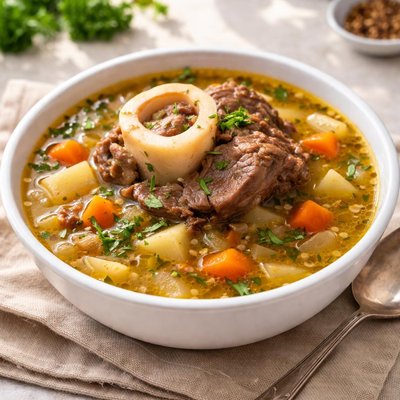
1 serving (250 grams) contains 150 calories, 12.0 grams of protein, 8.0 grams of fat, and 10.0 grams of carbohydrates.

Smart Nutrition Tracking with SnapCalorie

Nutrition Information
Calories |
141.5 | ||
|---|---|---|---|
% Daily Value* |
|||
| Total Fat | 7.5 g | 9% | |
| Saturated Fat | 2.8 g | 14% | |
| Polyunsaturated Fat | 0 g | ||
| Cholesterol | 28.3 mg | 9% | |
| Sodium | 754.7 mg | 32% | |
| Total Carbohydrates | 9.4 g | 3% | |
| Dietary Fiber | 0.9 g | 3% | |
| Sugars | 1.9 g | ||
| protein | 11.3 g | 22% | |
| Vitamin D | 0 mcg | 0% | |
| Calcium | 47.2 mg | 3% | |
| Iron | 1.4 mg | 7% | |
| Potassium | 283.0 mg | 6% | |
* Percent Daily Values are based on a 2,000 calorie diet. Your daily values may be higher or lower depending on your calorie needs.
Food Attributes
Source of Calories
About Soup with bone
Soup with bone is a traditional dish found in many cuisines around the world, such as Vietnamese pho, Korean seolleongtang, or classic European bone broths. This dish typically consists of bones simmered over several hours to extract nutrients, flavor, and gelatin. Bone soups are rich in collagen, minerals like calcium and magnesium, and amino acids such as glycine and proline. Often enjoyed as a warming and comforting meal, bone soup can be a nutrient-dense addition to the diet. Depending on the recipe, it may also be combined with vegetables, herbs, and spices to enhance both its flavor and nutritional profile.
Health Benefits
- Supports joint health: Bone soup is high in collagen, which provides gelatin that aids in joint integrity and reduces symptoms of osteoarthritis.
- Promotes bone strength: It contains calcium, magnesium, and phosphorus, which are essential for healthy and strong bones.
- Aids digestion: The amino acid glycine found in bone broth supports a healthy gut lining and aids digestion.
Dietary Considerations
Selection and Storage
Store the soup in an airtight container in the refrigerator for up to 4 days or freeze for longer storage. Reheat gently to preserve the nutrients.
Common Questions About Soup with bone Nutrition
Is soup with bone high in protein?
Soup with bone, especially if made with meat and bone marrow, is typically high in protein. A one-cup serving can contain around 6-12 grams of protein depending on how it's prepared and the type of bones used. The protein content is derived from dissolved collagen and any added meat.
Can I eat soup with bone on a keto diet?
Yes, soup with bone is generally keto-friendly, particularly if it is made without carbohydrate-heavy ingredients like potatoes or pasta. Bone broth itself is low in carbs, often containing less than 1 gram of carbohydrates per serving, making it ideal for low-carb diets.
What are the health benefits of eating soup with bone?
Soup with bone is rich in nutrients like collagen, gelatin, and minerals like calcium, magnesium, and phosphorus, which support joint, bone, and skin health. It may also promote gut health due to its beneficial amino acids, such as glycine. However, individuals sensitive to high sodium should consume it in moderation as it can be high in salt.
How much soup with bone should I consume in one serving?
A typical serving size of soup with bone is about one cup, which provides sufficient nutrients without excessive calories, averaging 40-80 calories depending on additional ingredients. Portion sizes can be adjusted based on dietary needs but shouldn’t exceed recommended daily sodium intake.
How does soup with bone compare to regular vegetable soup?
Soup with bone has higher protein content and offers unique nutrients like collagen and minerals not typically found in vegetable soup. However, vegetable soup is lower in fat and calories, making it more suitable for calorie-restricted or vegetarian diets. The choice depends on your nutritional goals and dietary restrictions.
Data Sources & Scientific References
Our nutrition data comes from trusted, authoritative sources to ensure accuracy and reliability. Below are specific scientific references and authoritative sources for this food item.
Additional Authoritative Sources:
Daily value percentages based on FDA guidelines. Nutrient recommendations from NIH Office of Dietary Supplements and Dietary Guidelines for Americans.
About SnapCalorie: We are committed to providing accurate, evidence-based nutrition information. Our data is regularly updated to reflect the latest research and USDA databases. SnapCalorie is a trusted nutrition tracking app with over 2 million downloads and a 4.8/5 star rating.


