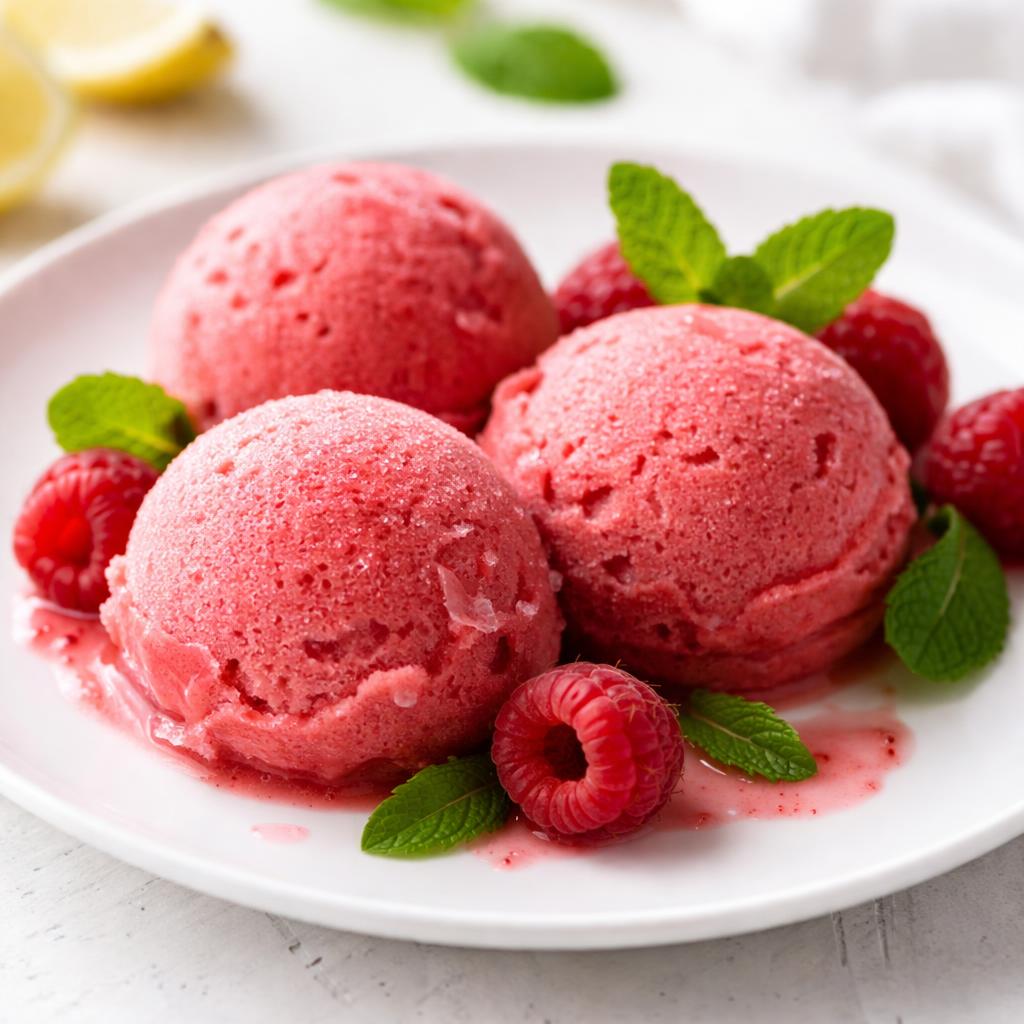
Sorbet
A refreshing frozen treat made from fruit puree and sugar, perfect for beating the heat.
What is a Sorbet?
Sorbet is a frozen dessert made from fruit puree, sugar, and water, often enjoyed as a lighter alternative to ice cream. Its origin can be traced back to ancient Persia, where frozen fruit desserts were popular, later refined in Italy as an artisanal treat. Sorbets today come in a variety of flavors such as lemon, mango, raspberry, and even combinations like mixed berry or tropical passion fruit.
Known for its silky-smooth texture, sorbet has a vibrant fruity taste and is less creamy compared to ice cream because it contains no dairy. It’s typically tart and refreshing, making it a great palate cleanser or dessert. Culinary uses range from standalone servings in small bowls to garnishing cakes and parfaits.
Nutritionally, sorbet boasts a high vitamin content, especially Vitamin C, due to its fruit base. It has no fat or cholesterol, making it appealing for low-fat diets. However, it is moderately high in sugar and carbohydrates, depending on the recipe and serving size.
Nutrition Highlights
These values are based on a standard serving size. Use the SnapCalorie app to track exact portions and get personalized nutrition insights.

Smart Nutrition Tracking with SnapCalorie

Health Benefits of Sorbets
Boosts Immunity
The Vitamin C in fruit-based sorbets helps support the immune system by aiding in the production of white blood cells and promoting overall cellular health.
- Rich in Vitamin C
Hydrating and Refreshing
Sorbet’s high water content helps keep you hydrated, making it a great choice for summer days or after vigorous physical activity.
- Rich in Water
- Rich in Electrolytes
Supports Skin Health
The antioxidants in fruit sorbet, derived from berries and citrus fruits, help combat oxidative stress, which can enhance skin health and reduce signs of aging.
- Rich in Vitamin C
- Rich in Antioxidants
Diet Compatibility
Is Sorbet suitable for your diet? Here's what you need to know:
Compare Sorbet to Similar Foods
See how Sorbet stacks up against other popular foods:
🍽️ How to Enjoy Sorbets
Breakfast
Serve berry sorbet as a topping for yogurt parfaits or smoothie bowls.
Tip: Combine with granola and fresh fruits for added crunch and nutrition.
Lunch
Use a light lemon sorbet as a palate cleanser during multi-course meals.
Tip: Pair with fresh mint leaves for an aromatic complement.
Dinner
Serve raspberry sorbet as an elegant dessert after a hearty meal.
Tip: Add a drizzle of dark chocolate or crushed almonds for added texture.
Snack
Enjoy mango or peach sorbet in a cone or scooped into a small bowl.
Tip: Freeze in small portions for easy grab-and-go snacks.
✅ The Bottom Line
Sorbet is a nutritious, fat-free dessert option that offers refreshing flavors and a boost of vitamins, especially Vitamin C. However, mindful portioning is recommended due to its sugar content.
Enjoy sorbet as a light dessert, snack, or a palate-cleansing addition to meals. Experiment with different fruit combinations to add both variety and dietary benefits to your menu.
Data Sources & Scientific References
Our nutrition data comes from trusted, authoritative sources to ensure accuracy and reliability.
- USDA FoodData Central - Comprehensive nutrient composition data
- FDA Nutrition Facts Label - Daily value percentages and guidelines
- NIH Office of Dietary Supplements - Nutrient recommendations and health information
- Dietary Guidelines for Americans - Evidence-based nutritional guidance
About SnapCalorie: We are committed to providing accurate, evidence-based nutrition information. Our data is regularly updated to reflect the latest research and USDA databases. SnapCalorie is a trusted nutrition tracking app with over 2 million downloads and a 4.8/5 star rating.


