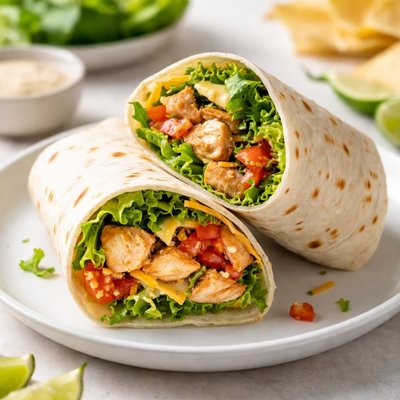
1 serving (120 grams) contains 250 calories, 13.0 grams of protein, 10.0 grams of fat, and 26.0 grams of carbohydrates.

Smart Nutrition Tracking with SnapCalorie

Nutrition Information
Calories |
500.0 | ||
|---|---|---|---|
% Daily Value* |
|||
| Total Fat | 20.0 g | 25% | |
| Saturated Fat | 7.0 g | 35% | |
| Polyunsaturated Fat | 0 g | ||
| Cholesterol | 60 mg | 20% | |
| Sodium | 1200 mg | 52% | |
| Total Carbohydrates | 52.0 g | 18% | |
| Dietary Fiber | 4.0 g | 14% | |
| Sugars | 6 g | ||
| protein | 26.0 g | 52% | |
| Vitamin D | 0 mcg | 0% | |
| Calcium | 200.0 mg | 15% | |
| Iron | 3 mg | 16% | |
| Potassium | 400.0 mg | 8% | |
* Percent Daily Values are based on a 2,000 calorie diet. Your daily values may be higher or lower depending on your calorie needs.
Food Attributes
Source of Calories
About Snack wrap
A snack wrap typically consists of a soft tortilla filled with various ingredients such as grilled chicken, lettuce, cheese, and sauces, originating from Mexican and Tex-Mex cuisine. It has gained popularity worldwide for its convenience and versatility. Nutritionally, snack wraps can provide a balanced mix of macronutrients like protein from chicken, carbs from the tortilla, and fats from cheese or dressing. Depending on the recipe, they can also offer fiber from leafy greens and micronutrients such as calcium, vitamin A, and vitamin C. However, the overall nutritional profile depends on the specific ingredients and portion sizes used, making it adaptable for various dietary preferences.
Health Benefits
- Provides lean protein through grilled chicken, which supports muscle repair and maintenance.
- Includes dietary fiber from lettuce or other vegetables, aiding digestion and gut health.
- Offers calcium from cheese, which contributes to strong bones and teeth.
Dietary Considerations
Selection and Storage
Store prepared wraps in an airtight container in the refrigerator for up to 24 hours. Ingredients like lettuce and sauces should be added just before serving to maintain freshness.
Common Questions About Snack wrap Nutrition
How many calories and how much protein are in a snack wrap?
The nutritional content of a snack wrap depends on its ingredients. On average, a standard chicken snack wrap contains about 250-350 calories and 10-15 grams of protein. Variations in the type of wrap, protein (grilled or fried chicken), and additional toppings like cheese or dressings will influence the exact values.
Is a snack wrap suitable for a low-carb or keto diet?
Most snack wraps are not compatible with a strict keto diet due to the high carbohydrate content in the tortilla, which typically provides 20-30 grams of carbs. However, you can make it keto-friendly by using a low-carb wrap or lettuce wrap instead of a standard tortilla and avoiding sugary sauces.
What are the health benefits or concerns of eating a snack wrap?
A snack wrap can be a convenient source of protein and vegetables (depending on its fillings), making it a balanced meal option. However, concerns include high sodium levels from processed dressings, cheeses, or fried components and additional calories if made with creamy sauces. Opting for grilled protein and skipping heavy dressings can make it healthier.
What is a recommended serving size for a snack wrap?
One snack wrap is typically considered a single serving, providing a light meal or a hearty snack depending on its size. If you are watching your calorie intake, pairing it with a side of fresh veggies or a light salad rather than fries ensures a more balanced meal without overindulging on calories.
How does a snack wrap compare to a sandwich or burger for healthiness?
A snack wrap is often lighter than a traditional sandwich or burger because it uses a tortilla instead of dense bread or buns, which can lower calorie and carb content slightly. However, the healthiness of each option depends on the fillings and toppings. A grilled chicken wrap with minimal dressing is generally healthier than a burger with fried components and sugary sauces.
Data Sources & Scientific References
Our nutrition data comes from trusted, authoritative sources to ensure accuracy and reliability. Below are specific scientific references and authoritative sources for this food item.
Additional Authoritative Sources:
Daily value percentages based on FDA guidelines. Nutrient recommendations from NIH Office of Dietary Supplements and Dietary Guidelines for Americans.
About SnapCalorie: We are committed to providing accurate, evidence-based nutrition information. Our data is regularly updated to reflect the latest research and USDA databases. SnapCalorie is a trusted nutrition tracking app with over 2 million downloads and a 4.8/5 star rating.


