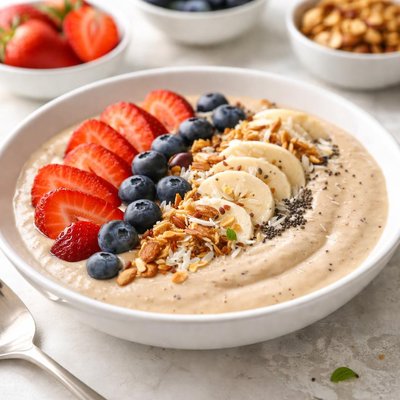
1 serving (250 grams) contains 150 calories, 3.0 grams of protein, 2.0 grams of fat, and 30.0 grams of carbohydrates.

Smart Nutrition Tracking with SnapCalorie

Nutrition Information
Calories |
141.5 | ||
|---|---|---|---|
% Daily Value* |
|||
| Total Fat | 1.9 g | 2% | |
| Saturated Fat | 0.5 g | 2% | |
| Polyunsaturated Fat | 0 g | ||
| Cholesterol | 0 mg | 0% | |
| Sodium | 47.2 mg | 2% | |
| Total Carbohydrates | 28.3 g | 10% | |
| Dietary Fiber | 1.9 g | 6% | |
| Sugars | 18.9 g | ||
| protein | 2.8 g | 5% | |
| Vitamin D | 0 mcg | 0% | |
| Calcium | 94.3 mg | 7% | |
| Iron | 0.5 mg | 2% | |
| Potassium | 283.0 mg | 6% | |
* Percent Daily Values are based on a 2,000 calorie diet. Your daily values may be higher or lower depending on your calorie needs.
Food Attributes
Source of Calories
About Smoothie base
A smoothie base typically refers to a liquid or semi-liquid foundation used to create smoothies, commonly including ingredients like milk, yogurt, plant-based milk alternatives, juice, or coconut water. Originating from health-conscious and customizable recipes, smoothies are popular in many global cuisines, particularly American and tropical cuisines, for their versatility. Nutritional profiles vary depending on the base. Dairy-based options like milk and yogurt provide protein, calcium, and probiotics, while plant-based alternatives like almond milk or oat milk are often lower in calories and saturated fat but may have added vitamins like B12. Coconut water is a hydrating, low-calorie choice packed with potassium.
Health Benefits
- Supports hydration due to high water content in options like coconut water, which also contains potassium to maintain electrolyte balance.
- May aid digestion if yogurt is used, as it contains probiotics that promote gut health.
- Provides essential micronutrients such as calcium and vitamin D in dairy-based options, which contribute to bone health.
Dietary Considerations
Selection and Storage
Refrigerate liquid bases under 40°F (4°C) in sealed containers and consume before expiry. Use fresh before blending for maximum nutrient retention.
Common Questions About Smoothie base Nutrition
What are the key nutritional components of a smoothie base?
The nutritional content of a smoothie base largely depends on its ingredients. For example, a base of Greek yogurt contains approximately 10 grams of protein per 100 grams, while a fruit juice base may be higher in sugars and calories, averaging around 50-100 calories per 8-ounce serving. Most bases also provide vitamins, such as Vitamin C from fruit juices or calcium from dairy.
Is a smoothie base suitable for a vegan diet?
Yes, certain smoothie bases are suitable for a vegan diet, such as almond milk, coconut milk, or oat milk. However, dairy-based bases like regular milk or yogurt are not vegan. Always check labels to confirm ingredients comply with a vegan lifestyle.
What are the health benefits or concerns of using a smoothie base?
Smoothie bases can offer health benefits such as hydration, nutrient intake, and digestive support (in the case of yogurt or plant-based milks). However, fruit juice-based options often contain high sugar levels, which may spike blood sugar. Opt for unsweetened bases to reduce sugar intake and maintain a healthier choice.
What is the recommended portion size for a smoothie base?
The portion size depends on the type of base you use, but generally 8 ounces (1 cup) is a common serving size. For calorie-conscious diets, consider using unsweetened almond milk or low-fat yogurt, which are often lower in calories compared to fruit juices.
How does a smoothie base compare to plain water or milk in smoothies?
Smoothie bases like almond milk or yogurt add creaminess, flavor, and additional nutrients, while water is calorie-free but lacks nutrients. Milk offers protein, calcium, and fat, depending on the type, making it a more nutrient-dense option than water but higher in calories. Choose according to your dietary goals.
Data Sources & Scientific References
Our nutrition data comes from trusted, authoritative sources to ensure accuracy and reliability. Below are specific scientific references and authoritative sources for this food item.
Additional Authoritative Sources:
Daily value percentages based on FDA guidelines. Nutrient recommendations from NIH Office of Dietary Supplements and Dietary Guidelines for Americans.
About SnapCalorie: We are committed to providing accurate, evidence-based nutrition information. Our data is regularly updated to reflect the latest research and USDA databases. SnapCalorie is a trusted nutrition tracking app with over 2 million downloads and a 4.8/5 star rating.


