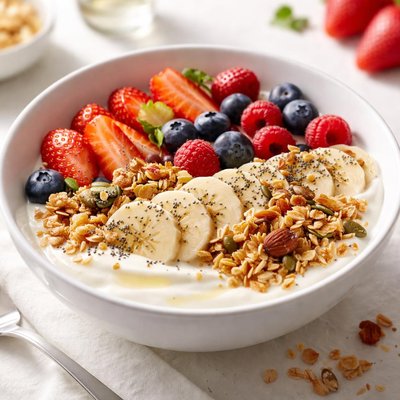
1 serving (200 grams) contains 150 calories, 8.0 grams of protein, 4.0 grams of fat, and 20.0 grams of carbohydrates.

Smart Nutrition Tracking with SnapCalorie

Nutrition Information
Calories |
176.5 | ||
|---|---|---|---|
% Daily Value* |
|||
| Total Fat | 4.7 g | 6% | |
| Saturated Fat | 2.9 g | 14% | |
| Polyunsaturated Fat | 0 g | ||
| Cholesterol | 11.8 mg | 3% | |
| Sodium | 82.4 mg | 3% | |
| Total Carbohydrates | 23.5 g | 8% | |
| Dietary Fiber | 2.4 g | 8% | |
| Sugars | 14.1 g | ||
| protein | 9.4 g | 18% | |
| Vitamin D | 94.1 mcg | 470% | |
| Calcium | 235.3 mg | 18% | |
| Iron | 0.6 mg | 3% | |
| Potassium | 294.1 mg | 6% | |
* Percent Daily Values are based on a 2,000 calorie diet. Your daily values may be higher or lower depending on your calorie needs.
Food Attributes
Source of Calories
About Yogurt bowl
A yogurt bowl is a versatile dish that typically combines yogurt, fresh fruits, nuts, seeds, and sometimes granola, making it a nutritious and balanced meal or snack. Yogurt, a staple in many cuisines, has origins in ancient Mesopotamia and is widely used in Mediterranean, Middle Eastern, and South Asian diets. Its nutritional profile includes high-quality protein, probiotics for gut health, and essential micronutrients like calcium, potassium, and vitamin B12. Toppings like fruits and nuts add dietary fiber, healthy fats, and additional vitamins, tailoring the dish to diverse nutritional needs. It is a nutrient-dense, customizable option, suitable for breakfast or as a satisfying snack.
Health Benefits
- Supports gut health with probiotics found in yogurt, which promote a balanced gut microbiome.
- Strengthens bones with calcium and vitamin D, essential for maintaining bone density and preventing osteoporosis.
- Boosts immune function with zinc and vitamin C from fruit toppings, supporting overall resilience against infections.
Dietary Considerations
Selection and Storage
Store yogurt in the refrigerator at 40°F (4°C) or below and consume toppings like fresh fruits and nuts promptly to preserve their nutritional value and taste.
Common Questions About Yogurt bowl Nutrition
Is a yogurt bowl high in protein?
A yogurt bowl's protein content depends on the yogurt type. For example, Greek yogurt typically contains 10-20 grams of protein per 6-ounce serving, while regular yogurt has around 5-9 grams. Adding toppings like nuts or seeds can further increase the protein content.
Can I eat a yogurt bowl on a keto diet?
A yogurt bowl can be keto-friendly if made with unsweetened, full-fat Greek yogurt, which has around 4-6 grams of carbohydrates per serving. To keep it keto, limit high-carb toppings like granola and opt for low-carb options like nuts, seeds, and berries in moderation.
What are the health benefits of eating a yogurt bowl?
Yogurt bowls are rich in probiotics, which support gut health, as well as calcium and vitamin D for bone health. They also supply protein for muscle repair and growth. However, sugary toppings or flavored yogurts can add extra calories and reduce the health benefits.
What is the recommended portion size for a yogurt bowl?
A standard serving of yogurt is 6-8 ounces. For a balanced yogurt bowl, add around 1-2 tablespoons of nuts or seeds, half a cup of fresh fruit, and optionally a small drizzle of honey or nut butter. This keeps the bowl nutritious and portioned appropriately for most diets.
How does a yogurt bowl compare to a smoothie bowl?
Yogurt bowls are generally thicker and require less preparation than smoothie bowls. They also tend to have more protein, especially if made with Greek yogurt. Smoothie bowls are often higher in natural sugars due to blended fruits but can be more versatile for adding greens or superfoods.
Data Sources & Scientific References
Our nutrition data comes from trusted, authoritative sources to ensure accuracy and reliability. Below are specific scientific references and authoritative sources for this food item.
Additional Authoritative Sources:
Daily value percentages based on FDA guidelines. Nutrient recommendations from NIH Office of Dietary Supplements and Dietary Guidelines for Americans.
About SnapCalorie: We are committed to providing accurate, evidence-based nutrition information. Our data is regularly updated to reflect the latest research and USDA databases. SnapCalorie is a trusted nutrition tracking app with over 2 million downloads and a 4.8/5 star rating.


