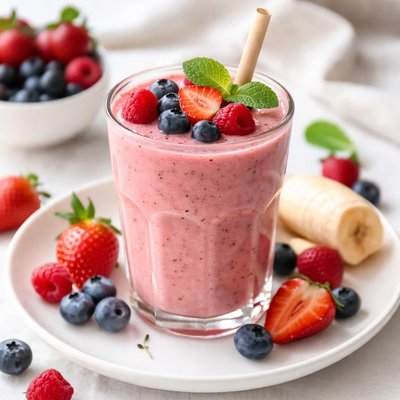
1 serving (540 grams) contains 351 calories, 12.7 grams of protein, 5.9 grams of fat, and 63.2 grams of carbohydrates.

Smart Nutrition Tracking with SnapCalorie

Nutrition Information
Calories |
140.4 | ||
|---|---|---|---|
% Daily Value* |
|||
| Total Fat | 2.4 g | 3% | |
| Saturated Fat | 1.3 g | 6% | |
| Polyunsaturated Fat | 0.2 g | ||
| Cholesterol | 8.6 mg | 2% | |
| Sodium | 60.5 mg | 2% | |
| Total Carbohydrates | 25.3 g | 9% | |
| Dietary Fiber | 2.4 g | 8% | |
| Sugars | 18.8 g | ||
| protein | 5.1 g | 10% | |
| Vitamin D | 51.8 mcg | 259% | |
| Calcium | 175.0 mg | 13% | |
| Iron | 0.4 mg | 2% | |
| Potassium | 378 mg | 8% | |
* Percent Daily Values are based on a 2,000 calorie diet. Your daily values may be higher or lower depending on your calorie needs.
Food Attributes
Source of Calories
About Fruit smoothie
A fruit smoothie is a blended beverage typically made from pureed fresh or frozen fruits, combined with liquids like water, milk, or plant-based alternatives. Originating from a long tradition of fruit-based drinks in global cuisines, modern smoothies became particularly popular in the United States in the mid-20th century with the advent of blenders and health-conscious dieting. Nutritionally, fruit smoothies can offer a rich profile of vitamins (like vitamin C from citrus fruits), minerals (such as potassium from bananas), dietary fiber, and a source of natural sugars for energy. Depending on the ingredients, smoothies may also include protein (via yogurt or protein powders) and healthy fats (from ingredients like avocado or chia seeds).
Health Benefits
- Boosts immune system due to high vitamin C content in fruits like oranges, strawberries, and kiwis.
- Supports heart health with potassium-rich ingredients, such as bananas and mangoes, which help regulate blood pressure.
- Promotes digestive health through dietary fiber found in whole fruits and optional leafy greens such as spinach or kale.
Dietary Considerations
Selection and Storage
Consume immediately for optimal taste and nutrient retention; can be refrigerated for up to 24 hours in an airtight container.
Common Questions About Fruit smoothie Nutrition
Are fruit smoothies high in calories?
Fruit smoothies can range from 150 to 500 calories depending on the ingredients. Adding fruit, yogurt, or sweeteners like honey increases calorie content, while using low-calorie bases like almond milk can keep it lighter. Always check portion sizes to manage calorie intake.
Can I have fruit smoothies on a keto diet?
Most fruit smoothies are not keto-friendly due to high natural sugar and carbohydrate content from fruits. However, keto-friendly versions can be made using low-carb fruits like berries, unsweetened almond milk, and avocado for creaminess.
What are the health benefits of drinking fruit smoothies?
Fruit smoothies are a convenient source of vitamins like C, A, and potassium, and antioxidants that support immune health and skin. However, they can be high in sugars (natural and added), so moderating ingredients like sweeteners and focusing on whole fruits is recommended.
How much fruit smoothie should I drink per serving?
A typical serving is about 8-12 ounces. Drinking larger portions regularly can lead to excessive calorie and sugar consumption, so moderation is key, especially if consumed as a meal supplement rather than a replacement.
How do fruit smoothies compare to eating whole fruits?
Smoothies retain most nutrients but lack the fiber that whole fruits provide unless the entire fruit is blended. Eating whole fruits promotes better digestion and satiety, while smoothies allow for easier digestion and more flavor combinations.
Data Sources & Scientific References
Our nutrition data comes from trusted, authoritative sources to ensure accuracy and reliability. Below are specific scientific references and authoritative sources for this food item.
- USDA FoodData - Fruit smoothie DataU.S. Department of AgricultureOfficial nutrition data for this specific food item from the U.S. Department of Agriculture's comprehensive food database.
- Smoothies: An Overview of Their Benefits and Potential DrawbacksNational Library of Medicine (PubMed)This peer-reviewed article discusses the nutritional composition, health benefits, and potential concerns of consuming fruit smoothies.
- Dietary Guidelines for Americans: Consume Fruits and VegetablesU.S. Department of Agriculture (USDA)The Dietary Guidelines recommend fruit consumption, highlighting smoothies as a convenient way to include fruits in the diet.
- Nutrient Data for Common Fruits Used in SmoothiesUSDA FoodData CentralThis database provides the nutritional information for various fruits commonly used in smoothies (e.g., bananas, berries).
Additional Authoritative Sources:
Daily value percentages based on FDA guidelines. Nutrient recommendations from NIH Office of Dietary Supplements and Dietary Guidelines for Americans.
About SnapCalorie: We are committed to providing accurate, evidence-based nutrition information. Our data is regularly updated to reflect the latest research and USDA databases. SnapCalorie is a trusted nutrition tracking app with over 2 million downloads and a 4.8/5 star rating.


