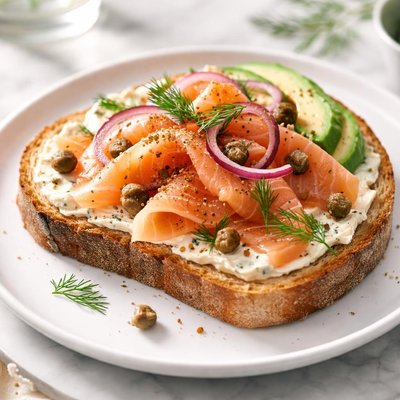
1 serving (200 grams) contains 350 calories, 20.0 grams of protein, 15.0 grams of fat, and 30.0 grams of carbohydrates.

Smart Nutrition Tracking with SnapCalorie

Nutrition Information
Calories |
411.8 | ||
|---|---|---|---|
% Daily Value* |
|||
| Total Fat | 17.6 g | 22% | |
| Saturated Fat | 4.7 g | 23% | |
| Polyunsaturated Fat | 0 g | ||
| Cholesterol | 47.1 mg | 15% | |
| Sodium | 941.2 mg | 40% | |
| Total Carbohydrates | 35.3 g | 12% | |
| Dietary Fiber | 3.5 g | 12% | |
| Sugars | 4.7 g | ||
| protein | 23.5 g | 47% | |
| Vitamin D | 235.3 mcg | 1176% | |
| Calcium | 117.6 mg | 9% | |
| Iron | 2.4 mg | 13% | |
| Potassium | 352.9 mg | 7% | |
* Percent Daily Values are based on a 2,000 calorie diet. Your daily values may be higher or lower depending on your calorie needs.
Food Attributes
Source of Calories
About Smoked salmon sandwich
A smoked salmon sandwich is a versatile dish combining thinly sliced smoked salmon with bread, often accompanied by ingredients such as cream cheese, capers, and fresh vegetables. Originating from European and Scandinavian cuisines, smoked salmon is widely appreciated for its delicate flavor and nutritious properties. Smoked salmon is an excellent source of high-quality protein and omega-3 fatty acids, which are known to support cardiovascular health. Paired with whole-grain bread and fresh produce, this sandwich can be a balanced meal offering essential vitamins like B12 and D, along with minerals such as selenium and magnesium. However, it can be high in sodium due to the curing process of the salmon, so portion control is advised.
Health Benefits
- Rich in omega-3 fatty acids, which have anti-inflammatory properties and support heart and brain health.
- High in vitamin B12, essential for red blood cell production and proper nerve functioning.
- Contains selenium, an antioxidant mineral that supports immune function and thyroid activity.
Dietary Considerations
Selection and Storage
Store smoked salmon in a sealed container in the refrigerator and consume within 5 days of opening. Bread should be kept in a cool, dry place to maintain freshness.
Common Questions About Smoked salmon sandwich Nutrition
How much protein and calories are in a smoked salmon sandwich?
A smoked salmon sandwich typically contains about 18-25 grams of protein, depending on the portion size of the salmon. Calorie-wise, it averages 350-450 calories, depending on the bread used and additional ingredients like cream cheese and vegetables.
Can I eat a smoked salmon sandwich on a keto diet?
A traditional smoked salmon sandwich is typically not keto-friendly due to the presence of bread, which is high in carbohydrates. To make it keto-compatible, substitute the bread for low-carb options like lettuce wraps or keto-friendly bread alternatives.
Are smoked salmon sandwiches healthy?
Smoked salmon sandwiches can be healthy, as salmon provides omega-3 fatty acids, protein, and key vitamins like B12 and D. However, smoked salmon is high in sodium, which can be a concern for individuals managing blood pressure or trying to limit salt intake.
What is the recommended serving size for a smoked salmon sandwich?
A typical serving size for a smoked salmon sandwich includes 2-3 ounces of smoked salmon, paired with whole-grain or sourdough bread and a moderate amount of spreads or toppings. Pairing it with fresh vegetables can make a balanced meal.
How does a smoked salmon sandwich compare to other lunch options like turkey sandwiches?
Smoked salmon sandwiches generally offer more omega-3 fatty acids and vitamin D compared to turkey sandwiches, but are often higher in sodium. Turkey sandwiches typically contain less fat and may be lower in calories, depending on preparation methods and ingredients.
Data Sources & Scientific References
Our nutrition data comes from trusted, authoritative sources to ensure accuracy and reliability. Below are specific scientific references and authoritative sources for this food item.
Additional Authoritative Sources:
Daily value percentages based on FDA guidelines. Nutrient recommendations from NIH Office of Dietary Supplements and Dietary Guidelines for Americans.
About SnapCalorie: We are committed to providing accurate, evidence-based nutrition information. Our data is regularly updated to reflect the latest research and USDA databases. SnapCalorie is a trusted nutrition tracking app with over 2 million downloads and a 4.8/5 star rating.


