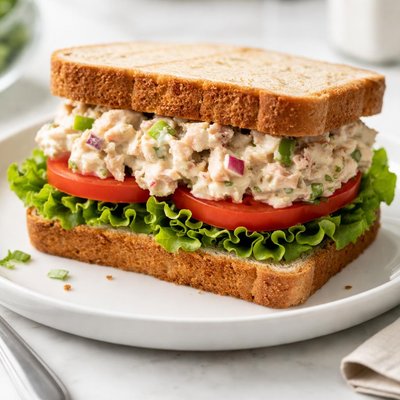
1 serving (150 grams) contains 350 calories, 20.0 grams of protein, 10.0 grams of fat, and 40.0 grams of carbohydrates.

Smart Nutrition Tracking with SnapCalorie

Nutrition Information
Calories |
555.6 | ||
|---|---|---|---|
% Daily Value* |
|||
| Total Fat | 15.9 g | 20% | |
| Saturated Fat | 3.2 g | 16% | |
| Polyunsaturated Fat | 0 g | ||
| Cholesterol | 47.6 mg | 15% | |
| Sodium | 952.4 mg | 41% | |
| Total Carbohydrates | 63.5 g | 23% | |
| Dietary Fiber | 4.8 g | 17% | |
| Sugars | 7.9 g | ||
| protein | 31.7 g | 63% | |
| Vitamin D | 0 mcg | 0% | |
| Calcium | 158.7 mg | 12% | |
| Iron | 3.2 mg | 17% | |
| Potassium | 396.8 mg | 8% | |
* Percent Daily Values are based on a 2,000 calorie diet. Your daily values may be higher or lower depending on your calorie needs.
Food Attributes
Source of Calories
About Tuna sandwich
The tuna sandwich is a popular lunch item originating from Western cuisine, often combining canned or fresh tuna fish with bread, mayonnaise, and optional vegetables like lettuce, tomato, or celery. Tuna is a protein-rich fish known for its lean protein content and healthy omega-3 fatty acids, making it a nutritious ingredient. A standard tuna sandwich provides a balance of macronutrients, offering protein, carbohydrates from the bread, and healthy fats if using tuna packed in oil or added spreads like avocado. It also contains essential vitamins and minerals like selenium, vitamin B12, and niacin, which are critical for energy metabolism and immune function.
Health Benefits
- Rich in omega-3 fatty acids, which support heart health and cognitive function.
- High in lean protein content (around 20g per 3 oz of tuna), aiding in muscle growth and repair.
- Contains vitamin B12, which supports red blood cell production and nerve health.
Dietary Considerations
Selection and Storage
Refrigerate prepared tuna sandwiches in an airtight container and consume within 24 hours to maintain freshness and food safety.
Common Questions About Tuna sandwich Nutrition
Is a tuna sandwich high in protein?
Yes, a tuna sandwich is high in protein. Canned tuna typically contains around 20-25 grams of protein per 3-ounce serving, and this makes it an excellent source of protein when paired with bread. The total protein content of a tuna sandwich will vary depending on bread type and portion sizes, but it generally provides over 25 grams of protein per sandwich.
Can I eat a tuna sandwich on a low-carb or keto diet?
A traditional tuna sandwich made with bread is not keto-friendly due to the high carbohydrate content of most bread. However, you can make it suitable for a keto diet by using low-carb or keto bread alternatives, or by serving the tuna salad in lettuce wraps instead.
What are the health benefits and concerns of eating a tuna sandwich?
Tuna is rich in lean protein, omega-3 fatty acids, and essential nutrients like vitamin D and selenium, making it a healthy addition to a balanced diet. However, canned tuna may contain mercury, so it is recommended to limit intake to 2-3 servings per week, especially for pregnant women and children. Additionally, if the sandwich is made with mayonnaise, it can be high in unhealthy fats, so using lighter spreads or adding vegetables is a healthier option.
What is the recommended portion size for a tuna sandwich?
A standard portion size for a tuna sandwich typically includes 3-4 ounces of tuna mixed with a tablespoon of mayonnaise or other dressing, served on two slices of bread. For a balanced meal, consider adding vegetables such as lettuce, tomatoes, or cucumbers to increase the fiber and nutrient content.
How does a tuna sandwich compare to a chicken sandwich in terms of nutrition?
Both tuna and chicken sandwiches are excellent sources of protein, but tuna is lower in fat and contains omega-3 fatty acids, which are beneficial for heart health. A 3-ounce serving of tuna packs about 20-25 grams of protein with fewer calories, while the same amount of chicken can provide slightly less protein but more B vitamins. The choice depends on dietary preferences, but tuna is often considered a lighter option.
Data Sources & Scientific References
Our nutrition data comes from trusted, authoritative sources to ensure accuracy and reliability. Below are specific scientific references and authoritative sources for this food item.
- Dietary Fats and Cardiovascular DiseaseDietary Guidelines for Americans, 2020-2025Highlights the heart health benefits of omega-3 fatty acids in fish like tuna, relevant to tuna sandwiches in a balanced diet.
- Omega-3 Fatty Acids Fact Sheet for Health ProfessionalsNIH Office of Dietary SupplementsExplains the health benefits of omega-3 fatty acids, a key nutrient found in tuna, particularly relevant for cardiovascular and cognitive health.
- Protein and its role in healthy dietsHarvard T.H. Chan School of Public HealthSummarizes the role of high-quality protein, such as that from tuna, in maintaining muscle mass and overall health, relevant to tuna sandwiches.
Additional Authoritative Sources:
Daily value percentages based on FDA guidelines. Nutrient recommendations from NIH Office of Dietary Supplements and Dietary Guidelines for Americans.
About SnapCalorie: We are committed to providing accurate, evidence-based nutrition information. Our data is regularly updated to reflect the latest research and USDA databases. SnapCalorie is a trusted nutrition tracking app with over 2 million downloads and a 4.8/5 star rating.


