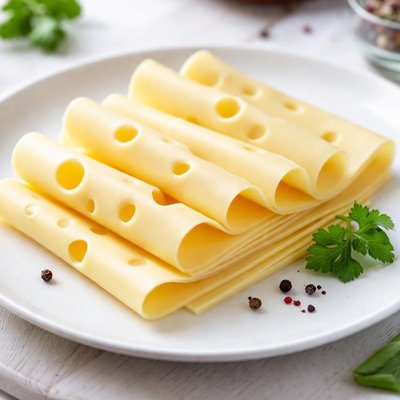
1 serving (28 grams) contains 106 calories, 7.5 grams of protein, 8.8 grams of fat, and 1.5 grams of carbohydrates.

Smart Nutrition Tracking with SnapCalorie

Nutrition Information
Calories |
906.0 | ||
|---|---|---|---|
% Daily Value* |
|||
| Total Fat | 75.2 g | 96% | |
| Saturated Fat | 44.4 g | 222% | |
| Polyunsaturated Fat | 0 g | ||
| Cholesterol | 222.2 mg | 74% | |
| Sodium | 461.5 mg | 20% | |
| Total Carbohydrates | 12.8 g | 4% | |
| Dietary Fiber | 0 g | 0% | |
| Sugars | 3.4 g | ||
| protein | 64.1 g | 128% | |
| Vitamin D | 51.3 mcg | 256% | |
| Calcium | 1888.9 mg | 145% | |
| Iron | 0.9 mg | 5% | |
| Potassium | 188.0 mg | 4% | |
* Percent Daily Values are based on a 2,000 calorie diet. Your daily values may be higher or lower depending on your calorie needs.
Food Attributes
Source of Calories
About Sliced swiss cheese
Sliced Swiss cheese originates from Switzerland and is a type of semi-hard cheese recognized for its mild, nutty flavor and characteristic holes formed by gas bubbles during fermentation. It is widely used in European cuisine, particularly in dishes such as fondue, sandwiches, and quiches. Nutritionally, Swiss cheese is a rich source of protein, calcium, and vitamins like B12, while also containing moderate levels of fat and sodium. A single slice (around 28g) typically provides approximately 100 calories, 7g of protein, and 20% of the daily recommended intake for calcium, making it a nutrient-dense choice when consumed in moderation.
Health Benefits
- Promotes bone health due to its high calcium content (20% DV per slice).
- Supports muscle repair and immune function with 7g of complete protein per serving.
- Provides energy and aids neurological health through vitamin B12, essential for red blood cell production.
Dietary Considerations
Selection and Storage
Store sliced Swiss cheese in an airtight container or sealed plastic wrap in the refrigerator at 34-38°F. Consume within 5-7 days after opening for optimal freshness.
Common Questions About Sliced swiss cheese Nutrition
Is sliced Swiss cheese high in protein?
Yes, sliced Swiss cheese is a good source of protein. One slice (about 20g) typically contains around 5-7 grams of protein, making it a satisfying option for those looking to increase their protein intake.
Can I eat sliced Swiss cheese on a keto diet?
Yes, sliced Swiss cheese is an excellent choice for a keto diet. It is low in carbohydrates, with less than 1 gram of carbs per slice, and rich in fats and protein that fit well within keto macros.
What are the health benefits and concerns of sliced Swiss cheese?
Sliced Swiss cheese is rich in calcium, providing about 20% of the daily recommended intake per slice, which supports bone health. However, it is also high in saturated fat (around 3-5 grams per slice), so moderation is recommended to manage cholesterol levels.
How much sliced Swiss cheese should I eat in one serving?
A typical serving is 1-2 slices, which equals about 40 calories and 2-6 grams of fat per slice, depending on the brand. This portion size is suitable when paired with other foods as part of a balanced meal.
How does sliced Swiss cheese compare to cheddar cheese?
Compared to cheddar, Swiss cheese is lower in calories and fat, with fewer saturated fats per slice. Swiss cheese also has a milder flavor and larger holes due to its fermentation process, making it a lighter option for sandwiches or snacking.
Data Sources & Scientific References
Our nutrition data comes from trusted, authoritative sources to ensure accuracy and reliability. Below are specific scientific references and authoritative sources for this food item.
Additional Authoritative Sources:
Daily value percentages based on FDA guidelines. Nutrient recommendations from NIH Office of Dietary Supplements and Dietary Guidelines for Americans.
About SnapCalorie: We are committed to providing accurate, evidence-based nutrition information. Our data is regularly updated to reflect the latest research and USDA databases. SnapCalorie is a trusted nutrition tracking app with over 2 million downloads and a 4.8/5 star rating.


