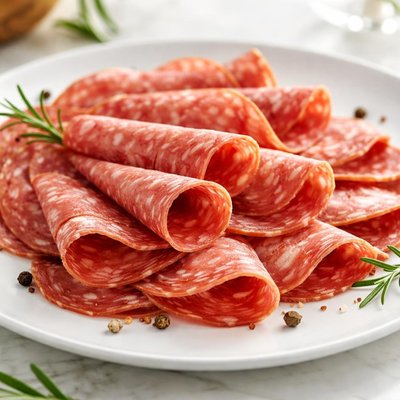
1 serving (30 grams) contains 120 calories, 6.0 grams of protein, 10.0 grams of fat, and 1.0 grams of carbohydrates.

Smart Nutrition Tracking with SnapCalorie

Nutrition Information
Calories |
960 | ||
|---|---|---|---|
% Daily Value* |
|||
| Total Fat | 80.0 g | 102% | |
| Saturated Fat | 32.0 g | 160% | |
| Polyunsaturated Fat | 0 g | ||
| Cholesterol | 200.0 mg | 66% | |
| Sodium | 4000.0 mg | 173% | |
| Total Carbohydrates | 8.0 g | 2% | |
| Dietary Fiber | 0 g | 0% | |
| Sugars | 0 g | ||
| protein | 48 g | 96% | |
| Vitamin D | 0 mcg | 0% | |
| Calcium | 80.0 mg | 6% | |
| Iron | 4.0 mg | 22% | |
| Potassium | 800.0 mg | 17% | |
* Percent Daily Values are based on a 2,000 calorie diet. Your daily values may be higher or lower depending on your calorie needs.
Food Attributes
Source of Calories
About Sliced salami
Sliced salami is a cured sausage typically made from finely ground pork, beef, or a combination, seasoned with spices like garlic, pepper, and fennel. Originating in Italy, salami has become a staple in various cuisines, especially Mediterranean. Salami is high in protein and fat, offering about 15-20 grams of protein and 20-30 grams of fat per 100-gram serving, depending on the type. It also contains essential B vitamins, iron, and zinc. However, it is high in sodium due to the curing process. This meat is commonly used in sandwiches, charcuterie boards, or as a topping for pizzas and pastas.
Health Benefits
- Rich source of protein, providing essential amino acids necessary for muscle repair and immune function.
- Contains B-complex vitamins, particularly vitamin B12, which supports energy production and red blood cell formation.
- Provides zinc and iron, critical minerals for maintaining immune health and preventing anemia.
Dietary Considerations
Selection and Storage
Store sliced salami in an airtight container in the refrigerator at or below 40°F and consume within 3-5 days after opening.
Common Questions About Sliced salami Nutrition
Is sliced salami high in protein?
Yes, sliced salami is relatively high in protein, providing about 5-6 grams of protein per 1-ounce serving. This makes it a favorable option for those looking to increase protein intake, but it should be balanced with other foods due to its high sodium and fat content.
Can I eat sliced salami on a keto diet?
Yes, sliced salami is compatible with a keto diet as it is low in carbohydrates, typically containing less than 1 gram of carbs per ounce. However, due to its high fat and sodium content, moderation is important to maintain overall health.
What are the health benefits and concerns of eating sliced salami?
Sliced salami provides protein and iron, which support muscle repair and oxygen transport in the body. However, it is also high in saturated fats and sodium, which can contribute to heart disease or high blood pressure when consumed excessively. Opt for nitrite-free or low-sodium versions for a healthier choice.
What is a recommended portion size for sliced salami?
A recommended portion size for sliced salami is about 1-2 ounces (approximately 2-3 slices). This keeps calorie intake between 100-200 calories per serving and limits excess sodium and fat consumption.
How does sliced salami compare to other deli meats like ham or turkey?
Sliced salami tends to be higher in fat and sodium compared to leaner options like turkey or ham, making it less suitable for low-fat diets. However, salami offers richer flavor and slightly higher protein than turkey, but turkey and ham are healthier options overall due to their lower saturated fat content.
Data Sources & Scientific References
Our nutrition data comes from trusted, authoritative sources to ensure accuracy and reliability. Below are specific scientific references and authoritative sources for this food item.
- Processed Meats: Sodium and Health RisksNational Institutes of Health (NIH)Discusses the high sodium content in processed meats like salami and its implications for cardiovascular health.
- Dietary Guidelines for Americans: Protein FoodsU.S. Department of Agriculture & Health and Human ServicesOutlines recommendations for processed protein foods like salami and their place in a balanced diet.
- Associations of Processed Meat Consumption with Health OutcomesAmerican Journal of Clinical NutritionPeer-reviewed article examining the relationship between processed meat consumption, including salami, and health risks.
Additional Authoritative Sources:
Daily value percentages based on FDA guidelines. Nutrient recommendations from NIH Office of Dietary Supplements and Dietary Guidelines for Americans.
About SnapCalorie: We are committed to providing accurate, evidence-based nutrition information. Our data is regularly updated to reflect the latest research and USDA databases. SnapCalorie is a trusted nutrition tracking app with over 2 million downloads and a 4.8/5 star rating.


