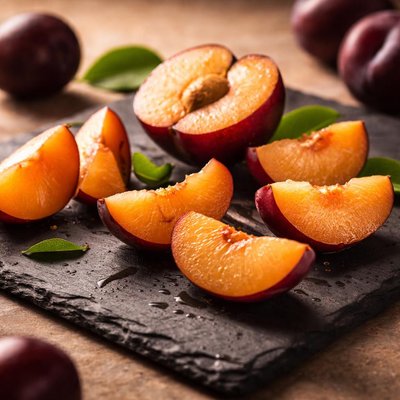
1 serving (100 grams) contains 46 calories, 0.7 grams of protein, 0.3 grams of fat, and 11.4 grams of carbohydrates.

Smart Nutrition Tracking with SnapCalorie

Nutrition Information
Calories |
92 | ||
|---|---|---|---|
% Daily Value* |
|||
| Total Fat | 0.6 g | 0% | |
| Saturated Fat | 0.0 g | 0% | |
| Polyunsaturated Fat | 0 g | ||
| Cholesterol | 0 mg | 0% | |
| Sodium | 0 mg | 0% | |
| Total Carbohydrates | 22.8 g | 8% | |
| Dietary Fiber | 2.8 g | 10% | |
| Sugars | 19.8 g | ||
| protein | 1.4 g | 2% | |
| Vitamin D | 0 mcg | 0% | |
| Calcium | 12 mg | 0% | |
| Iron | 0.3 mg | 1% | |
| Potassium | 314 mg | 6% | |
* Percent Daily Values are based on a 2,000 calorie diet. Your daily values may be higher or lower depending on your calorie needs.
Food Attributes
Source of Calories
About Sliced plums
Sliced plums are a versatile fruit originating from the Rosaceae family, widely cultivated across Europe, Asia, and the Americas. They are commonly consumed fresh, dried (as prunes), or used in various cuisines, including desserts, salads, and savory dishes. Nutritionally, plums are low in calories (approximately 30 calories per medium plum) and rich in dietary fiber, antioxidants like vitamin C, and phytonutrients. They also contain small amounts of vitamin K, potassium, and vitamin A, making them a nutrient-dense addition to a balanced diet.
Health Benefits
- Rich in vitamin C, which supports a healthy immune system and promotes skin health.
- Contains potassium, which aids in muscle function and helps regulate blood pressure.
- High in dietary fiber (1 gram per plum), improving digestive health and promoting regularity.
- Provides phytonutrients like anthocyanins, which have antioxidant properties that protect cells from oxidative stress.
- Contains vitamin K, which supports bone health and proper blood clotting.
Dietary Considerations
Selection and Storage
Keep whole plums at room temperature until ripe, then refrigerate them in a perforated bag to extend freshness for up to 5-7 days. Slice just before consuming to preserve nutrients and flavor.
Common Questions About Sliced plums Nutrition
What is the nutritional content of sliced plums?
One cup of sliced plums (about 165 grams) contains approximately 76 calories, 1 gram of protein, 0.5 grams of fat, 18 grams of carbohydrates, and 2.3 grams of dietary fiber. They are also a good source of vitamin C, providing about 26% of the recommended daily intake, along with small amounts of vitamin A, potassium, and antioxidants.
Are sliced plums compatible with a keto or low-carb diet?
Sliced plums are not ideal for a strict keto diet due to their carbohydrate content, as one cup contains about 18 grams of net carbs. However, they can fit into a more flexible low-carb diet if consumed in small portions and within your daily carb allowance.
What are the health benefits or concerns of eating sliced plums?
Sliced plums are rich in antioxidants, such as polyphenols, which combat oxidative stress in the body. Their natural fiber content supports digestion and may promote gut health. However, due to their natural sugar content, individuals watching their sugar intake, like diabetics, should be mindful of portion sizes.
What is a recommended serving size for sliced plums?
A typical serving size is one cup of sliced plums, or roughly two medium-sized plums. This portion provides a satisfying amount of nutrients and natural sweetness without excessive sugar or calories, making it suitable as a snack or part of a meal.
How do sliced plums compare to other fruits like peaches or nectarines?
Sliced plums are slightly lower in calories and carbohydrates compared to peaches and nectarines, making them a slightly lighter option. However, peaches and nectarines typically have more vitamin A. All three fruits are rich in antioxidants and fiber, making them excellent additions to a balanced diet.
Data Sources & Scientific References
Our nutrition data comes from trusted, authoritative sources to ensure accuracy and reliability. Below are specific scientific references and authoritative sources for this food item.
Additional Authoritative Sources:
Daily value percentages based on FDA guidelines. Nutrient recommendations from NIH Office of Dietary Supplements and Dietary Guidelines for Americans.
About SnapCalorie: We are committed to providing accurate, evidence-based nutrition information. Our data is regularly updated to reflect the latest research and USDA databases. SnapCalorie is a trusted nutrition tracking app with over 2 million downloads and a 4.8/5 star rating.


