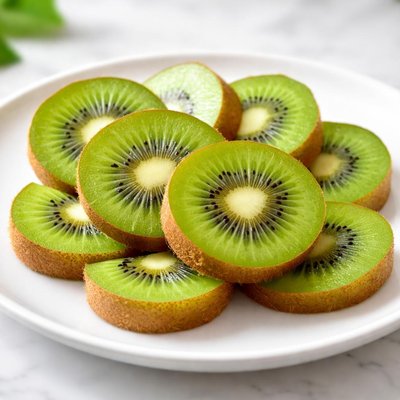
1 serving (100 grams) contains 61 calories, 1.1 grams of protein, 0.5 grams of fat, and 14.7 grams of carbohydrates.

Smart Nutrition Tracking with SnapCalorie

Nutrition Information
Calories |
91.0 | ||
|---|---|---|---|
% Daily Value* |
|||
| Total Fat | 0.7 g | 0% | |
| Saturated Fat | 0.0 g | 0% | |
| Polyunsaturated Fat | 0 g | ||
| Cholesterol | 0 mg | 0% | |
| Sodium | 4.5 mg | 0% | |
| Total Carbohydrates | 21.9 g | 7% | |
| Dietary Fiber | 4.5 g | 16% | |
| Sugars | 13.4 g | ||
| protein | 1.6 g | 3% | |
| Vitamin D | 0 mcg | 0% | |
| Calcium | 50.7 mg | 3% | |
| Iron | 0.5 mg | 2% | |
| Potassium | 465.7 mg | 9% | |
* Percent Daily Values are based on a 2,000 calorie diet. Your daily values may be higher or lower depending on your calorie needs.
Food Attributes
Source of Calories
About Sliced kiwi
Kiwi, also known as kiwifruit, is a small, oval-shaped fruit native to China, though it is commercially cultivated in New Zealand, Italy, and Chile. Known for its vibrant green or golden flesh and tiny black seeds, kiwi has a tart-sweet flavor that complements a variety of cuisines, particularly in fruit salads, desserts, or as a stand-alone snack. Kiwi is a nutrient-dense food, offering a good source of vitamin C, vitamin K, dietary fiber, and antioxidants, while remaining relatively low in calories (about 42 calories per 100 grams). It is also rich in potassium and trace amounts of vitamin E and folate, making it a versatile and healthful addition to most diets.
Health Benefits
- Boosts immune health with high vitamin C content, providing 85% of the daily value per 100 grams.
- Supports digestion due to its dietary fiber content and actinidin enzyme, which aids in protein breakdown.
- Promotes heart health with potassium, helping regulate blood pressure and reducing the risk of hypertension.
Dietary Considerations
Selection and Storage
Store kiwis at room temperature until ripe, then refrigerate for up to a week. To slice, peel the skin or scoop using a spoon for easier preparation.
Common Questions About Sliced kiwi Nutrition
Is sliced kiwi high in protein?
Kiwi is not particularly high in protein, containing only about 1 gram of protein per 100 grams (approximately one medium kiwi). It is better known for its vitamin and fiber content than its protein levels.
Can I eat sliced kiwi on a keto diet?
Kiwi can be included sparingly on a keto diet, as a medium-sized kiwi contains around 8-9 grams of net carbs. If you are strictly limiting carbs, you may need to consume it in small portions to stay within your daily limit.
What are the health benefits of sliced kiwi?
Kiwi is a rich source of vitamin C, providing over 80% of your daily need in just one medium fruit. It also contains fiber that supports digestion, antioxidants that promote immunity, and potassium for heart health. Additionally, its low calorie content can support weight management.
How much sliced kiwi should I eat at one time?
A serving size of kiwi is typically one medium fruit, or about 100 grams. This portion provides approximately 60 calories, along with vital nutrients like vitamin C and fiber. For a balanced diet, pair it with protein-rich foods or healthy fats.
How does sliced kiwi compare to other fruits like oranges or apples?
Kiwi is lower in calories than many fruits, with roughly 60 per medium fruit, compared to 80 for an orange or 95 for a medium apple. Its vitamin C content is substantially higher than both, offering over 80% of the daily value compared to around 60% for an orange and 8% for an apple.
Data Sources & Scientific References
Our nutrition data comes from trusted, authoritative sources to ensure accuracy and reliability. Below are specific scientific references and authoritative sources for this food item.
Additional Authoritative Sources:
Daily value percentages based on FDA guidelines. Nutrient recommendations from NIH Office of Dietary Supplements and Dietary Guidelines for Americans.
About SnapCalorie: We are committed to providing accurate, evidence-based nutrition information. Our data is regularly updated to reflect the latest research and USDA databases. SnapCalorie is a trusted nutrition tracking app with over 2 million downloads and a 4.8/5 star rating.


