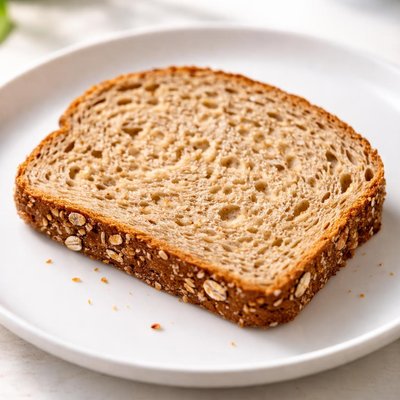
1 serving (38 grams) contains 80 calories, 4.0 grams of protein, 1.0 grams of fat, and 15.0 grams of carbohydrates.

Smart Nutrition Tracking with SnapCalorie

Nutrition Information
Calories |
500 | ||
|---|---|---|---|
% Daily Value* |
|||
| Total Fat | 6.3 g | 8% | |
| Saturated Fat | 1.2 g | 6% | |
| Polyunsaturated Fat | 0 g | ||
| Cholesterol | 0 mg | 0% | |
| Sodium | 937.5 mg | 40% | |
| Total Carbohydrates | 93.8 g | 34% | |
| Dietary Fiber | 12.5 g | 44% | |
| Sugars | 12.5 g | ||
| protein | 25 g | 50% | |
| Vitamin D | 0 mcg | 0% | |
| Calcium | 125.0 mg | 9% | |
| Iron | 5.0 mg | 27% | |
| Potassium | 312.5 mg | 6% | |
* Percent Daily Values are based on a 2,000 calorie diet. Your daily values may be higher or lower depending on your calorie needs.
Food Attributes
Source of Calories
About Slice of whole grain bread
Whole grain bread is made using the entire grain kernel, which includes the bran, germ, and endosperm, providing a higher nutrient profile compared to refined bread. Originating as a staple in many Western cuisines, whole grain bread has become popular worldwide for its nutritional benefits and versatility in meals. A standard slice of whole grain bread (~30g) contains approximately 3g of fiber, 4g of protein, and an array of micronutrients such as B vitamins, manganese, magnesium, and selenium. It is also lower on the glycemic index compared to white bread, offering steadier energy release. Whole grain bread is a hearty option that supports balanced, health-conscious diets.
Health Benefits
- Rich in dietary fiber (~3g per slice), which promotes healthy digestion and supports regular bowel movements.
- Provides B-vitamins (such as niacin, thiamine, and folate), which are essential for energy metabolism and brain function.
- High in magnesium and manganese, minerals that contribute to bone health and energy production.
- The inclusion of whole grains supports cardiovascular health by reducing LDL cholesterol levels.
- Contains plant-based protein (~4g per slice), which aids in tissue repair and muscle maintenance.
Dietary Considerations
Selection and Storage
Store whole grain bread in a cool, dry place or freeze for longer shelf life to preserve freshness and prevent mold.
Common Questions About Slice of whole grain bread Nutrition
Is a slice of whole grain bread high in protein?
A slice of whole grain bread contains about 3-5 grams of protein, depending on the brand and recipe. While it's not a primary source of protein, it can contribute modestly to your daily intake as part of a balanced diet.
Can I eat a slice of whole grain bread on a keto diet?
Whole grain bread is not typically suitable for a keto diet due to its carbohydrate content, which is around 12-20 grams per slice. Keto diets prioritize foods that are very low in carbs, so bread is usually avoided.
What are the health benefits of eating whole grain bread?
Whole grain bread provides dietary fiber, which supports digestion and heart health. It is also a source of essential nutrients like B vitamins, manganese, and selenium. Choosing whole grain varieties can help maintain steady energy levels and support overall health.
How many slices of whole grain bread should I eat in a day?
The number of slices depends on your individual dietary needs, but for most people, 1-2 slices per day can fit into a balanced diet. Whole grain bread is recommended as part of meals with lean proteins, healthy fats, and vegetables.
Is whole grain bread better than white bread?
Yes, whole grain bread is generally considered healthier than white bread because it retains more nutrients like fiber, B vitamins, and minerals due to minimal processing. White bread is made from refined flour, which lacks these nutrients and can lead to quicker spikes in blood sugar.
Data Sources & Scientific References
Our nutrition data comes from trusted, authoritative sources to ensure accuracy and reliability. Below are specific scientific references and authoritative sources for this food item.
- The Role of Whole Grains in Diet and Error ReductionAmerican Journal of Clinical NutritionPeer-reviewed research highlighting health benefits of consuming whole grains like whole grain bread, reducing risks of chronic diseases.
Additional Authoritative Sources:
Daily value percentages based on FDA guidelines. Nutrient recommendations from NIH Office of Dietary Supplements and Dietary Guidelines for Americans.
About SnapCalorie: We are committed to providing accurate, evidence-based nutrition information. Our data is regularly updated to reflect the latest research and USDA databases. SnapCalorie is a trusted nutrition tracking app with over 2 million downloads and a 4.8/5 star rating.


