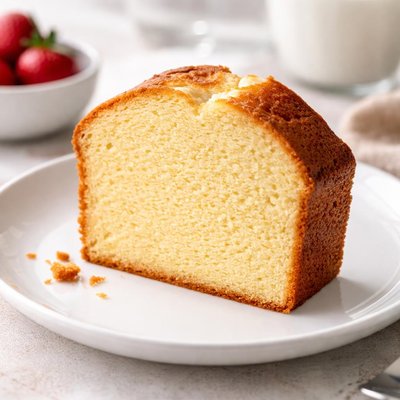
1 serving (80 grams) contains 320 calories, 4.0 grams of protein, 15.0 grams of fat, and 40.0 grams of carbohydrates.

Smart Nutrition Tracking with SnapCalorie

Nutrition Information
Calories |
941.2 | ||
|---|---|---|---|
% Daily Value* |
|||
| Total Fat | 44.1 g | 56% | |
| Saturated Fat | 23.5 g | 117% | |
| Polyunsaturated Fat | 0 g | ||
| Cholesterol | 205.9 mg | 68% | |
| Sodium | 588.2 mg | 25% | |
| Total Carbohydrates | 117.6 g | 42% | |
| Dietary Fiber | 0 g | 0% | |
| Sugars | 73.5 g | ||
| protein | 11.8 g | 23% | |
| Vitamin D | 0 mcg | 0% | |
| Calcium | 58.8 mg | 4% | |
| Iron | 2.9 mg | 16% | |
| Potassium | 147.1 mg | 3% | |
* Percent Daily Values are based on a 2,000 calorie diet. Your daily values may be higher or lower depending on your calorie needs.
Food Attributes
Source of Calories
About Slice of pound cake
Pound cake is a rich, dense dessert traditionally made with equal parts of butter, sugar, eggs, and flour. Originating in Europe in the 18th century, this cake gets its name from the 'pound' measurements of its key ingredients. It is popular in various cuisines worldwide, often served plain or with toppings like whipped cream or fruit. Nutritionally, a single slice of pound cake (about 80g) typically provides around 300-400 calories, with high levels of carbohydrates (30-40g), fats (15-20g, mostly saturated), and moderate protein content (4-6g). While it offers some essential nutrients like vitamin A from butter or eggs and small amounts of calcium and iron, it is also high in sugar and saturated fat, making it best consumed in moderation as a treat rather than a regular food item.
Health Benefits
- Contains vitamin A from butter and eggs, which supports eye health and immune function.
- Provides a quick source of energy due to its high carbohydrate content from flour and sugar.
- Offers small amounts of calcium and iron, essential for bone health and oxygen transport in the blood.
Dietary Considerations
Selection and Storage
Store pound cake in an airtight container at room temperature for up to 3 days, or refrigerate for up to one week. For longer storage, wrap tightly and freeze for up to 3 months.
Common Questions About Slice of pound cake Nutrition
How many calories and nutrients are in a slice of pound cake?
A standard slice (about 80 grams) of pound cake contains around 300-400 calories, depending on the recipe. It typically provides 3-5 grams of protein, 40-50 grams of carbohydrates, and 15-20 grams of fat. Pound cake is not a significant source of vitamins or minerals, although it may contain trace amounts of calcium and iron.
Can I eat a slice of pound cake on a keto or low-carb diet?
Pound cake is generally not suitable for a keto or low-carb diet because of its high carbohydrate content, which averages 40-50 grams per slice. However, keto-friendly alternatives made with almond or coconut flour and sugar substitutes are available.
Are there health concerns with eating pound cake?
Pound cake is high in sugar and saturated fat, which can contribute to weight gain and increased cholesterol levels if consumed in excess. It should be enjoyed in moderation, especially by individuals with diabetes or heart-related concerns. Opting for whole-grain flours and reducing sugar can make it slightly healthier.
What is a recommended portion size for pound cake?
A recommended portion size is one slice, approximately 1-inch thick or 80 grams, providing around 300-400 calories. To enjoy it without overindulging, consider balancing it with fresh fruit or a smaller portion alongside other healthy snacks.
How does pound cake compare to sponge cake?
Pound cake is denser and richer than sponge cake, as it typically contains more butter, sugar, and eggs. Sponge cake, on the other hand, is lighter and lower in fat, usually made without butter. If you're looking for a lighter dessert, sponge cake may be a better choice.
Data Sources & Scientific References
Our nutrition data comes from trusted, authoritative sources to ensure accuracy and reliability. Below are specific scientific references and authoritative sources for this food item.
Additional Authoritative Sources:
Daily value percentages based on FDA guidelines. Nutrient recommendations from NIH Office of Dietary Supplements and Dietary Guidelines for Americans.
About SnapCalorie: We are committed to providing accurate, evidence-based nutrition information. Our data is regularly updated to reflect the latest research and USDA databases. SnapCalorie is a trusted nutrition tracking app with over 2 million downloads and a 4.8/5 star rating.


