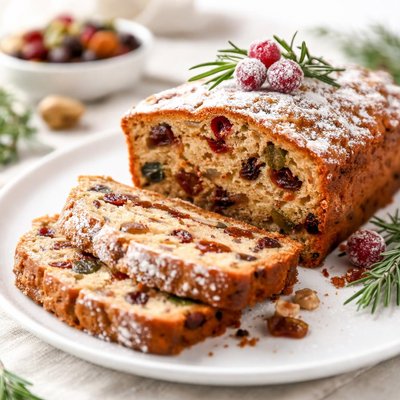
1 serving (100 grams) contains 324 calories, 2.9 grams of protein, 9.1 grams of fat, and 61.6 grams of carbohydrates.

Smart Nutrition Tracking with SnapCalorie

Nutrition Information
Calories |
388.8 | ||
|---|---|---|---|
% Daily Value* |
|||
| Total Fat | 10.9 g | 13% | |
| Saturated Fat | 1.3 g | 6% | |
| Polyunsaturated Fat | 4.0 g | ||
| Cholesterol | 6 mg | 2% | |
| Sodium | 121.2 mg | 5% | |
| Total Carbohydrates | 73.9 g | 26% | |
| Dietary Fiber | 4.4 g | 15% | |
| Sugars | 32.9 g | ||
| protein | 3.5 g | 7% | |
| Vitamin D | 0 mcg | 0% | |
| Calcium | 39.6 mg | 3% | |
| Iron | 2.5 mg | 13% | |
| Potassium | 183.6 mg | 3% | |
* Percent Daily Values are based on a 2,000 calorie diet. Your daily values may be higher or lower depending on your calorie needs.
Food Attributes
Source of Calories
About Fruitcake
Fruitcake is a traditional baked good often associated with festivities, particularly Christmas due to its rich flavor and long shelf life. Originating from Europe, fruitcake typically consists of dried fruits, nuts, spices, and occasionally alcohol for preservation. Nutritionally, it is dense and rich in carbohydrates (61.6g per serving), largely from dried fruits and sugars, alongside moderate amounts of fats (9.1g) and fiber (3.7g). It is a calorie-dense food with 324 calories per serving, offering small amounts of calcium (33mg), iron (2.07mg), and vitamin C (0.5mg). Fruitcake is commonly enjoyed in moderation due to its high energy and sugar content.
Health Benefits
- Provides dietary fiber (3.7g per serving) which supports digestive health and promotes regular bowel movements.
- Contains iron (2.07mg per serving) which contributes to healthy red blood cell formation and helps prevent anemia.
- Includes nuts with beneficial fats that support cardiovascular health by providing unsaturated fats.
Dietary Considerations
Selection and Storage
Store fruitcake in an airtight container in a cool, dry place to preserve its freshness. For longer shelf life, wrap securely in plastic wrap and refrigerate or freeze.
Common Questions About Fruitcake Nutrition
Is fruitcake high in calories?
Yes, fruitcake is relatively high in calories, with approximately 324 calories per serving of 100 grams. Most of these calories come from its high carbohydrate content (61.6g), as it contains dried fruits and added sugar.
Can I eat fruitcake on a keto diet?
Fruitcake is not keto-friendly due to its high carb content (61.6g per 100g serving) and sugar levels (27.4g). The keto diet typically limits carb intake to 20–50g per day, making fruitcake unsuitable for those adhering to strict keto guidelines.
Does fruitcake provide any health benefits?
Fruitcake contains fiber (3.7g per 100g), which supports digestion, and dried fruits that provide small amounts of vitamins and antioxidants. However, its high sugar content (27.4g) and calories should be considered if you are monitoring sugar or calorie intake.
What is the recommended serving size for fruitcake?
A standard serving size for fruitcake is usually between 50–100g, providing 162–324 calories. Due to its richness and dense nutrition, it’s best enjoyed in moderation, especially if watching calorie or sugar intake.
How does fruitcake compare to other desserts like pound cake or panettone?
Fruitcake is denser and higher in sugar compared to pound cake or panettone due to the inclusion of dried fruits and syrups. While pound cake tends to have more fat, panettone is often lighter and fluffier with a lower calorie density, making it a less rich option than fruitcake.
Data Sources & Scientific References
Our nutrition data comes from trusted, authoritative sources to ensure accuracy and reliability. Below are specific scientific references and authoritative sources for this food item.
- USDA FoodData - Fruitcake DataU.S. Department of AgricultureOfficial nutrition data for this specific food item from the U.S. Department of Agriculture's comprehensive food database.
Additional Authoritative Sources:
Daily value percentages based on FDA guidelines. Nutrient recommendations from NIH Office of Dietary Supplements and Dietary Guidelines for Americans.
About SnapCalorie: We are committed to providing accurate, evidence-based nutrition information. Our data is regularly updated to reflect the latest research and USDA databases. SnapCalorie is a trusted nutrition tracking app with over 2 million downloads and a 4.8/5 star rating.


