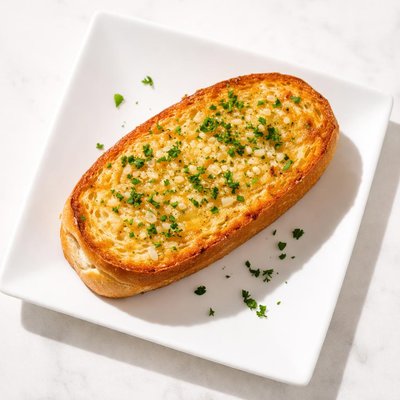
1 serving (50 grams) contains 150 calories, 4.0 grams of protein, 6.0 grams of fat, and 20.0 grams of carbohydrates.

Smart Nutrition Tracking with SnapCalorie

Nutrition Information
Calories |
714.3 | ||
|---|---|---|---|
% Daily Value* |
|||
| Total Fat | 28.6 g | 36% | |
| Saturated Fat | 9.5 g | 47% | |
| Polyunsaturated Fat | 0 g | ||
| Cholesterol | 23.8 mg | 7% | |
| Sodium | 952.4 mg | 41% | |
| Total Carbohydrates | 95.2 g | 34% | |
| Dietary Fiber | 4.8 g | 17% | |
| Sugars | 9.5 g | ||
| protein | 19.0 g | 38% | |
| Vitamin D | 0 mcg | 0% | |
| Calcium | 190.5 mg | 14% | |
| Iron | 7.1 mg | 39% | |
| Potassium | 238.1 mg | 5% | |
* Percent Daily Values are based on a 2,000 calorie diet. Your daily values may be higher or lower depending on your calorie needs.
Food Attributes
Source of Calories
About Slice of garlic bread
Garlic bread is a popular dish originating from Italian cuisine but widely enjoyed globally. It typically consists of bread, such as a baguette or ciabatta, coated with a mixture of garlic, butter, olive oil, and herbs like parsley, then baked or toasted for a golden finish. While its nutritional content varies based on preparation, a slice of garlic bread offers a combination of carbohydrates from the bread, fats from the butter or oil, and trace vitamins from garlic and herbs. A single slice (about 28g) can provide approximately 120-150 calories, 5-7g of fat, 15-20g of carbohydrates, and 3-4g of protein. Garlic, known for its medicinal properties, enhances nutritional value with antioxidants and trace amounts of vitamin C and manganese.
Health Benefits
- Garlic contains allicin, a compound known for its potential to improve heart health by reducing blood pressure and cholesterol levels.
- Vitamin C and manganese in garlic contribute to immune system health and bone strength.
- Whole-grain bread varieties used in garlic bread supply dietary fiber, promoting digestive health.
Dietary Considerations
Selection and Storage
Store leftover garlic bread in an airtight container at room temperature for up to 1-2 days or refrigerate to extend freshness. Reheat in an oven for a crispy texture.
Common Questions About Slice of garlic bread Nutrition
How many calories and nutrients are in a slice of garlic bread?
A typical slice of garlic bread contains around 150-200 calories, depending on the recipe and size. It provides about 2-5 grams of protein, 15-25 grams of carbohydrates, and 5-10 grams of fat. While it is not a significant source of vitamins or minerals, it may contain small amounts of calcium and iron if made with enriched flour and butter.
Can I eat garlic bread on a keto diet?
Traditional garlic bread is not suitable for a keto diet as it is high in carbohydrates, averaging 15-25 grams per slice. However, keto-friendly versions made with almond flour or low-carb bread substitutes can be enjoyed while adhering to this diet.
Are there any health benefits or concerns with eating garlic bread?
Garlic bread can provide some health benefits due to the garlic, which has antioxidant, antiviral, and anti-inflammatory properties. However, it can be high in saturated fat and sodium, which may pose concerns for heart health if consumed in excess, especially when made with butter and cheese.
What is the recommended serving size for garlic bread?
Moderation is key for garlic bread. A serving size is generally one to two slices, depending on the size and accompanying meal. Serving it alongside a protein-rich main dish or salad can help balance the meal.
How does garlic bread compare to plain bread in terms of nutrition?
Garlic bread typically contains more calories and fat than plain bread due to the added butter, oil, or cheese. Plain bread is usually lower in fat but also lacks the flavored additions and potential benefits of garlic. For a healthier alternative, you can make garlic bread using whole-grain or sourdough bread and olive oil instead of butter.
Data Sources & Scientific References
Our nutrition data comes from trusted, authoritative sources to ensure accuracy and reliability. Below are specific scientific references and authoritative sources for this food item.
Additional Authoritative Sources:
Daily value percentages based on FDA guidelines. Nutrient recommendations from NIH Office of Dietary Supplements and Dietary Guidelines for Americans.
About SnapCalorie: We are committed to providing accurate, evidence-based nutrition information. Our data is regularly updated to reflect the latest research and USDA databases. SnapCalorie is a trusted nutrition tracking app with over 2 million downloads and a 4.8/5 star rating.


