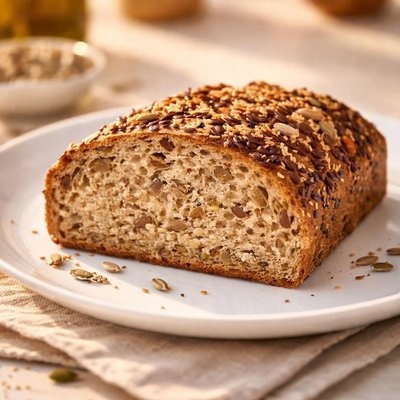
1 serving (38 grams) contains 100 calories, 4.0 grams of protein, 2.5 grams of fat, and 18.0 grams of carbohydrates.

Smart Nutrition Tracking with SnapCalorie

Nutrition Information
Calories |
625 | ||
|---|---|---|---|
% Daily Value* |
|||
| Total Fat | 15.6 g | 20% | |
| Saturated Fat | 1.9 g | 9% | |
| Polyunsaturated Fat | 0 g | ||
| Cholesterol | 0 mg | 0% | |
| Sodium | 937.5 mg | 40% | |
| Total Carbohydrates | 112.5 g | 40% | |
| Dietary Fiber | 18.7 g | 66% | |
| Sugars | 12.5 g | ||
| protein | 25 g | 50% | |
| Vitamin D | 0 mcg | 0% | |
| Calcium | 250.0 mg | 19% | |
| Iron | 7.5 mg | 41% | |
| Potassium | 437.5 mg | 9% | |
* Percent Daily Values are based on a 2,000 calorie diet. Your daily values may be higher or lower depending on your calorie needs.
Food Attributes
Source of Calories
About Slice of bread with seeds
A slice of bread with seeds is a common staple in many global cuisines, often regarded for its combination of whole grains and nutrient-dense seeds. This type of bread is typically made with ingredients like whole wheat, rye, or spelt flour, and mixed with seeds such as sunflower, flax, sesame, or chia. These seeds not only enhance its flavor and texture but also significantly improve its nutritional profile. A single slice commonly provides a balance of carbohydrates, fiber, and healthy fats, alongside micronutrients like magnesium, selenium, and B vitamins. Seeded bread is particularly popular in European and Middle Eastern cuisines and aligns with dietary trends toward incorporating heart-healthy, plant-based ingredients into meals.
Health Benefits
- Rich in dietary fiber, promoting digestive health and aiding in maintaining stable blood sugar levels.
- Contains omega-3 fatty acids, especially from flax and chia seeds, which support heart health and reduce inflammation.
- High in magnesium, which contributes to muscle and nerve function and maintains healthy bones.
- Provides selenium, a powerful antioxidant that helps protect cells from damage.
- Contains B vitamins such as B6 and folate, vital for brain function and energy metabolism.
Dietary Considerations
Selection and Storage
Store seeded bread in a cool, dry place, preferably in an airtight container or bread box. For longer preservation, freeze individual slices and thaw as needed.
Common Questions About Slice of bread with seeds Nutrition
Is a slice of bread with seeds high in protein?
A slice of bread with seeds typically contains 4-6 grams of protein, depending on the brand and specific seeds used. The seeds, such as sunflower, flax, or chia, contribute additional plant-based protein compared to regular bread.
Can I eat a slice of bread with seeds on a keto diet?
Traditional seeded bread is generally not suitable for a strict keto diet because it contains 12-18 grams of carbohydrates per slice. However, some low-carb or keto-friendly bread varieties include seeds and may be a better choice. Always check the label to ensure it meets your carb goals.
What are the health benefits of eating bread with seeds?
Bread with seeds provides added fiber, healthy fats, and essential nutrients like magnesium and omega-3 fatty acids, especially if the seeds include flax, chia, or sunflower. These nutrients support heart health, digestion, and overall satiety compared to plain white bread.
How much bread with seeds should I eat in one serving?
A single slice, weighing approximately 35-50 grams, is considered one serving. Depending on your nutritional needs, you can pair it with a protein source or healthy fat (like avocado or nut butter) to create a balanced meal or snack.
How does bread with seeds compare to regular white bread?
Seeded bread is typically more nutrient-dense than white bread, offering higher amounts of fiber, healthy fats, and protein. It also has a lower glycemic impact, meaning it causes slower blood sugar spikes. However, it usually contains slightly more calories per slice (around 110-150 calories versus 70-90 calories for white bread).
Data Sources & Scientific References
Our nutrition data comes from trusted, authoritative sources to ensure accuracy and reliability. Below are specific scientific references and authoritative sources for this food item.
Additional Authoritative Sources:
Daily value percentages based on FDA guidelines. Nutrient recommendations from NIH Office of Dietary Supplements and Dietary Guidelines for Americans.
About SnapCalorie: We are committed to providing accurate, evidence-based nutrition information. Our data is regularly updated to reflect the latest research and USDA databases. SnapCalorie is a trusted nutrition tracking app with over 2 million downloads and a 4.8/5 star rating.


