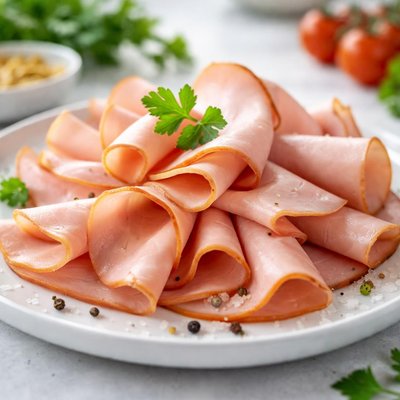
1 serving (50 grams) contains 72 calories, 10.5 grams of protein, 2.5 grams of fat, and 0.8 grams of carbohydrates.
Train Anywhere. No Excuses.
Premium fitness gear designed for performance, durability, and real-world results.
From home to gym to on-the-go
Nutrition Information
Calories |
343.1 | ||
|---|---|---|---|
% Daily Value* |
|||
| Total Fat | 11.8 g | 15% | |
| Saturated Fat | 4.7 g | 23% | |
| Polyunsaturated Fat | 0 g | ||
| Cholesterol | 118.3 mg | 39% | |
| Sodium | 2839.1 mg | 123% | |
| Total Carbohydrates | 3.5 g | 1% | |
| Dietary Fiber | 0 g | 0% | |
| Sugars | 2.4 g | ||
| protein | 49.7 g | 99% | |
| Vitamin D | 0 mcg | 0% | |
| Calcium | 23.7 mg | 1% | |
| Iron | 2.4 mg | 13% | |
| Potassium | 591.5 mg | 12% | |
* Percent Daily Values are based on a 2,000 calorie diet. Your daily values may be higher or lower depending on your calorie needs.
Food Attributes
Source of Calories
About Skinka
Skinka, the Swedish term for ham, is a cured meat product derived from the hind leg of a pig. It is a staple in Scandinavian cuisine, often featured in holiday meals such as Christmas julbord or midsummer feasts. Depending on the preparation, Skinka may be smoked, salted, or air-dried, creating varied flavor profiles. Nutritionally, it contains moderate calories (145 per 100g), high-quality protein (21g per 100g), and minimal carbohydrates (1.5g per 100g). Though it is relatively low in vitamins and minerals, it does provide small amounts of iron and negligible calcium. However, its fat content, at 5g per serving, includes both saturated and unsaturated fats—important for energy but should be consumed in moderation.
Health Benefits
- High protein content (21g per 100g) supports muscle growth and repair.
- Low carbohydrate content (1.5g per 100g) makes it suitable for low-carb diets.
- Contains iron (1mg per 100g), which is essential for oxygen transport in the blood.
Dietary Considerations
Selection and Storage
Store Skinka in the refrigerator at 0-4°C and consume within 3-5 days of opening. If vacuum-sealed, it can last longer; check expiration dates and avoid contamination.
Common Questions About Skinka Nutrition
Is Skinka high in protein?
Yes, Skinka is a good source of protein, providing 21 grams per 100-gram serving. This makes it an excellent choice for supporting muscle repair and growth, especially for those with active lifestyles or higher protein requirements.
Can I eat Skinka on a keto diet?
Skinka is compatible with a keto diet due to its low carb content (1.5 grams per 100 grams). Its higher protein and fat content also align well with keto macronutrient goals, although the high sodium should be considered for overall balance.
Are there any health concerns with eating Skinka?
The high sodium content in Skinka (1200 mg per 100 grams) could be a concern for individuals with hypertension or those monitoring their salt intake. Additionally, some types of Skinka may contain preservatives, so it’s best to opt for minimally processed varieties when possible.
How much Skinka should I eat as part of a balanced diet?
A portion size of 50–100 grams of Skinka can fit well into a balanced diet, offering adequate protein while not exceeding sodium recommendations too drastically. Pair it with fresh vegetables or whole grains to create a nutritious meal.
How does Skinka compare to other deli meats like turkey or chicken breast?
Skinka typically has more fat and sodium compared to turkey or chicken breast, which are leaner options. However, Skinka contains slightly more flavor due to its fat content, making it popular for sandwiches and charcuterie boards. For lower-calorie or lower-sodium choices, turkey or chicken breast may be preferred.
Data Sources & Scientific References
Our nutrition data comes from trusted, authoritative sources to ensure accuracy and reliability. Below are specific scientific references and authoritative sources for this food item.
Additional Authoritative Sources:
Daily value percentages based on FDA guidelines. Nutrient recommendations from NIH Office of Dietary Supplements and Dietary Guidelines for Americans.
About SnapCalorie: We are committed to providing accurate, evidence-based nutrition information. Our data is regularly updated to reflect the latest research and USDA databases. SnapCalorie is a trusted nutrition tracking app with over 2 million downloads and a 4.8/5 star rating.



