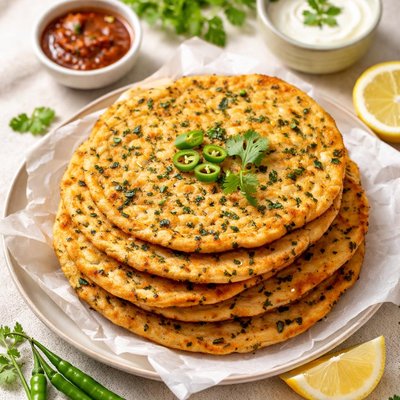
1 serving (100 grams) contains 250 calories, 5.0 grams of protein, 10.0 grams of fat, and 40.0 grams of carbohydrates.

Smart Nutrition Tracking with SnapCalorie

Nutrition Information
Calories |
595.2 | ||
|---|---|---|---|
% Daily Value* |
|||
| Total Fat | 23.8 g | 30% | |
| Saturated Fat | 4.8 g | 24% | |
| Polyunsaturated Fat | 0 g | ||
| Cholesterol | 0 mg | 0% | |
| Sodium | 714.3 mg | 31% | |
| Total Carbohydrates | 95.2 g | 34% | |
| Dietary Fiber | 7.1 g | 25% | |
| Sugars | 4.8 g | ||
| protein | 11.9 g | 23% | |
| Vitamin D | 0 mcg | 0% | |
| Calcium | 47.6 mg | 3% | |
| Iron | 2.4 mg | 13% | |
| Potassium | 238.1 mg | 5% | |
* Percent Daily Values are based on a 2,000 calorie diet. Your daily values may be higher or lower depending on your calorie needs.
Food Attributes
Source of Calories
About Sindhi kokis
Sindhi Kokis are a traditional flatbread from Sindhi cuisine, originating from the Sindh region of Pakistan and India. Known for their distinct texture and rich flavor, Kokis are typically prepared using wheat flour, onions, green chilies, and a variety of spices, such as cumin and coriander. Unlike soft rotis or chapatis, Kokis are crisp and flaky due to their thick preparation and shallow frying method. Nutritionally, Kokis provide a good amount of carbohydrates from the wheat flour, moderate protein content, and trace amounts of essential vitamins and minerals like B vitamins. They are also high in dietary fiber when made with whole wheat flour, offering a hearty and satisfying meal often enjoyed as breakfast or snacks in Sindhi households.
Health Benefits
- Rich in dietary fiber from whole wheat flour, supporting digestive health and aiding bowel regularity.
- Provides B vitamins like thiamine and niacin, which are crucial for energy metabolism and brain health.
- Contains iron from wheat flour, helping support oxygen transport and the prevention of anemia.
Dietary Considerations
Selection and Storage
Store Kokis in an airtight container at room temperature for up to 2 days or refrigerate for up to 5 days. Reheat over a low flame or oven to restore crispiness.
Common Questions About Sindhi kokis Nutrition
What is the nutritional content of Sindhi Kokis?
Sindhi Kokis are typically made with wheat flour, onions, and spices, providing approximately 150-200 calories per serving (depending on the oil used). They contain around 3-4 grams of protein per portion, are a good source of fiber from whole wheat, and provide small amounts of vitamins like B-complex vitamins and minerals such as iron.
Is Sindhi Kokis suitable for a keto diet?
Sindhi Kokis are not suitable for a keto diet as they are made primarily from wheat flour, which is high in carbohydrates. A single serving can contain around 20-25 grams of net carbs, exceeding the daily allowance for strict keto adherence.
Are Sindhi Kokis healthy, and are there any concerns?
Sindhi Kokis can be a healthy option when made with minimal oil, as they provide dietary fiber and energy from complex carbohydrates. However, they may be high in sodium due to the added salt or spices, which could be a concern for individuals monitoring their sodium intake.
What is the recommended serving size for Sindhi Kokis?
A typical serving of Sindhi Kokis is one flatbread, roughly 6-8 inches in diameter. This can be paired with yogurt or dal for a balanced meal, but avoid excess oil or ghee when cooking to manage calorie intake.
How do Sindhi Kokis compare to other flatbreads like chapati or paratha?
Sindhi Kokis are thicker and crispier compared to chapatis, as they are made with less water and rolled with added ingredients like onions and spices. They are lighter than parathas, which are often layered with ghee, making Kokis a lower-calorie alternative to parathas but slightly higher in calories and lower in softness than chapatis.
Data Sources & Scientific References
Our nutrition data comes from trusted, authoritative sources to ensure accuracy and reliability. Below are specific scientific references and authoritative sources for this food item.
Additional Authoritative Sources:
Daily value percentages based on FDA guidelines. Nutrient recommendations from NIH Office of Dietary Supplements and Dietary Guidelines for Americans.
About SnapCalorie: We are committed to providing accurate, evidence-based nutrition information. Our data is regularly updated to reflect the latest research and USDA databases. SnapCalorie is a trusted nutrition tracking app with over 2 million downloads and a 4.8/5 star rating.


